
 五度妙笔
五度妙笔 企业透视镜
企业透视镜 API商城
API商城
 数据库
数据库WISeSat.Space Successfully Launches Its 21st Satellite to LEO with SpaceX
WISeKey International Holding
, a leading global cybersecurity, blockchain and
IoT
company, announces that its subsidiary
WISeSat.Space
Corp. ("WISeSat"), which specializes in space-technology and secure satellite communications for
IoT
applications, has successfully launched its 21st satellite this time equipped the QS7001 chip from its other subsidiary, SEALSQ which focuses on semiconductors, PKI, and post-quantum technology products, into
Low Earth Orbit (LEO)
aboard a
SpaceX
Falcon 9
rocket.
The WISeSat 4.0 satellite lifted off from Vandenberg Space Force Base in California during a 57-minute
launch
window as part of
SpaceX
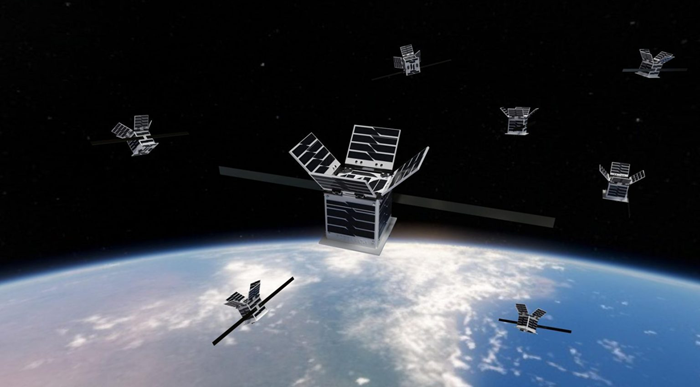
's Transporter-16 rideshare mission, deploying more than 100 satellites into orbit. This milestone represents the continued operational deployment of a new generation of WISeSat satellites, marking a significant leap forward in the company's ambition to deliver quantum-secure, high-speed, low-latency broadband connectivity directly to users via a growing constellation of
LEO
satellites.
A New Era for WISeSat: The WISeSat 4.0 Generation
WISeSat 4.0 embeds WISeKey's trusted Root of Trust alongside SEALSQ’s Post-Quantum chip with architecture designed to enable the phased deployment of
wallets across the WISeSat constellation, supporting the evolution toward autonomous, secure machine-to-machine transactions and decentralized service execution in orbit. This integration accelerates WISeKey's vision for the Space Quantum Internet, ensuring device-to-device (D2D) secure connectivity protected by post-quantum cryptography across critical sectors including defense, logistics, energy, and infrastructure management.
With an average satellite lifespan of approximately five years, the continuous renewal of the WISeSat
constellation
is essential to integrating next-generation technologies, improving performance, and introducing advanced functionalities. Multiple additional WISeSat deployments are planned throughout 2026 and 2027, focused on expanding constellation coverage, increasing bandwidth and redundancy, and integrating AI-driven analytics for enhanced security monitoring and real-time data processing.
Carlos Moreira
, Founder and CEO of WISeKey
noted, "This launch is a landmark achievement for WISeSat and the entire WISeKey group. WISeSat 4.0 is not just another satellite, it is the foundation of a quantum-secure IoT ecosystem capable of connecting billions of devices worldwide. By integrating SEALSQ's Post-Quantum chips from SEALSQ with our trusted Root of Trust, we are building a resilient, future-ready infrastructure capable of withstanding the cybersecurity challenges of the quantum era. This ensures that WISeSat continues to set the standard for trust, security, and innovation in satellite communications, reinforcing our position as a global leader in space-based cybersecurity solutions."
Introducing the World's First Commercial Quantum Spatial Orbital Cloud (QSOC)
WISeSat is developing and operating the world's first commercial Quantum Spatial Orbital Cloud (QSOC). The QSOC programme plans to deploy a 100-satellite constellation delivering quantum key distribution (QKD), quantum random number generation (QRNG), and post-quantum identity services as a subscription offering to enterprises and governments worldwide. Satellites will be deployed incrementally from 2024 through Full Operational Capability (FOC) in 2033. At FOC, WISeSat is expected to operate a dedicated QSOC constellation for SEALSQ, and SEALSQ is expected to deliver a contractually guaranteed 99.9% uptime service-level agreement (SLA) to its customers. This project, subject to, amongst other requirements, final approval by the board of directors of SEALSQ, is believed to be the first such commitment ever made for a quantum security service.
A Clear Division of Roles: Infrastructure and Cloud
The QSOC is structured on a model familiar from the world's leading hyperscale data centres: one party owns and operates the physical infrastructure as a dedicated capacity provider; the other party owns and operates the cloud services that run on top of that infrastructure and contracts directly with end-customers. This clear separation of roles ensures accountability, scalability, and the highest standards of service delivery for quantum security at a global scale.
SEALCOIN: Enabling the Autonomous Machine Economy in Space
SEALCOIN represents the transactional layer of WISeKey’s emerging space-based digital infrastructure, enabling secure, autonomous machine-to-machine (M2M) economic interactions. Designed as a decentralized payment and identity protocol, SEALCOIN allows connected devices, satellites, and edge systems to exchange value, authenticate each other, and execute trusted operations without human intervention. By combining blockchain-based settlement with embedded secure hardware and post-quantum cryptography, SEALCOIN lays the foundation for a scalable machine economy across terrestrial and space environments, supporting use cases such as autonomous logistics, data monetization, and real-time service provisioning.
Jonathan LLamas
, Chief Product & Strategy Officer, SEALCOIN
noted, “SEALCOIN extends the digital economy beyond Earth by enabling satellites and connected devices to operate as autonomous economic agents. As space infrastructure evolves, these systems will be able to securely transact, exchange data, and deliver services within a trusted, decentralized framework, unlocking entirely new models for how value is created and exchanged across both
terrestrial
and orbital networks.”
Click here to learn more about Wide Range of Launch Products on SATNow
Publisher:
SatNow
236
48


