
 五度妙笔
五度妙笔 企业透视镜
企业透视镜 API商城
API商城
 数据库
数据库Understanding how the body and mind adapt to microgravity
Science & Exploration
Understanding how the body and mind adapt to microgravity
ESA astronaut Sophie Adenot has been spending much of her time carrying out science experiments since her arrival aboard the International Space Station on 14 February 2026 for the εpsilon mission.
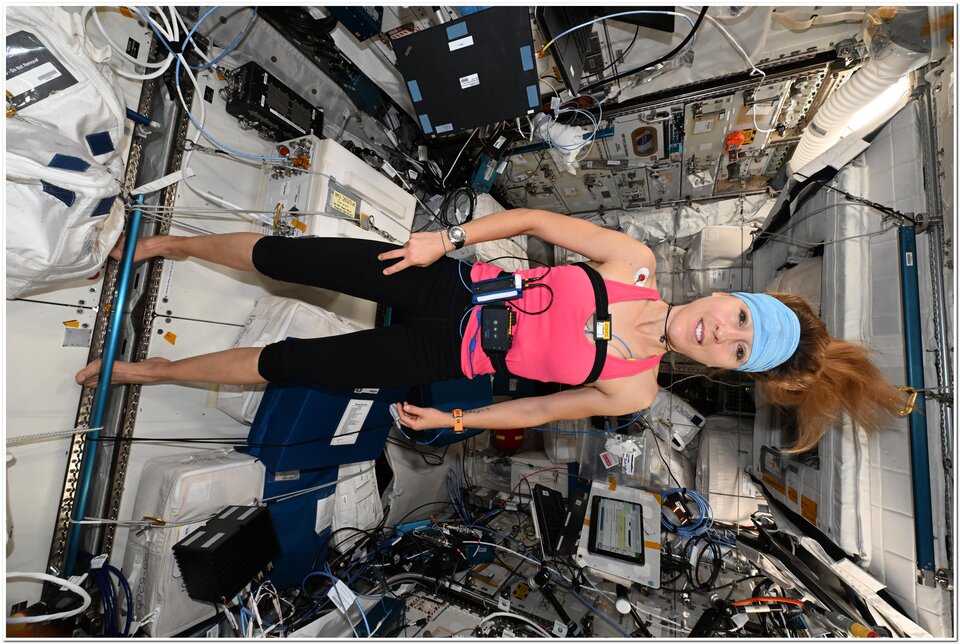
ESA astronaut Sophie Adenot is all set for a PhysioTool session
Among them is PhysioTool, an experiment developed by the French space agency CNES to monitor how the human body and mind adapt to life in weightlessness, where the constant stimulation of gravity disappears. On Earth, something as simple as standing up activates our cardiovascular system; in microgravity, this stimulation vanishes and the system gradually deconditions, reducing an astronaut’s physical capabilities.
PhysioTool introduces a new medical concept that uses synchronised and mobile physiological sensors to monitor astronauts’ health during daily activities, leading to a better understanding of how their systems adjust to microgravity. PhysioTool measures parameters such as arterial neuronal activity, blood flow and pressure, heart rate, temperature, oxygen saturation, respiratory rate and sleep. Three different kinds of sensors are used: electrodes to monitor muscular and cardiovascular parameters, optodes (light‑based sensors) to measure local blood oxygen levels, and oximeters to measure arterial oxygen saturation.
This physiological monitoring is paired with cognitive exercises on a tablet to assess the astronaut’s focus, decision-making abilities and memory. The data collected during PhysioTool will help better prepare crews for long-duration missions, during which their behaviour, judgment and cognitive abilities may be affected.
Potential applications on Earth include any place where continuous health monitoring is required, for instance in long-term care facilities or at home for people who are at risk. It could also be useful for monitoring the health of individuals in isolated environments, such as on ships, in submarines, or in remote scientific bases.
PhysioTool was developed by
CADMOS
, the centre for the development of microgravity applications and space operations at CNES. CADMOS is one of ESA’s four User Support and Operations Centres (USOCs), helping European scientists make the best possible use of the Station’s facilities and supporting more than 25 scientific experiments each year on behalf of ESA and international partners.


