
 五度妙笔
五度妙笔 企业透视镜
企业透视镜 API商城
API商城
 数据库
数据库Planet Labs Demonstrates AI-Powered Onboard Object Detection on Pelican-4 Satellite
Following the announcement of a strategic initiative with
NVIDIA
,
Planet Labs PBC
announced a landmark technical achievement: the successful deployment and execution of
AI
-driven object detection directly onboard its
Pelican-4 satellite
, paving the way toward on-orbit compute for rapid insights, a capability Planet calls Planetary Intelligence.
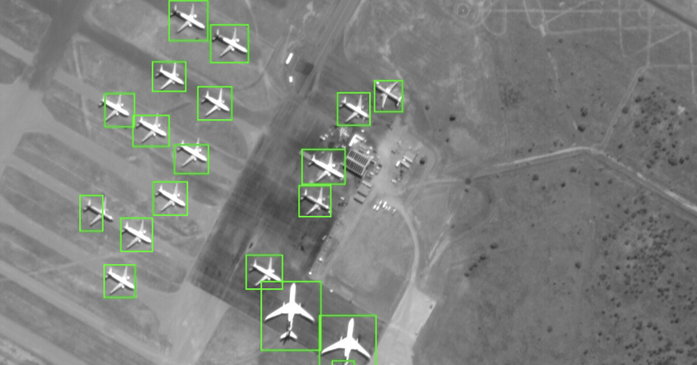
On March 25th, 500km over Alice Springs, Australia,
Planet
’s
Pelican-4
captured an image of an airport, then successfully utilized its onboard
NVIDIA Jetson Orin module
to run an AI model to detect airplanes in moments. This represents one of the first times an Earth imaging satellite has moved beyond simple data capture to onboard AI inference and analysis.
“This success is a glimpse into the future of what we call Planetary Intelligence at scale,"
said
Kiruthika Devaraj, VP of Avionics & Spacecraft Technology
.
"By running AI at the edge on the
NVIDIA Jetson platform
, we can help reduce the time between 'seeing' a change on Earth and a customer 'acting' on it, while simultaneously minimizing downlink latency and cost. This shift toward integrated
AI
at the edge is a technological leap that can help differentiate solutions like Planet’s Global Monitoring Service (GMS), providing valuable insights for our customers and enabling rapid response times when it matters most."
“This step with
NVIDIA
can help speed the pace of insight, reducing the time to potential answers from hours to minutes. This can be the critical difference-maker for our customers from disaster response to security and beyond,”
said
Will Marshall, Planet CEO and Co-Founder.
“Bigger picture: this is an exciting milestone towards delivering Planetary Intelligence. We’re moving AI from the internet into the physical realm, effectively connecting the ‘eyes’ of our satellites with an onboard ‘brain’ to create a nervous system for the planet.”
This breakthrough can help progress
Planet’s Pelican
and forthcoming Owl constellations into a near-real-time intelligence network. Leveraging
NVIDIA Jetson
and high-speed inter-satellite links,
Planet
is working to effectively close the latency gap. Rather than waiting for data to download and then be analyzed on the ground, customers could receive actionable insights within minutes of capture. The end-to-end process, spanning initial data generation, deep-net object detection, and full geo-rectification, is designed to occur entirely in orbit. By producing GeoTIFF and GeoJSON insights within isolated Docker containers in space, Planet is striving to be able to generate intelligence about events in minutes.
While the onboard models are in their early stages and will continue to be refined, the successful integration of AI applications in space paves the way for a new era of flexibility for satellite constellations. By placing this computing power on the satellite itself, Planet aims to unlock the future of Earth intelligence at a planetary scale with near real-time insights.
Click here to learn more about Planet Lab's Pelican Satellites
Publisher:
SatNow
236
48


