
 五度妙笔
五度妙笔 企业透视镜
企业透视镜 API商城
API商城
 数据库
数据库Fireballs and lightning, very, very frightening – or not!
Not all fireballs appear equal
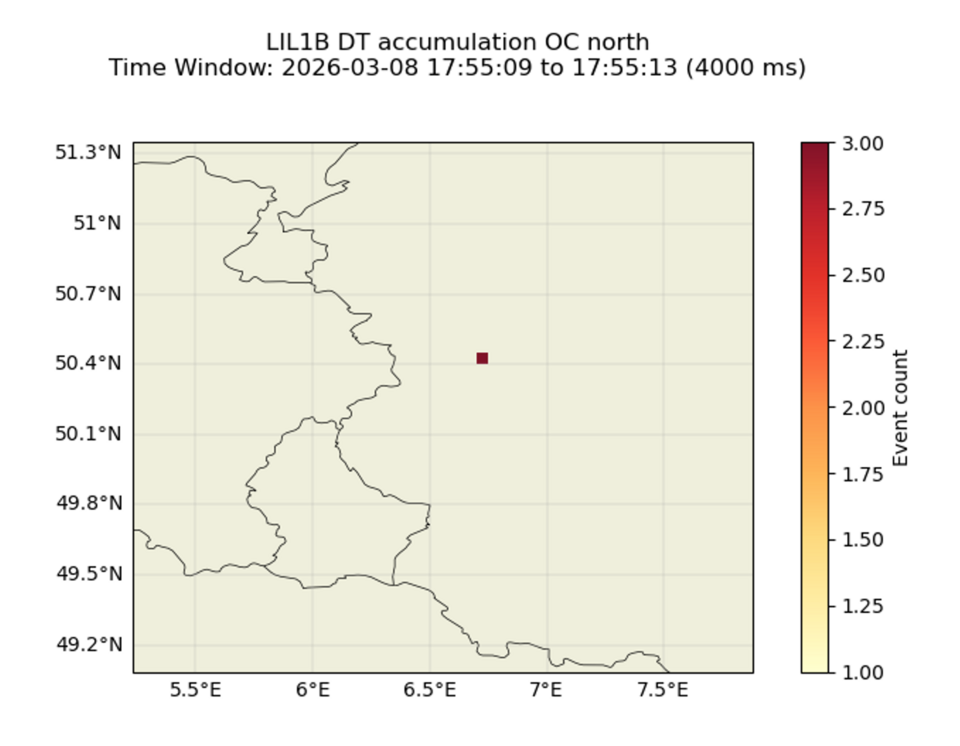
Flash detection by MTG-LI of the widely observed fireball from 8 March 2026.
On
8 March
of this year, many witnessed a bright fireball flash across the skies of central Europe.
Niels remembers that day well.
“I was travelling by train from my hometown in Belgium back to Frankfurt when I started receiving messages from friends and colleagues saying they had seen a massive fireball over Darmstadt and Frankfurt. Naturally, I was a bit disappointed to have missed it in person,” he recalls.
Yet the event was not missed entirely, for MTG-LI had been watching.
“My immediate reaction was to check whether we had detected it with LI,” Niels admits.
“To my surprise, we only saw a very faint signal — far weaker than I had expected,” he says. The event produced a very small signal in a single pixel of the instrument. “This highlighted an important point: observing fireballs from the ground in visible light and detecting them from space with a narrow‑band instrument designed for lightning are fundamentally different.”
The striking difference between the January and March fireballs highlights how much more we have yet to learn about geostationary fireball observations. “We are still uncovering the more subtle ways in which different types of fireballs appear in our data,” Niels says.


