 五度妙笔
五度妙笔 企业透视镜
企业透视镜 API商城
API商城
 数据库
数据库《海洋预报》| 虎门水道盐水运动规律及输运机制

虎门水道盐水运动规律及输运机制
全文请用PC端下载 地址:
http://www.hyyb.org.cn/Magazine/Show.aspx?ID=3718
读书小笔记
作者:袁菲1 2 杨裕桂1 林中源1 2 卢陈1 2 高时友1
单位:
1. 珠江水利委员会珠江水利科学研究院, 广东 广州 510611;
2. 水利部珠江河口治理与保护重点实验室, 广东 广州 510611
分类号:P731.2
出版年·卷·期(页码):2026·43·第二期(32-41)
摘要:选取2016年枯水期实测咸情资料,分析东江下游虎门水道盐水运动规律及输运机制。结果表明:欧拉余流输运、垂向环流输运及潮泵输运决定了虎门水道内盐水的上溯和下落。虎门以上咸淡水充分或部分混合,欧拉余流及潮泵输运是盐分输运的主要动力;半月潮的潮差增强期盐水随潮变化形成陆向的脉冲式上溯,中潮涨憩时咸界最远;半月潮的潮差减弱期盐度趋近于零。虎门以下小潮阶段咸淡水分层特征显著,垂向环流输运较强,在密度梯度力作用下,表底层流速出现反向;潮差增强期,咸淡水掺混逐步加强,表层盐度持续上升,至中潮期达到峰值;潮差减弱期,表底层混合相对均匀,盐度值减小。由于口门上下游盐分输运方向相反,盐分主要在口门以下积累;口门以上水域的盐度最大值主要由潮差增强期的平流输运决定。因此,可从减弱涨潮动力及降低下游盐度两个方面着手,抑制虎门水道及上游东江三角洲的咸潮上溯。
关键词:东江三角洲 虎门水道 咸潮上溯 输运机制 抑咸措施
Abstract:In recent years, saltwater intrusion in the Dongjiang River Delta has intensified significantly, threatening water supply security in Guangzhou, Dongguan, and other regions. It is thus imperative to conduct indepth research on the saltwater movement mechanisms from the Dongjiang Delta to the Humen Channel estuary and guide salt suppression practices. This paper analyzes the patterns and transport mechanisms of saltwater movement of the Humen Channel downstream Dongjiang River Delta during the dry season of 2016 using field salinity data. The results show that the upstream intrusion and downstream retreat of saltwater in the Humen Channel are governed by three transport mechanisms: Eulerian residual flow transport, vertical circulation transport, and tidal pumping transport. Upstream of Humen: Saltwater and freshwater are fully or partially mixed. Eulerian residual flow and tidal pumping serve as the primary drivers of salt transport. During the transition to spring tide, saltwater exhibits pulsed, landward intrusion synchronized with tidal cycles, with the saltwater front reaching its maximum upstream extent at flood slack at medium tide. During the transition to neap tide salinity approaches zero. Downstream of Humen: Significant stratification between saltwater and freshwater occurs during the neap tide. Vertical circulation transport dominates, driven by density gradients, resulting in opposing flow directions in the surface and bottom layers. As tidal range increases(transition to spring tide), mixing gradually intensifies, leading to a continuous rise in surface salinity that peaks during the medium tide period. During the transition to neap tide, vertical mixing becomes relatively uniform, and salinity decreases. Due to opposing salt transport directions upstream and downstream of the estuary mouth, salt primarily accumulates downstream of the mouth. The peak salinity levels upstream of the mouth are predominantly determined by advective transport during the spring tidal phase. Therefore, suppressing saltwater intrusion in the Humen Channel and the upstream Dongjiang Delta can be approached from two angles: reducing tidal influx momentum and lowering downstream salinity levels.
Key words:Dongjiang Delta; Humen Waterway; saltwater intrusion; transport mechanism; salinity-mitigation measures
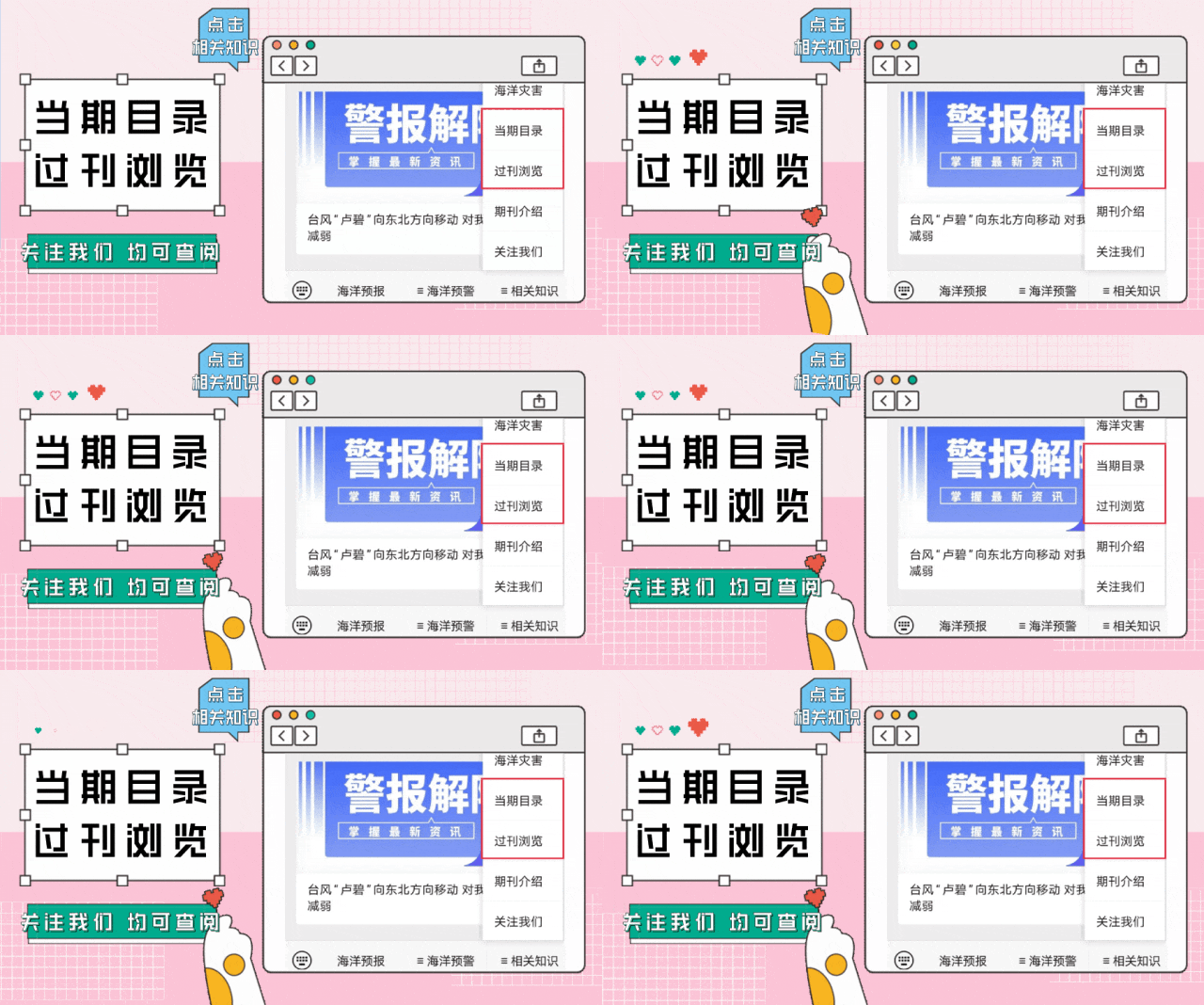
读者也可以通过公众号菜单栏
“相关知识”板块进入《当期目录》和《过刊浏览》
查阅详细期刊内容




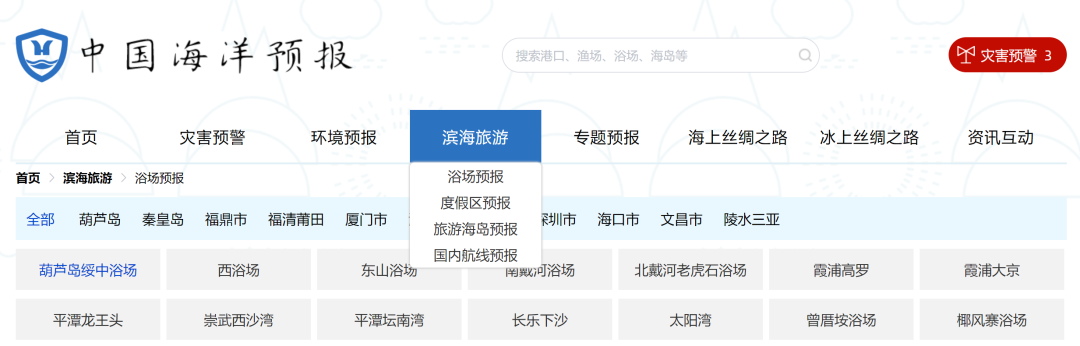
更多滨海旅游海况预报 尽在中国海洋预报


点击下方图片
进入“中国海洋预报”微信小程序

点击下方图片
进入“全球海啸预警”微信小程序

长按下方图片,识别二维码
关注“国家海洋环境预报中心”公众号