
 五度妙笔
五度妙笔 企业透视镜
企业透视镜 API商城
API商城
 数据库
数据库Handbook for safe handling of wireline equipment on deck
Handbook for safe handling of wireline equipment on deck
甲板上钢丝绳设备安全操作手册
19 May 2026 2026年5月19日
FOREWORD 前言
This handbook has been developed with the participation of interested parties in the industry.
本手册是在行业相关方的参与下制定的。
The handbook is owned by Offshore Norge.
本手册由挪威海上作业协会所有。
Offshore Norge 挪威近海
Hovedkontor Hinna Park: Fjordpiren, Laberget 22, 4020 Stavanger
总部Hinna Park:Fjordpiren,Laberget 22,4020 Stavanger
Postboks 8065, 4068 Stavanger 邮箱8065、4068斯塔万格
Telephone: + 47 51 84 65 00
电话:+ 47 51 84 65 00
Website:
Email: firmapost@offshorenorge.no
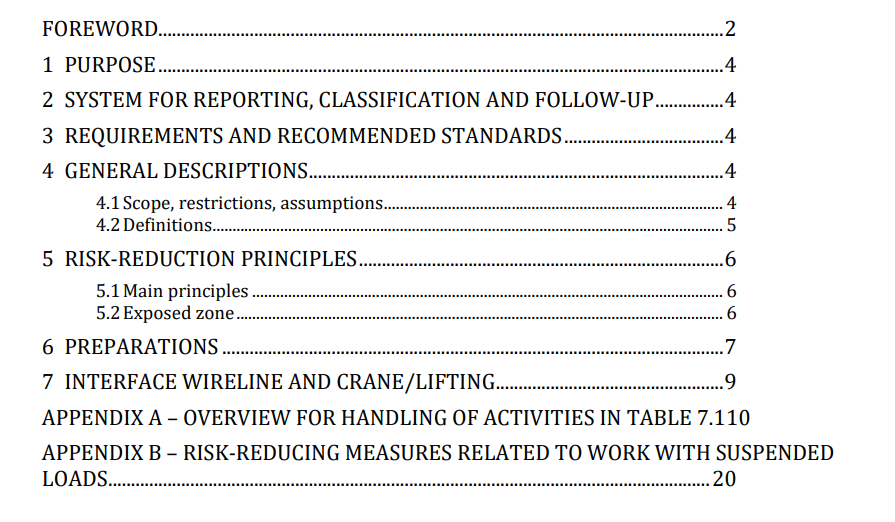
FOREWORD
1 PURPOSE
2 SYSTEM FOR REPORTING, CLASSIFICATION AND FOLLOW-UP3 REQUIREMENTS AND RECOMMENDED STANDARDS
4 GENERAL DESCRIPTIONS
4.1 Scope, restrictions, assumptions
4.2 Definitions.
5 RISK-REDUCTION PRINCIPLES
5.1 Main principles
5.2 Exposed zone..
6 PREPARATIONS
7 INTERFACE WIRELINE AND CRANE/LIFTING
APPENDIX A - OVERVIEW FOR HANDLING OF ACTIVITIES IN TABLE 7.110
APPENDIX B - RISK-REDUCING MEASURES RELATED TO WORK WITH SUSPENDED LOADS
1 PURPOSE 1 目的
This handbook describes the safe handling of equipment on the surface in connection with wireline operations.
本手册介绍了与钢丝绳作业相关的地面设备安全操作规范。
The handbook clarifies the interface between crane and lifting operations on the one hand and wireline operations on the other. The handbook provides guidance on which activities are conducted as crane and lifting operations pursuant to section 92 of the activities regulations on lifting operations, and which are defined as wireline operations. The handbook will also help to realise the intentions of section 92 of the activities regulations and to clarify use of NORSOK R-003 in connection with wireline operations.
本手册一方面明确了起重机及吊装作业与钢丝绳作业之间的界限。手册依据吊装作业活动法规第92条,规定了哪些作业属于起重机及吊装作业范畴,哪些作业被界定为钢丝绳作业。本手册还将助力落实吊装作业活动法规第92条的相关要求,并明确NORSOK R-003标准在钢丝绳作业中的应用规范。
The handbook also describes how an exposed zone can be established to reduce the risk associated with wireline operations. An overview of activities that require an exposed zone for wireline operations has been compiled and is presented as an appendix to this handbook.
本手册还介绍了如何划定暴露区域,以降低电缆作业相关的风险。手册已汇总了电缆作业需设置暴露区域的各类活动概况,并将其作为附录列于本手册末尾。
2 SYSTEM FOR REPORTING, CLASSIFICATION AND FOLLOW-UP
2 报告、分类与跟踪系统
Observations identified in a risk assessment, during work and in debriefing should be registered in a system for reporting, classification and follow-up in each company.
在风险评估中识别出的观察结果,以及在工作过程中和复盘时发现的情况,均应在每家公司的报告、分类与跟踪系统中进行登记。
Each company is responsible to ensure it has a process for experience transfer and continuous improvement.
每家公司都有责任确保自身建立经验传递与持续改进的流程。
3 REQUIREMENTS AND RECOMMENDED STANDARDS
3 要求及推荐标准
Crane and lifting operations are handled in accordance with the relevant company procedures. These procedures shall comply with section 92 of the activities regulations. NORSOK R-002 and R-003 provide guidance for activities assessed as crane and lifting operations in the drilling and well area.
起重机和起重作业按照相关的公司程序处理,这些程序应符合活动条例第92节。NORSOK R-002和R-003为在钻井和井区被评估为起重机和起重作业的活动提供指导。
A wireline winch is not defined as a lifting facility. See NORSOK R-002.
电缆绞车未被定义为起重设备。参见 NORSOK R-002。
Offshore Norge 088 recommended guidelines on a common model for work permits (WPs) should determine which types of work require a WP.
挪威近海088号关于工作许可通用模式的建议指南应明确哪些类型的工作需要办理工作许可。
Offshore Norge 090 Recommended guidelines for common model for Safe Job analysis should be used for any Safe Job Analyses (SJA).
海上挪威090推荐的安全作业分析通用模型指南应用于任何安全作业分析(SJA)。
4 GENERAL DESCRIPTIONS 4一般说明
4.1 Scope, restrictions, assumptions
4.1 范围、限制与假设
The handbook forms the basis for wireline operations related to well intervention activities on the Norwegian continental shelf (NCS). Other activities not described in this document are planned, handled and risk-assessed in accordance with applicable company procedures.
本手册构成挪威大陆架(NCS)上与修井作业相关的有线作业的基础。本文件未提及的其他作业,均按照适用的公司程序进行规划、执行和风险评估。
Operations regarded as loading, lifting and other material handling are conducted in accordance with NORSOK R-002 and R-003. Wireline operations defined as loading and lifting are described in table 7.1 in this handbook.
被视为装载、吊装及其他物料搬运的作业均按照 NORSOK R-002 和 R-003 标准执行。被定义为装载和吊装的钢丝绳作业在本手册的表 7.1 中有详细说明。
The use and handling of specially designed lifting appliances (SDLAs) are described in NORSOK R-002 and are not covered in this handbook.
NORSOK R-002 标准中规定了专用起重设备(SDLAs)的使用与操作规范,本手册不涉及相关内容。
4.2 Definitions 4.2定义
Well centre 井中心
The well centre is the inside/interior of production tubing, casing and/or risers. See NORSOK R-003 3.1.24. Comment on terms 1: Raising and lowering of loads within production tubing, casing and risers is defined as a drilling and well operation.
井口中心指生产油管、套管和/或隔水管的内部。参见 NORSOK R-003 3.1.24。术语注释1:在生产油管、套管和隔水管内起下载荷的作业被定义为钻井和井口作业。
Exposed zone 暴露区
Is an area where personnel can be exposed to dropped objects, equipment being moved in connection with wireline operations, and rigging of equipment which involves work with suspended loads. An exposed zone is regarded as a high-risk work area.
这是一个人员可能会受到落物、钢丝绳作业相关移动物体以及涉及悬吊载荷设备吊装作业影响的区域。暴露区域被视为高风险作业区域。
Double physical barrier, technical barrier
双重物理屏障、技术屏障
Chapter 5.4.8 of NORSOK R-003 forms the basis where a double physical barrier for external components connected to a lifting appliance is required. Criteria for technical barriers related to the force that can be applied to the cable head before this fails should be established and clarified with the cable head supplier.
NORSOK R-003 标准的第 5.4.8 章规定,与起重设备相连的外部部件需设置双重物理屏障。应与电缆接头供应商共同确定并明确与技术屏障相关的判定标准,该标准需明确电缆接头在失效前可承受的作用力。
Dynamic load 动载荷
Load dependent on the lifting appliance/wireline winch or similar appliance that is in motion.
负载取决于起重设备/电缆绞车或正在运动的类似设备。
Lifting of wireline tools in the well centre
在井眼中心起升钢丝绳工具
Raising and lowering of loads within production tubing, casing or risers are defined as drilling and well operations.
提升和降低生产油管、套管或立管内的载荷被定义为钻井和油井作业。
Lifting of wireline tools outside the well centre
井眼中心外钢丝绳工具的起升
Lifting outside the well centre is regarded as operations where the toolstring or components are not treated as well/intervention equipment (lubricator, riser or BOP). These operations are specially treated based on need and accepted risk assessment. That applies where part of the equipment is not approved for lifting. NORSOK R-003 is used as a guideline for conducting such operations where the wireline tool is attached to the cable head and the latter is used to raise/lower the toolstring outside the well centre. See appendix A.
在井口中心外进行起吊作业,指的是工具管柱或相关部件不被视为井口/干预设备(防喷器、隔水管或防喷器)的作业。此类作业需根据实际需求和经认可的风险评估进行特殊处理。若部分设备未获批用于起吊,则适用本规定。当钢丝绳测井工具连接至电缆头,且通过该电缆头在井口中心外起下工具管柱时,以NORSOK R-003作为开展此类作业的指导准则。详见附录A。
Static/suspended load 静载荷/悬垂载荷
Load suspended in a lifting appliance/wireline winch or similar that is not in motion or secured.
悬挂在未处于运动或固定状态的起重设备/钢丝绳绞车或类似设备上的载荷。
Critical lift 关键吊装作业
Critical lifting operations are defined pursuant to chapter 3.1.19 of NORSOK R-003. Lifting operations that can lead to major consequences in the event of failure.
关键吊装作业依据 NORSOK R-003 标准第 3.1.19 章进行定义。指一旦发生故障可能引发严重后果的吊装作业。
5 RISK-REDUCTION PRINCIPLES 5 降低风险原则
5.1 Main principles 5.1 主要原则
The following principles for safe handling form the basis for activities related to working with a suspended load.
以下安全操作原则是处理吊载相关作业的基础。
If possible, avoid manual handling in the exposed zone – assess an alternative method.
如可能,应避免在暴露区域内进行人工搬运——需评估替代方法。
Choose work position in relation to possible unintended movement of the load or changed direction of drop.
根据货物可能的意外移动或下落方向变化选择工作位置
Reduce the time spent by personnel in the exposed zone.
减少人员在危险区域内的停留时间。
Reduce the number of personnel in the exposed zone.
减少暴露区域内的人员数量。
The load shall be static (at rest) before personnel enter the exposed zone and manual guiding/handling can begin.
人员进入暴露区域并开始手动引导/搬运前,负载应保持静止状态。
Where possible, equipment or loads related to wireline operations are provided with a double physical barrier when personnel could be exposed to dropped objects when handling and/or lifting equipment on the surface.
在地面上进行有线作业相关设备的搬运和/或吊装时,若人员可能面临坠物风险,应尽可能为相关设备或载荷设置双重物理屏障。
5.2 Exposed zone 5.2暴露区
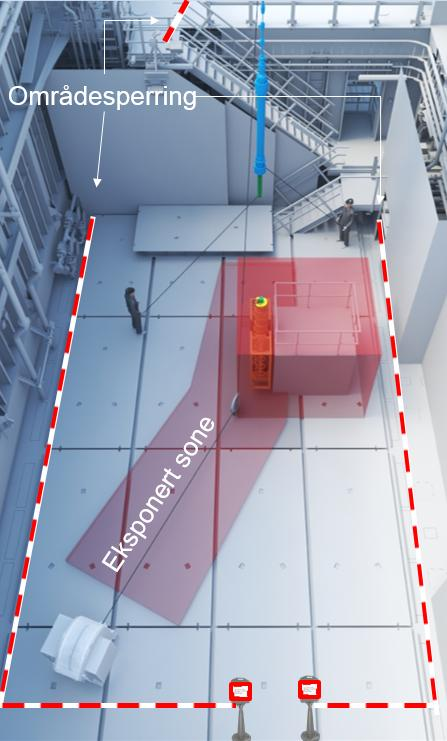
The exposure time when personnel are close to the load should be minimised. No personnel should be beneath a suspended load when it is in motion. The exposed zone can be established as illustrated below. All personnel shall keep their distance from the toolstring when it is in motion.
当人员接近负载时,暴露时间应最小化。当悬吊负载运动时,任何人都不应在其下方。暴露区域可以如下所示建立。当工具串运动时,所有人员都应与工具串保持距离。
Focus on continuous assessment during the operation and risk reviews such as toolbox talks before the work starts.
作业期间注重持续评估,并在作业开始前开展班前会等风险审查工作。
Recommendations: 建议:
the exposed zone is reviewed during the toolbox talk
在工具箱谈话期间审查暴露区域
an overview of the exposed zone should be available at the work site
作业现场应备有暴露区域的示意图
assess the use of diagrams during the planning phase for the operation
在运营规划阶段评估图表的使用
assess the use of diagrams or images when the exposed zone is cordoned off
当暴露区域被封锁时,评估图表或图像的使用
only one point of entry to the exposed zone
暴露区域只有一个入口
a dedicated function shall be nominated to control access to the exposed zone, provide an overview and check entry to/exit from the zone
应指定一个专门的功能来控制对暴露区域的访问,提供概览并检查进出区域
signs/cordons shall be marked 应张贴警示标识/设置隔离带
Have a continual focus on associated risks when work is ongoing.
当工作进行时,持续关注相关风险。
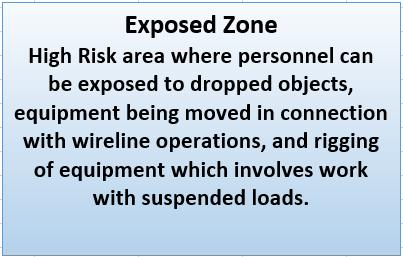
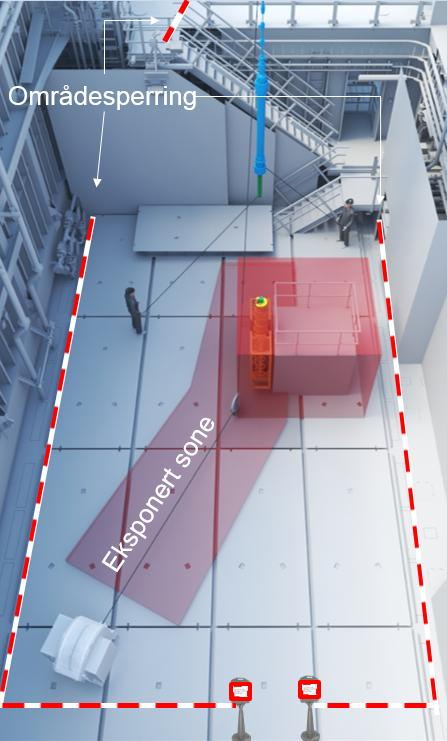
(Exposed Zone – High Risk area where personnel can be exposed to dropped objects, equipment being moved in connection with wireline operations, and rigging of equipment which involves work with suspended loads.)
暴露区——高风险区域,人员在此区域可能面临落物风险,还可能接触到钢丝绳作业相关的移动设备,以及涉及吊装作业的设备吊装操作。
Key: Area cordon · Exposed zone 关键:区域警戒线·暴露区
6 PREPARATIONS 6 准备工作
Planning, lifting and toolbox talk 规划、吊装与班前安全交底
A documented work routine or procedure should be available for the activity and communicated to the personnel involved before the job starts. A lifting plan should be established so that the operation is known to everyone involved and is included in the toolbox talk before the activity begins.
针对该项作业,应备有书面化的工作流程或规程,并在作业开始前传达给相关人员。需制定吊装方案,确保所有参与人员都了解作业流程,且该方案需在作业开始前纳入班前工具安全交底内容。
Risk assessment and safe job analysis (SJA)
风险评估与安全作业分析(SJA)
The risk involved in executing the activities is assessed and checked to ensure an acceptable level of safety both for each activity and for the overall work.
对执行活动所涉及的风险进行评估和检查,以确保每项活动和整个工作都达到可接受的安全水平。
Potential undesirable incidents and risk are identified and dealt with in the planning phase through an operational risk analysis. The need for an SJA or similar risk assessment should be assessed in the execution phase.
在规划阶段,通过运营风险分析识别并处理潜在的不良事件与风险。应在执行阶段评估开展安全工作分析(SJA)或类似风险评估的必要性。
Possible manual work in the exposed zone is governed by appendix B on risk-reducing measures related to work on a suspended load.
暴露区域内可能进行的人工作业,需遵循附录 B 中关于悬吊载荷作业的风险降低措施相关规定。
Rigging up wireline equipment 钢丝绳设备的安装
The rigging-up should be planned in a way that minimises exposure to suspended loads. The way the rig up is set up will influenced by:
吊装准备的规划方式应将悬垂载荷的暴露风险降至最低。吊装准备的设置方式将受以下因素影响:
joints on the lubricator and toolstring
防喷器和工具串接头
escape routes, including escape from scaffolding
疏散路线,包括从脚手架处的疏散通道
placement of equipment and containers in such a way that personnel should not need to enter the exposed zone unnecessarily
设备和集装箱的摆放方式应确保人员无需不必要地进入暴露区域
placement of the control panel for wireline mast/crane
电缆桅杆/起重机控制面板的放置
map and obtain an overview of well equipment
绘制并获得油井设备概览
the weight of the toolstring is adjusted in the relation to the strength of the cable head during rigging
在装配过程中,根据缆绳头的强度调整钻具组合的重量
good order, tidiness and cleanliness in the pick-up and lay-down areas for toolstring and lubricator
工具管柱和润滑器的起下作业区域保持良好秩序、整洁干净
Securing equipment and load, prevention of dropped objects
固定设备与载荷,防止坠物
Before work starts, an inspection should be conducted to prevent dropped objects in the immediate vicinity at levels both above and below. Area checks are carried out at regular intervals. Approved safety equipment should be used for equipment and people when working at a height.
开工前应进行检查,以防止上下楼层附近区域发生物体坠落。需定期开展区域巡查。高空作业时,设备和人员应使用经批准的安全装备。
7 INTERFACE WIRELINE AND CRANE/LIFTING
7接口电线和起重机/起重
Table 7.1 contains an overview of activities that are defined as wireline operations and which are conducted pursuant to NORSOK R-003 as crane and lifting operations.
表7.1概述了被定义为有线作业且依据NORSOK R-003标准作为起重机和吊装作业开展的各项活动。
The table specifies which activities could expose personnel to suspended loads in connection with wireline operations. Appendix A describes which conditions and compensatory measures are recommended for these activities in order to ensure an acceptable level of risk.
该表格明确了哪些作业可能导致人员在有线作业过程中接触悬垂载荷。附录A说明了针对这些作业建议采取哪些条件和补偿措施,以确保风险处于可接受水平。
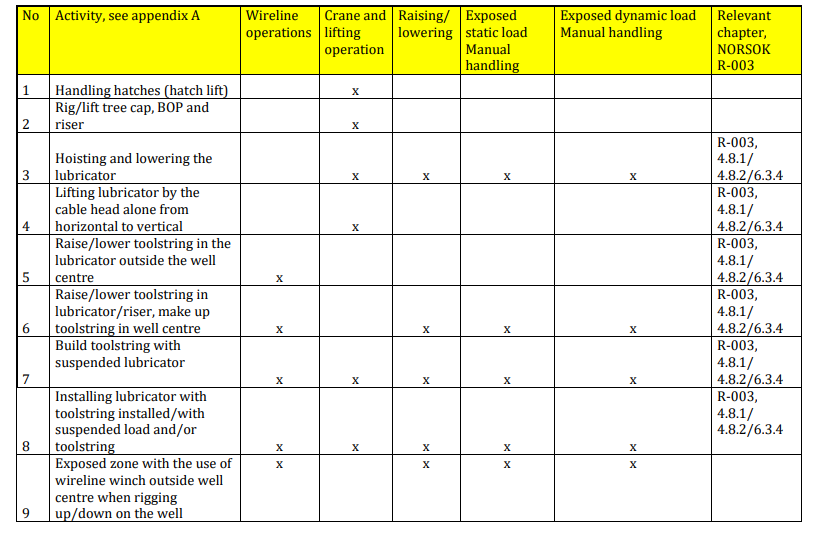
Table 7.1: Overview of relevant wireline operations covered in this handbook. (The original 8-column landscape table is presented here as one card per activity for mobile reading – no data has been changed.)
表7.1:本手册涵盖的相关有线作业概述。(原8列横向表格此处按每项活动一张卡片呈现,便于移动设备阅读——未更改任何数据。)
No
1 · Handling hatches (hatch lift)
1号·舱口操作(舱口起吊)
Classification: Crane and lifting operation ✓
分类:起重机和吊装作业✓
Raising/lowering: – 起升/下降:–
Exposed static load, manual handling: –
暴露静载,人工搬运:–
Exposed dynamic load, manual handling: –
暴露的动态载荷,人工搬运:–
Relevant chapter NORSOK R-003: – 相关章节 NORSOK R-003:–
No 2 · Rig/lift tree cap, BOP and riser
No 2·钻机/提升树帽、防喷器和立管
Classification: Crane and lifting operation ✓
分类:起重机和起重作业✓
Raising/lowering: – 起升/下降:–
Exposed static load, manual handling: –
外露静载荷,手动搬运:-
Exposed dynamic load, manual handling: –
暴露的动态载荷,人工操作:–
Relevant chapter NORSOK R-003: – 相关章节NORSOK R-003:-
No 3 · Hoisting and lowering the lubricator
第3项 · 提升器的起吊与下放
Classification: Crane and lifting operation ✓
分类:起重机及吊装作业✓
Raising/lowering: ✓ 起吊/下放:✓
Exposed static load, manual handling: ✓
暴露的静态载荷,人工操作:✓
Exposed dynamic load, manual handling: ✓
暴露的动态载荷,人工操作:✓
Relevant chapter NORSOK R-003: 4.8.1 / 4.8.2 / 6.3.4
相关章节 NORSOK R-003:4.8.1 / 4.8.2 / 6.3.4
No 4 · Lifting lubricator by the cable head alone from horizontal to vertical
第4项 · 仅通过电缆头将润滑器从水平状态吊装至垂直状态
Classification: Crane and lifting operation ✓
分类:起重机及吊装作业✓
Raising/lowering: – 起下:–
Exposed static load, manual handling: –
暴露的静态载荷,人工搬运:–
Exposed dynamic load, manual handling: –
暴露的动态载荷,人工操作:–
Relevant chapter NORSOK R-003: 4.8.1 / 4.8.2 / 6.3.4
相关章节 NORSOK R-003:4.8.1 / 4.8.2 / 6.3.4
No 5 · Raise/lower toolstring in the lubricator outside the well centre
No 5·在井中心外的润滑器中提升/降低工具串
Classification: Wireline operation ✓
分类:钢丝绳作业✓
Raising/lowering: – 起下:–
Exposed static load, manual handling: –
暴露的静态载荷,人工操作:–
Exposed dynamic load, manual handling: –
暴露的动态载荷,人工操作:–
Relevant chapter NORSOK R-003: 4.8.1 / 4.8.2 / 6.3.4
相关章节 NORSOK R-003:4.8.1 / 4.8.2 / 6.3.4
No 6 · Raise/lower toolstring in lubricator/riser, make up toolstring in well centre
6号 · 在防喷器/隔水管中起下钻具组合,在井场中心组装钻具组合
Classification: Wireline operation ✓
分类:钢丝绳作业✓
Raising/lowering: ✓ 起下:✓
Exposed static load, manual handling: ✓
暴露的静态载荷,人工操作:✓
Exposed dynamic load, manual handling: ✓
暴露的动态载荷,人工操作:✓
Relevant chapter NORSOK R-003: 4.8.1 / 4.8.2 / 6.3.4
相关章节 NORSOK R-003:4.8.1 / 4.8.2 / 6.3.4
No 7 · Build toolstring with suspended lubricator
7号·带悬挂润滑器组装工具串
Classification: Wireline operation ✓ Crane and lifting operation ✓
分类:钢丝绳作业✓ 起重机与吊装作业 ✓
Raising/lowering: ✓ 起下:✓
Exposed static load, manual handling: ✓
暴露的静载荷,人工操作:✓
Exposed dynamic load, manual handling: ✓
外露动载荷,人工搬运:✓
Relevant chapter NORSOK R-003: 4.8.1 / 4.8.2 / 6.3.4
相关章节 NORSOK R-003:4.8.1 / 4.8.2 / 6.3.4
No 8 · Installing lubricator with toolstring installed/with suspended load and/or toolstring
8号·在已安装工具串/承受悬载和/或工具串的情况下安装防喷器
Classification: Wireline operation ✓ Crane and lifting operation ✓
分类:钢丝绳作业✓ 起重机与吊装作业 ✓
Raising/lowering: ✓ 起吊/下放:✓
Exposed static load, manual handling: ✓
暴露的静态载荷,人工操作:✓
Exposed dynamic load, manual handling: ✓
外露动载荷,人工搬运:✓
Relevant chapter NORSOK R-003: 4.8.1 / 4.8.2 / 6.3.4
相关章节 NORSOK R-003:4.8.1 / 4.8.2 / 6.3.4
No 9 · Exposed zone with the use of wireline winch outside well centre when rigging up/down on the well
9号·在井上上下索具时,使用井心外的钢丝绳绞车暴露区域
Classification: Wireline operation ✓
分类:钢丝绳作业✓
Raising/lowering: ✓ 起吊/下放:✓
Exposed static load, manual handling: ✓
暴露的静态载荷,人工操作:✓
Exposed dynamic load, manual handling: ✓
外露动载荷,人工搬运:✓
Relevant chapter NORSOK R-003: – 相关章节NORSOK R-003:-
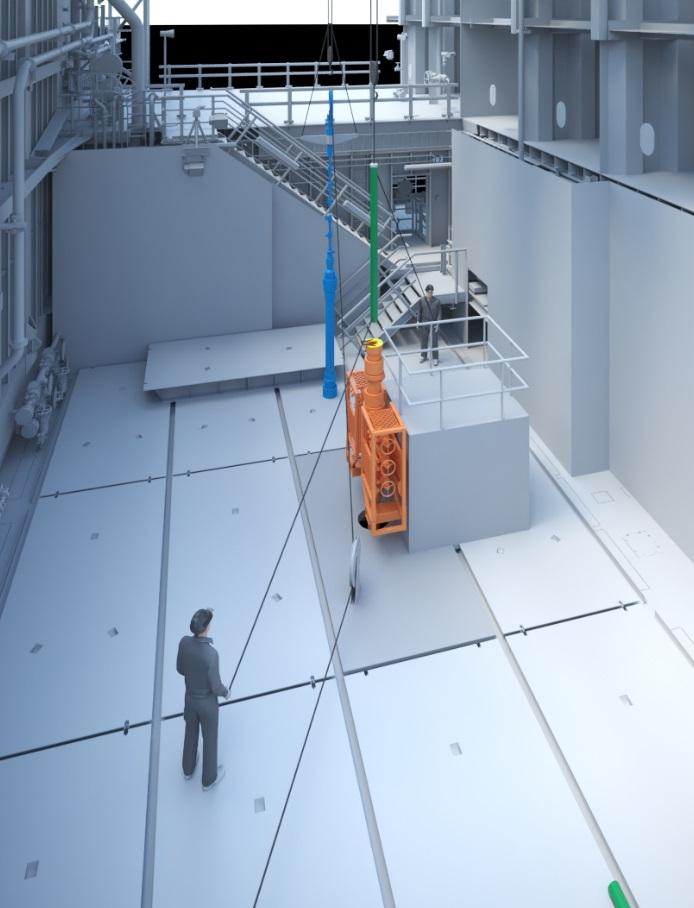
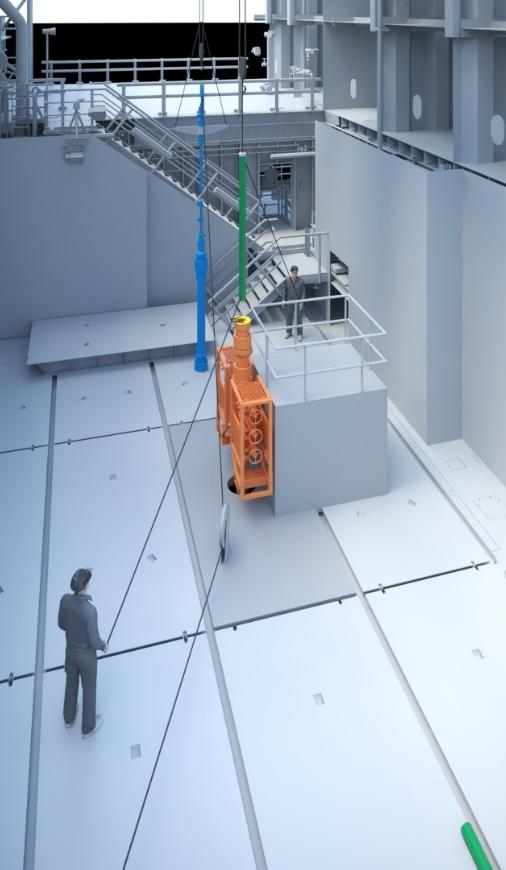
All O-rings should be verified on deck before connection on the well. If O-rings need replacing in the vertical position, a risk assessment should be conducted and the O-ring replaced when the load is static.
所有O型圈在井场连接前都应在甲板上进行检查。若需在垂直位置更换O型圈,需进行风险评估,并在负载处于静止状态时更换O型圈。
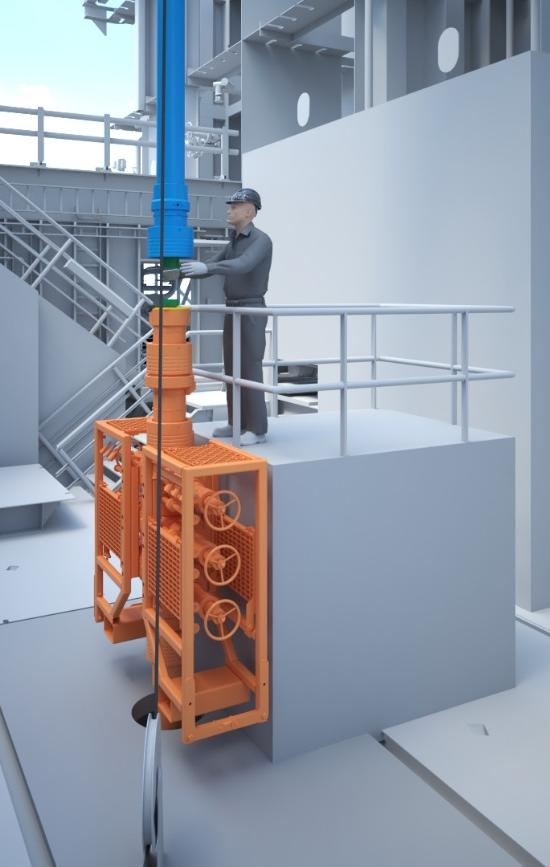
Lubricator/riser is lowered to below shoulder height, and a work window is chosen to reduce the threat of crush injuries.
防喷器/隔水管被下放至防喷器/隔水管接头以下,同时选择作业窗口以降低挤压伤害风险。
Securing the lubricator should be assessed.
应评估润滑器的固定情况。
Choose work position/placement in relation to unintended movement of the load.
根据负载的意外移动情况选择作业位置/布置位置
APPENDIX A – OVERVIEW FOR HANDLING OF ACTIVITIES IN TABLE 7.1
附录A——表7.1中活动操作概述
Appendix A provides an overview for handling the activities defined in table 7.1. The description will provide guidance on the recommended way to carry out the activity and possible measures that should be implemented to ensure that the activity could be performed with an acceptable level of risk.
附录A概述了处理表7.1中定义的各项活动的方法。该说明将提供开展活动的推荐方式,以及为确保活动能在可接受的风险水平下进行而应采取的相关措施。
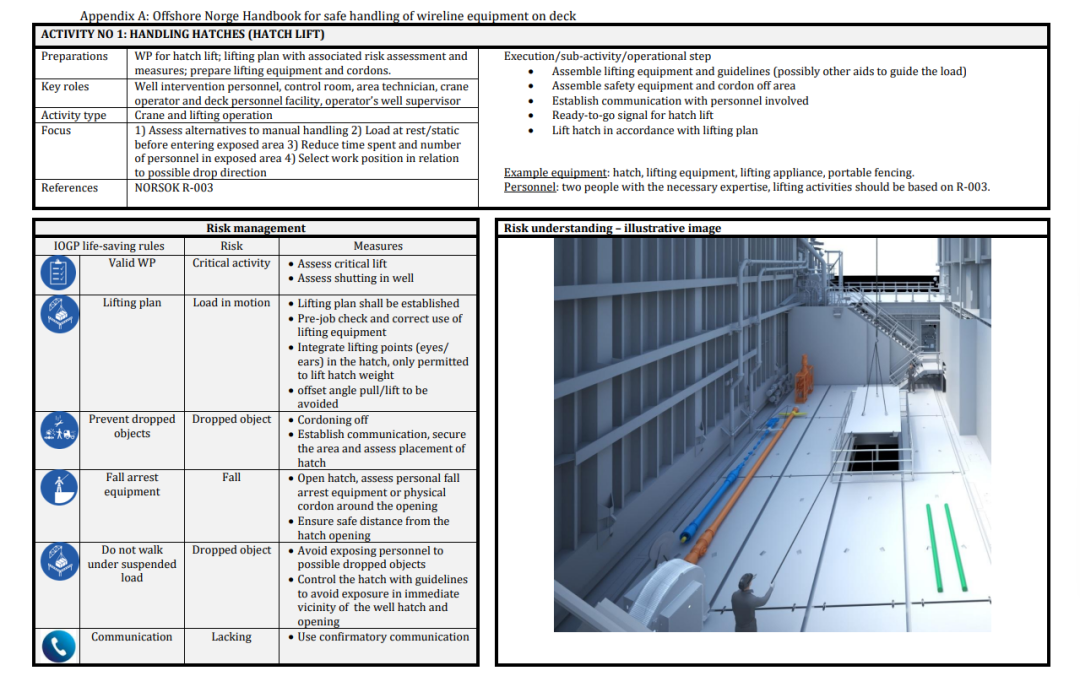
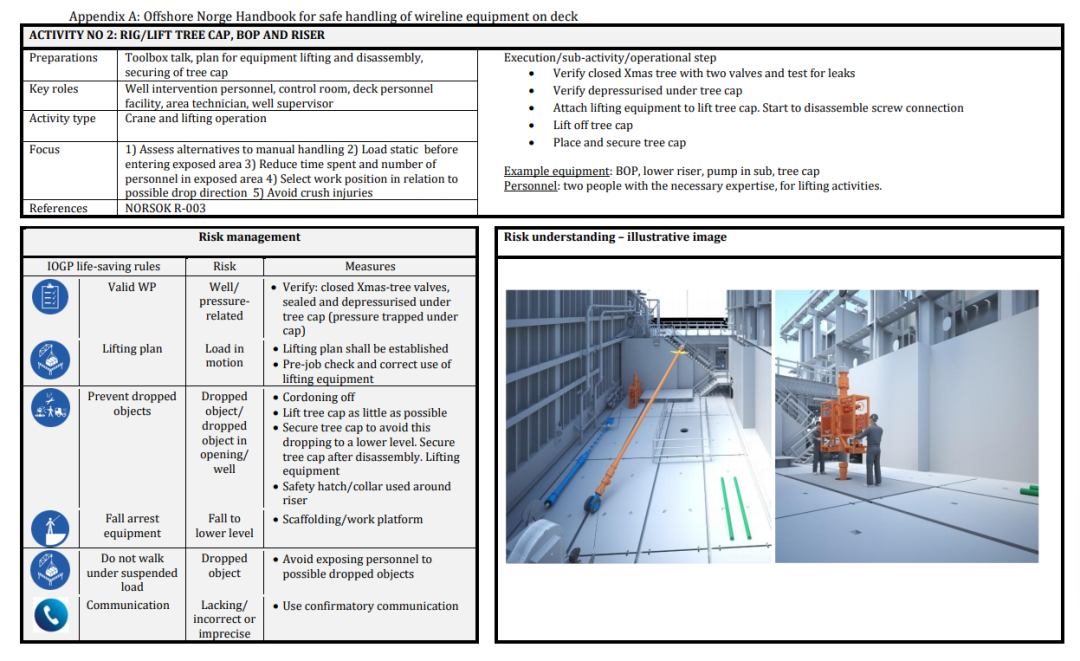
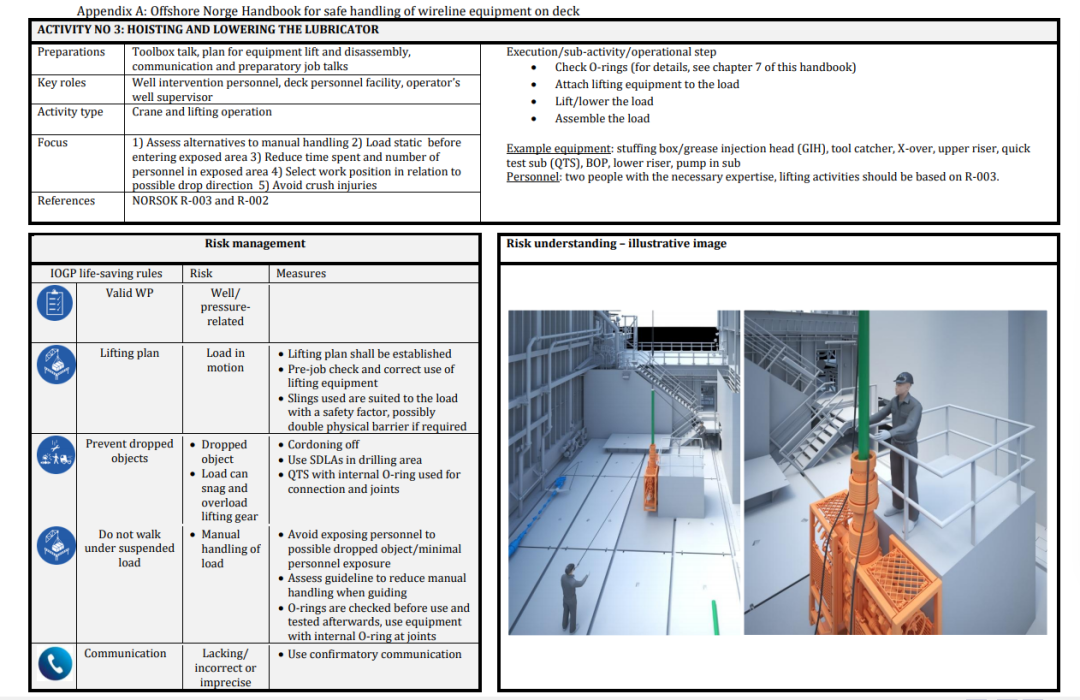
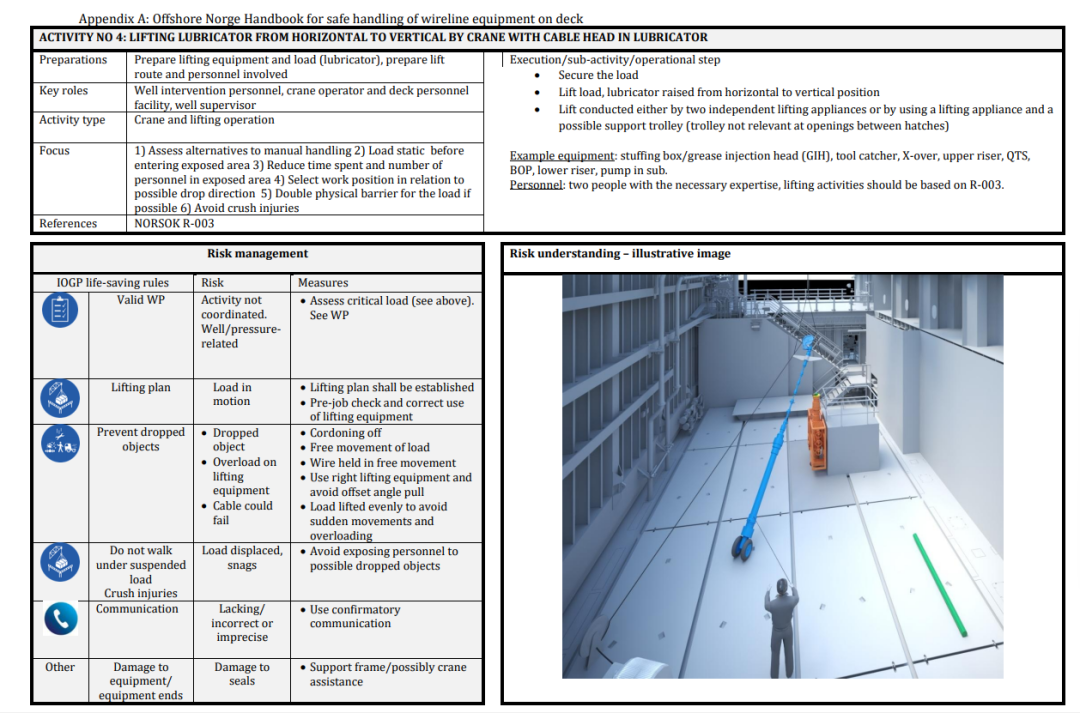
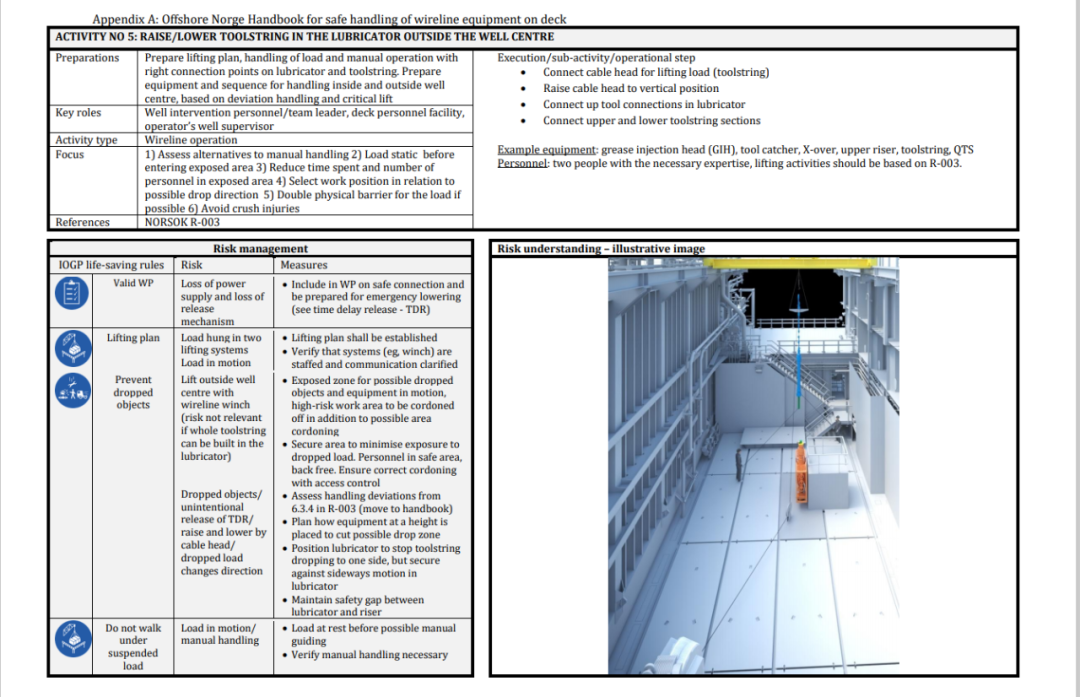
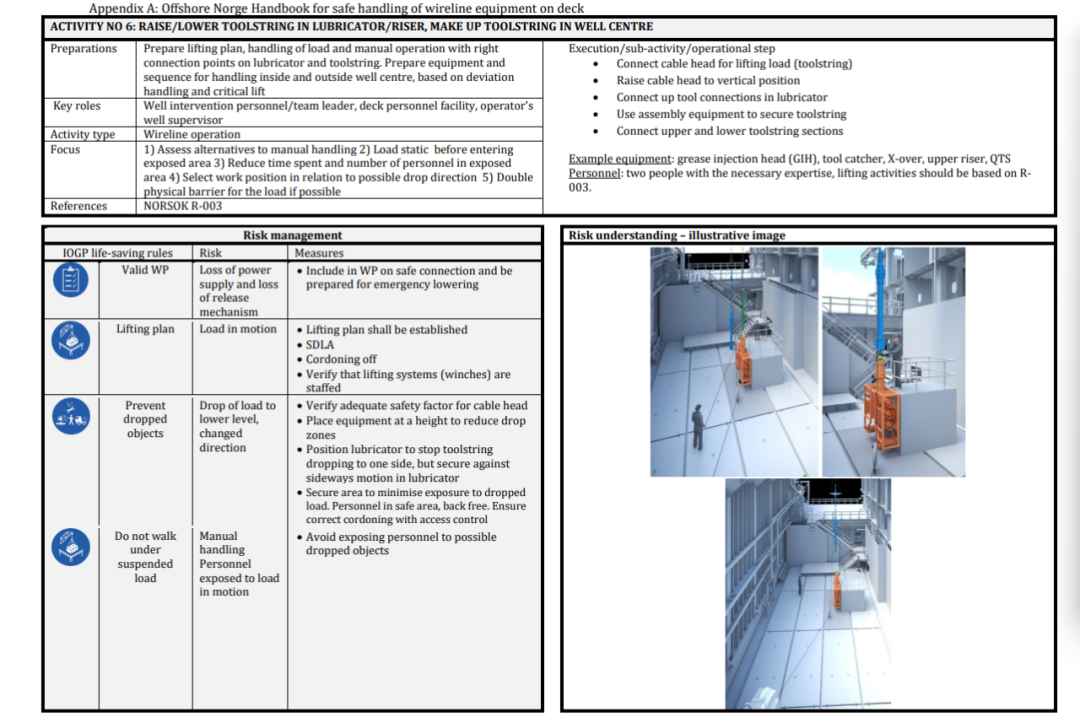
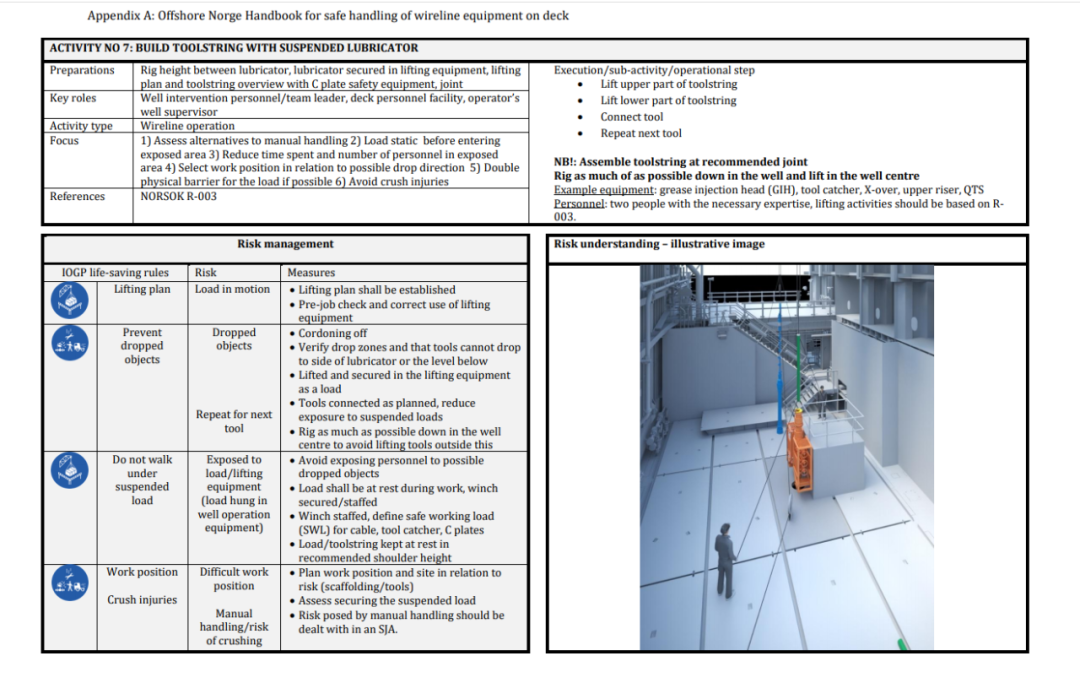
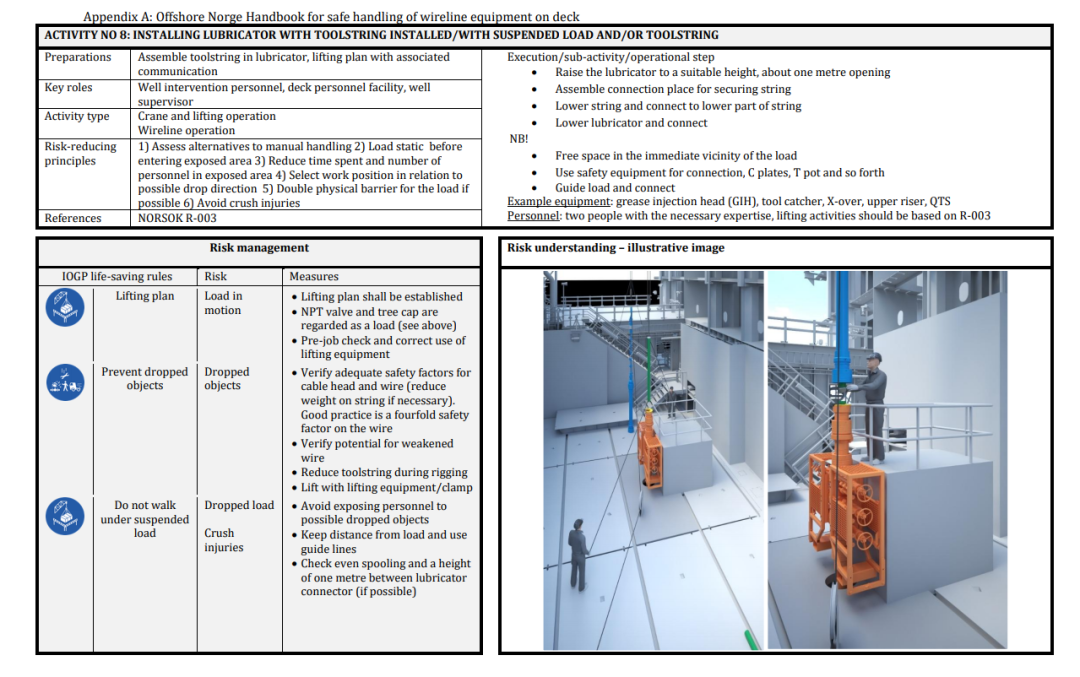
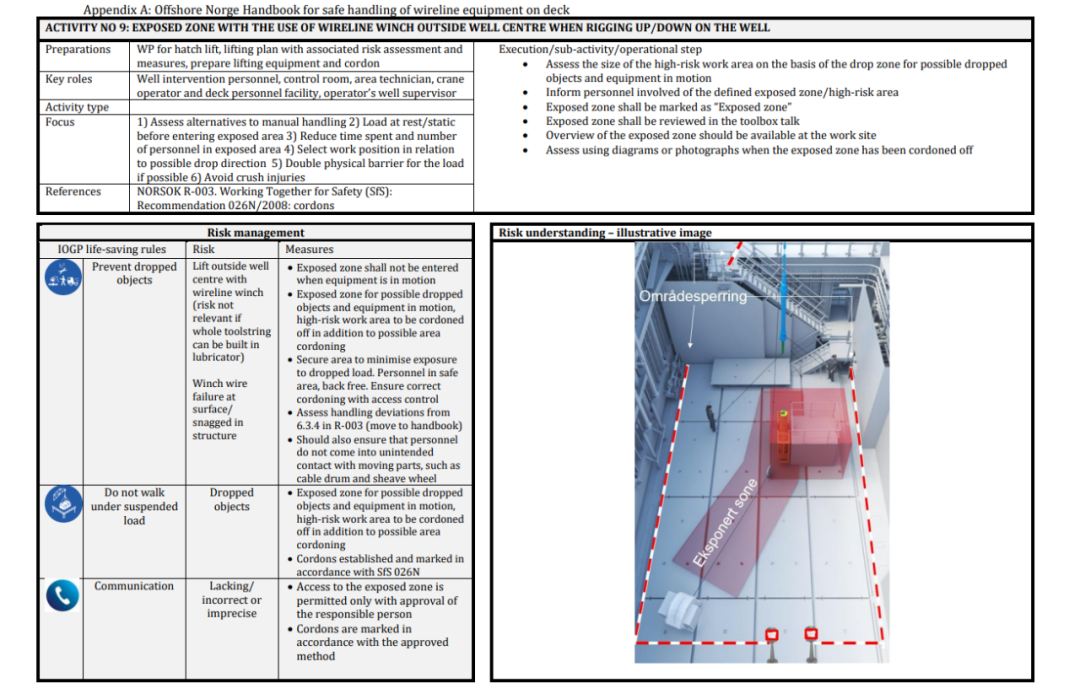
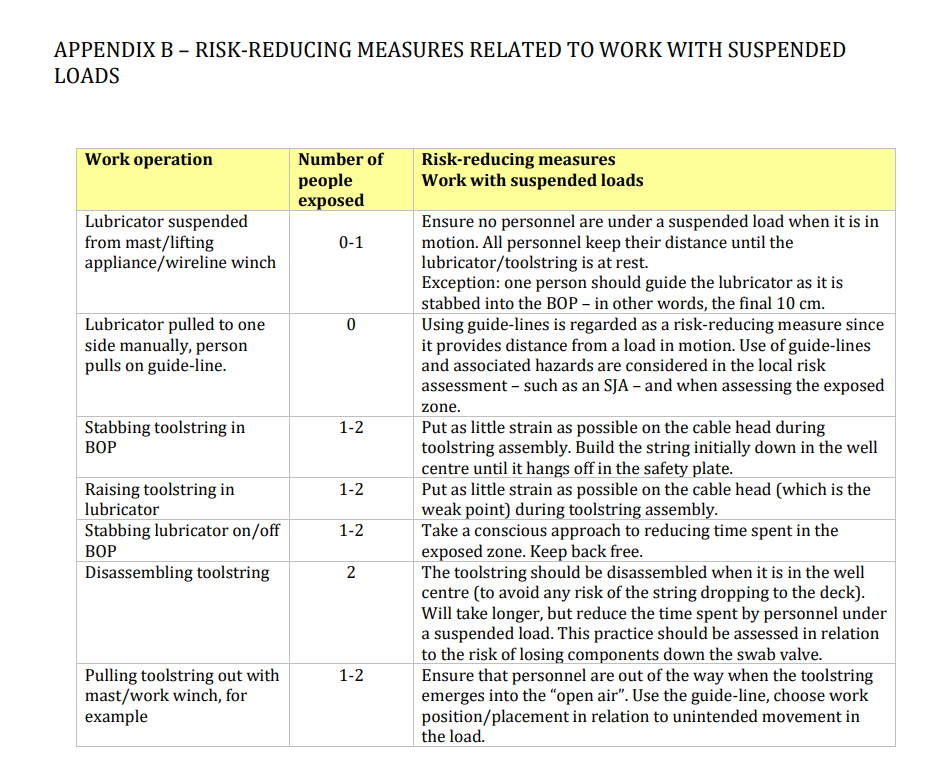
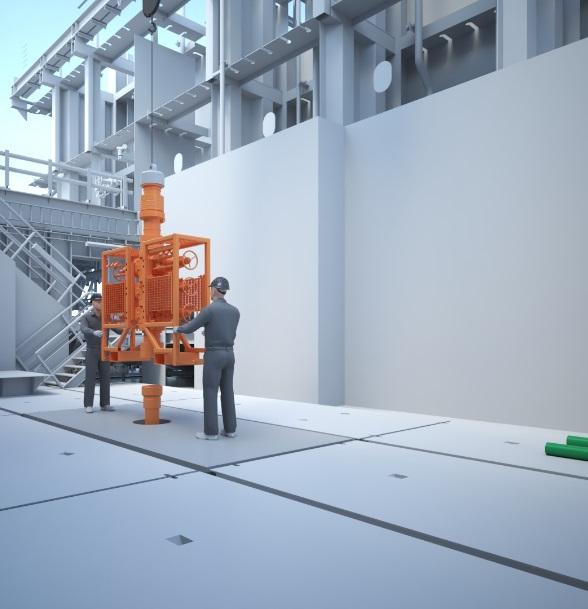
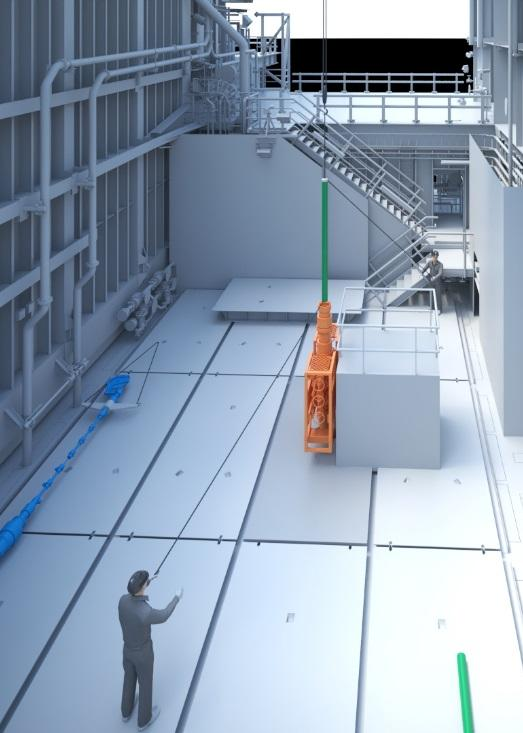
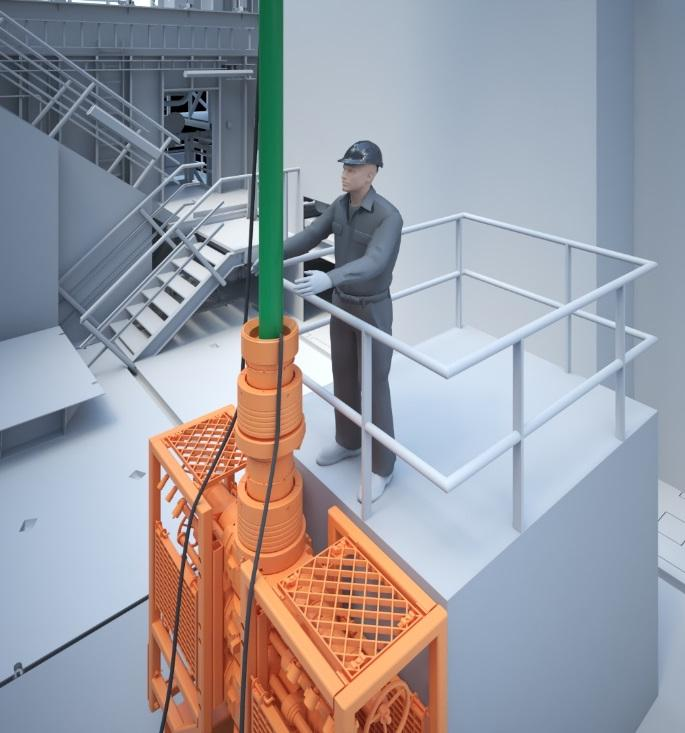
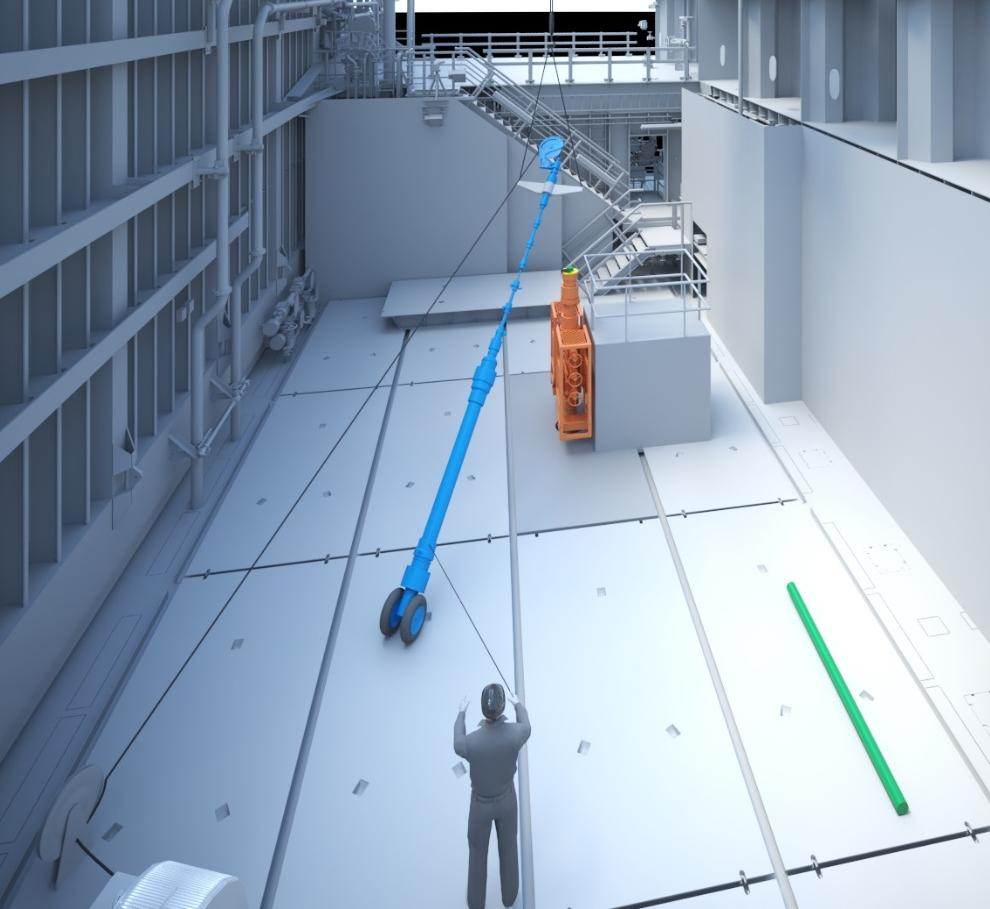
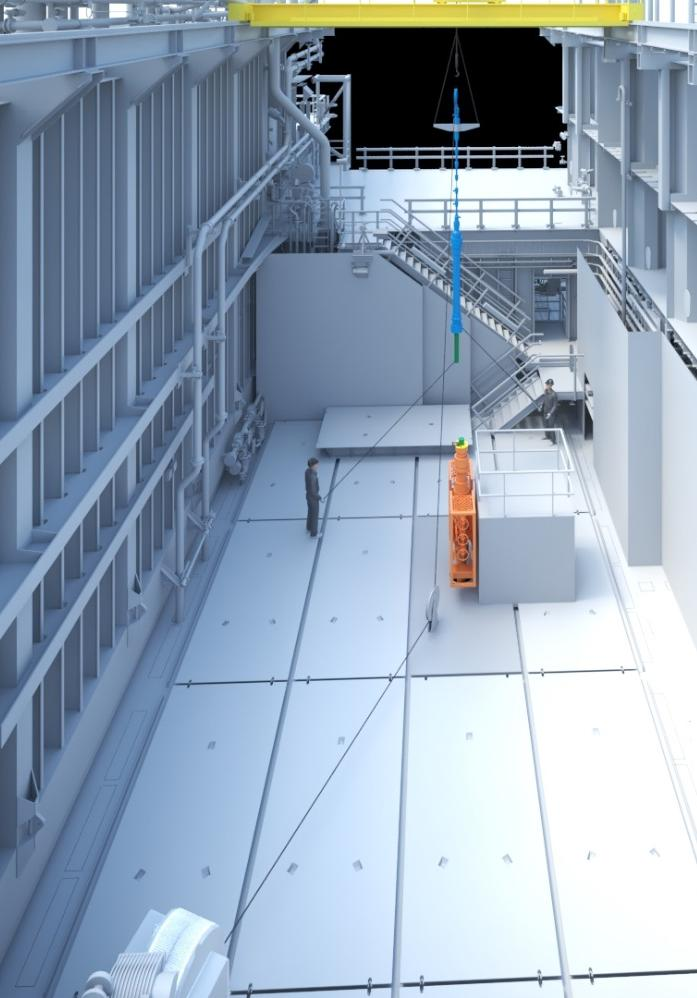
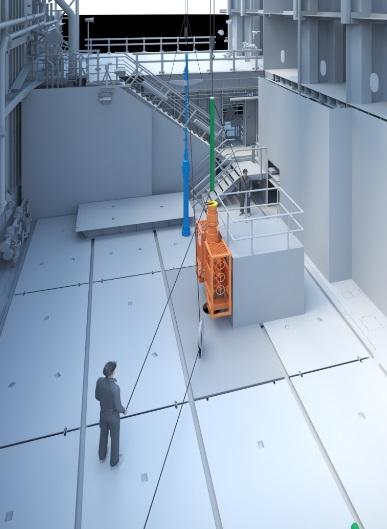
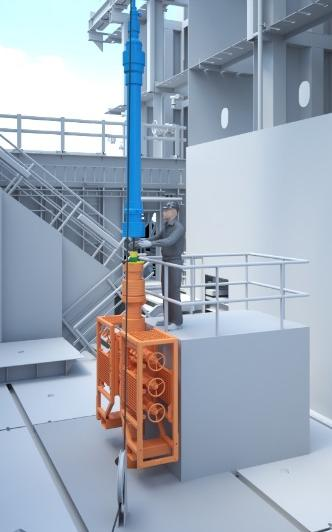
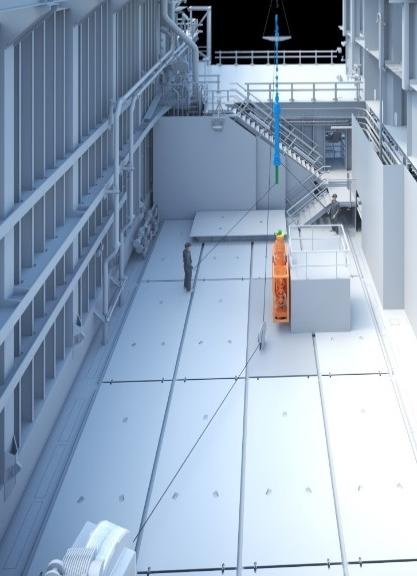
Each activity in the original is laid out as a two-column sheet plus a three-column risk table; below it is re-set as stacked blocks for mobile. The “Risk understanding – illustrative image” photos of the original are not reproduced here and can be inserted from the PDF if required.
原文中的每项活动均以两栏表格加三栏风险表的形式呈现;下文已为移动端重新调整为堆叠模块。原文的“风险理解——示例图片”照片未在此处重现,如有需要可从PDF文件中插入。
ACTIVITY NO 1: HANDLING HATCHES (HATCH LIFT)
活动编号1:舱口处理(舱口起吊)
Preparations 准备工作
WP for hatch lift; lifting plan with associated risk assessment and measures; prepare lifting equipment and cordons.
舱口升降机的工作许可;含相关风险评估及措施的吊装方案;准备吊装设备与警戒线。
Key roles 关键职责
Well intervention personnel, control room, area technician, crane operator and deck personnel facility, operator’s well supervisor
井场干预人员、控制室人员、区域技术员、起重机操作员以及甲板人员设施、操作员井场主管
Activity type 作业类型
Crane and lifting operation 起重机和起重作业
Focus 重点
1) Assess alternatives to manual handling 2) Load at rest/static before entering exposed area 3) Reduce time spent and number of personnel in exposed area 4) Select work position in relation to possible drop direction
1) 评估人工搬运的替代方案 2) 进入暴露区域前进行静止/静态装载 3) 减少人员在暴露区域的停留时间和人数 4) 根据可能的坠落方向选择作业位置
References 参考资料
NORSOK R-003
Execution / sub-activity / operational step
执行 / 子活动 / 操作步骤
Assemble lifting equipment and guidelines (possibly other aids to guide the load)
组装起重设备并制定操作指引(可配备其他辅助装置以引导吊物)
Assemble safety equipment and cordon off area
组装安全设备并划定区域
Establish communication with personnel involved
与相关人员建立沟通
Ready-to-go signal for hatch lift 舱口提升就绪信号
Lift hatch in accordance with lifting plan
按照吊装方案吊装舱口盖
Example equipment 示例设备
hatch, lifting equipment, lifting appliance, portable fencing.
舱口、起重设备、起重机、便携式围栏
Personnel 人员
two people with the necessary expertise, lifting activities should be based on R-003.
两人具备必要的专业知识,起重活动应以R-003为基础。
Risk management 风险管理
IOGP life-saving rule: Valid WP 国际海洋生产者协会救生规则:有效的工作许可
Risk: Critical activity 风险:关键作业
Assess critical lift 评估临界升力
Assess shutting in well 评估关井作业
IOGP life-saving rule: Lifting plan
IOGP 救生规则:吊装方案
Risk: Load in motion 风险:运动中的载荷
Lifting plan shall be established 应制定吊装方案
Pre-job check and correct use of lifting equipment
作业前检查并正确使用起重设备
Integrate lifting points (eyes/ears) in the hatch, only permitted to lift hatch weight
在舱口处整合吊点(吊耳/吊环),仅允许起吊舱口自重
offset angle pull/lift to be avoided
应避免斜向牵拉/起吊
IOGP life-saving rule: Prevent dropped objects
国际油气生产商协会救生规则:防止坠物
Risk: Dropped object 风险:坠物风险
Cordoning off 划定警戒区域
Establish communication, secure the area and assess placement of hatch
建立沟通,封锁区域并评估舱口的位置
IOGP life-saving rule: Fall arrest equipment
国际海洋石油公会救生规则:防坠落装备
Risk: Fall 风险:坠落
Open hatch, assess personal fall arrest equipment or physical cordon around the opening
打开舱口,评估个人防坠落装备或舱口周边的物理隔离措施
Ensure safe distance from the hatch opening
与舱口开口保持安全距离
IOGP life-saving rule: Do not walk under suspended load
国际海洋生产者协会救生准则:不得在悬吊载荷下方行走
Risk: Dropped object 风险:坠物
Avoid exposing personnel to possible dropped objects
避免让人员接触可能掉落的物体
Control the hatch with guidelines to avoid exposure in immediate vicinity of the well hatch and opening
用指导方针控制舱口,以避免暴露在紧靠舱口和开口的地方
IOGP life-saving rule: Communication
国际海洋生产者协会救生规则:沟通
Risk: Lacking 风险:缺失
Use confirmatory communication 使用确认式沟通
ACTIVITY NO 2: RIG/LIFT TREE CAP, BOP AND RISER
活动NO 2:钻机/升降树盖、防喷器和立管
Preparations 准备工作
Toolbox talk, plan for equipment lifting and disassembly, securing of tree cap
工具箱安全会议、设备吊装与拆卸计划、采油树帽的固定
Key roles 关键角色
Well intervention personnel, control room, deck personnel facility, area technician, well supervisor
油井干预人员、控制室、甲板人员设施、区域技术员、油井主管
Activity type 作业类型
Crane and lifting operation 起重机和起重作业
Focus 重点
1) Assess alternatives to manual handling 2) Load static before entering exposed area 3) Reduce time spent and number of personnel in exposed area 4) Select work position in relation to possible drop direction 5) Avoid crush injuries
1) 评估人工搬运的替代方案 2) 在进入暴露区域前装载重物 3) 减少在暴露区域的停留时间和人员数量 4) 根据可能的坠落方向选择作业位置 5) 避免挤压伤害
References 参考文献
NORSOK R-003
Execution / sub-activity / operational step
执行/子活动/操作步骤
Verify closed Xmas tree with two valves and test for leaks
通过两个阀门确认采油树关闭并进行泄漏测试
Verify depressurised under tree cap 确认树帽下方已卸压
Attach lifting equipment to lift tree cap. Start to disassemble screw connection
安装吊装设备以起升井口帽。开始拆卸螺纹连接
Lift off tree cap 摘下树帽
Place and secure tree cap 放置并固定采油树帽
Example equipment 示例设备
BOP, lower riser, pump in sub, tree cap
防喷器、下部隔水管、井下泵、采油树帽
Personnel 人员
two people with the necessary expertise, for lifting activities.
两个具有必要专业知识的人,进行起重活动。
Risk management 风险管理
IOGP life-saving rule: Valid WP IOGP 救生规则:有效的工作许可
Risk: Well/pressure-related 风险:与油井/压力相关
Verify: closed Xmas-tree valves, sealed and depressurised under tree cap (pressure trapped under cap)
检查:圣诞树阀门已关闭,在树帽下方已密封并卸压(压力已困在帽盖下方)
IOGP life-saving rule: Lifting plan
IOGP 救生规则:吊装方案
Risk: Load in motion 风险:运动中的载荷
Lifting plan shall be established 应制定吊装方案
Pre-job check and correct use of lifting equipment
作业前检查并正确使用起重设备
IOGP life-saving rule: Prevent dropped objects
IOGP救生规则:防止掉落物体
Risk: Dropped object / dropped object in opening / well
风险:坠物/开口处坠物/井内坠物
Cordoning off 设置警戒区域
Lift tree cap as little as possible
尽量少抬起井口帽
Secure tree cap to avoid this dropping to a lower level. Secure tree cap after disassembly. Lifting equipment
固定树帽,防止其掉落至较低位置。拆卸后固定树帽。起重设备
Safety hatch/collar used around riser
立管周围使用的安全舱口/套环
IOGP life-saving rule: Fall arrest equipment
国际海洋生产者协会救生规则:防坠落装备
Risk: Fall to lower level 风险:坠落至更低楼层
Scaffolding/work platform 脚手架/作业平台
IOGP life-saving rule: Do not walk under suspended load
国际海洋生产者协会救生规则:不得在悬吊载荷下方行走
Risk: Dropped object 风险:物体掉落
Avoid exposing personnel to possible dropped objects
避免人员接触可能掉落的物体
IOGP life-saving rule: Communication
国际海洋生产者协会救生规则:沟通
Risk: Lacking / incorrect or imprecise
风险:缺失 / 不正确或不精确
Use confirmatory communication 使用确认性沟通
ACTIVITY NO 3: HOISTING AND LOWERING THE LUBRICATOR
活动3:润滑器的吊装与下放
Preparations 准备工作
Toolbox talk, plan for equipment lift and disassembly, communication and preparatory job talks
班前安全会议、设备吊装与拆卸计划、沟通协调以及作业前准备讨论
Key roles 关键角色
Well intervention personnel, deck personnel facility, operator’s well supervisor
修井人员、甲板人员设施、作业方的修井主管
Activity type 活动类型
Crane and lifting operation 起重机与吊装作业
Focus 聚焦
1) Assess alternatives to manual handling 2) Load static before entering exposed area 3) Reduce time spent and number of personnel in exposed area 4) Select work position in relation to possible drop direction 5) Avoid crush injuries
1) 评估人工搬运的替代方案 2) 在进入暴露区域前先装载重物 3) 减少在暴露区域的停留时间和人员数量 4) 根据可能的坠落方向选择作业位置 5) 避免挤压伤害
References 参考资料
NORSOK R-003 and R-002 NORSOK R-003 和 NORSOK R-002
Execution/sub-activity/operational step
执行/子活动/操作步骤
Check O-rings (for details, see chapter 7 of this handbook)
检查O型圈(详细信息见本手册第7章)
Attach lifting equipment to the load
将起重设备固定在负载上
Lift/lower the load 起吊/下放载荷
Assemble the load 组装负载
Example equipment 示例设备
stuffing box/grease injection head (GIH), tool catcher, X-over, upper riser, quick test sub (QTS), BOP, lower riser, pump in sub
填料箱/油脂注入头(GIH)、工具捕手、X-over、上立管、快速测试子(QTS)、防喷器、下立管、泵在子
Personnel 人员
two people with the necessary expertise, lifting activities should be based on R-003.
两名具备必要专业技能的人员,吊装作业应依据R-003执行。
Risk management 风险管理
IOGP life-saving rule: Valid WP 国际海洋生产者协会救生规则:有效工作许可
Risk: Well/pressure-related 风险:与油井/压力相关
IOGP life-saving rule: Lifting plan
IOGP 救生规则:吊装方案
Risk: Load in motion 风险:运动中的载荷
Lifting plan shall be established 应制定吊装方案
Pre-job check and correct use of lifting equipment
作业前检查并正确使用起重设备
Slings used are suited to the load with a safety factor, possibly double physical barrier if required
所使用的吊索需根据载荷配备安全系数,必要时可设置双重物理防护装置
IOGP life-saving rule: Prevent dropped objects
国际油气生产商协会救生规则:防止坠物
Risk: Dropped object · Load can snag and overload lifting gear
风险:落物风险·载荷可能卡阻并导致提升设备过载
Cordoning off 划定警戒区域
Use SDLAs in drilling area 在钻井区域使用SDLAs
QTS with internal O-ring used for connection and joints
用于连接和接头的带内置O型圈的QTS
IOGP life-saving rule: Do not walk under suspended load
国际海洋生产者协会救生准则:不得在悬吊载荷下方行走
Risk: Manual handling of load 风险:人工搬运载荷
Avoid exposing personnel to possible dropped object/minimal personnel exposure
避免人员接触可能发生的坠物/尽量减少人员暴露
Assess guideline to reduce manual handling when guiding
评估指导手册,以减少引导过程中的人工搬运操作
O-rings are checked before use and tested afterwards, use equipment with internal O-ring at joints
O型圈在使用前进行检查,使用后进行测试,在接头处使用带有内置O型圈的设备
IOGP life-saving rule: Communication
国际石油生产商协会救生规则:沟通
Risk: Lacking / incorrect or imprecise
风险:缺失/错误或不精确
Use confirmatory communication 使用确认性沟通
ACTIVITY NO 4: LIFTING LUBRICATOR FROM HORIZONTAL TO VERTICAL BY CRANE WITH CABLE HEAD IN LUBRICATOR
活动编号4:通过起重机将润滑器从水平状态吊至垂直状态,此时起重机的缆绳头位于润滑器内
Preparations 准备工作
Prepare lifting equipment and load (lubricator), prepare lift route and personnel involved
准备起重设备和载荷(防喷器),规划吊装路线及相关人员
Key roles 关键角色
Well intervention personnel, crane operator and deck personnel facility, well supervisor
修井作业人员、起重机操作员、甲板人员及设备、现场监督
Activity type 作业类型
Crane and lifting operation 起重机与吊装作业
Focus 重点
1) Assess alternatives to manual handling 2) Load static before entering exposed area 3) Reduce time spent and number of personnel in exposed area 4) Select work position in relation to possible drop direction 5) Double physical barrier for the load if possible 6) Avoid crush injuries
1) 评估人工搬运的替代方案 2) 进入暴露区域前先装载重物 3) 减少人员在暴露区域的停留时间和人数 4) 根据可能的坠落方向选择作业位置 5) 若可能,为负载设置双重物理防护 6) 避免挤压伤害
References 参考资料
NORSOK R-003
Execution / sub-activity / operational step
执行/子活动/操作步骤
Secure the load 固定载荷
Lift load, lubricator raised from horizontal to vertical position
起吊载荷,将润滑器从水平位置提升至垂直位置
Lift conducted either by two independent lifting appliances or by using a lifting appliance and a possible support trolley (trolley not relevant at openings between hatches)
由两台独立起重设备进行吊装,或由一台起重设备配合可能的辅助手推车进行吊装(舱口之间的开口处不涉及手推车)
Example equipment 示例设备
stuffing box/grease injection head (GIH), tool catcher, X-over, upper riser, QTS, BOP, lower riser, pump in sub.
填料函/注脂头(GIH)、工具捕捉器、转换接头、上部隔水管、快速测试接头(QTS)、防喷器(BOP)、下部隔水管、泵入接头。
Personnel 人事
two people with the necessary expertise, lifting activities should be based on R-003.
两名具备必要专业技能的人员,吊装作业应依据 R-003 执行。
Risk management 风险管理
IOGP life-saving rule: Valid WP 国际海洋生产者协会救生规则:有效工作许可
Risk: Activity not coordinated · Well/pressure-related
风险:作业协调不当·油井/压力相关
Assess critical load (see above). See WP
评估临界载荷(见上文)。参见作业许可
IOGP life-saving rule: Lifting plan
IOGP 救生规则:吊装方案
Risk: Load in motion 风险:运动中的载荷
Lifting plan shall be established 应制定吊装方案
Pre-job check and correct use of lifting equipment
作业前检查并正确使用起重设备
IOGP life-saving rule: Prevent dropped objects
国际油气生产商协会救生规则:防止坠物
Risk: Dropped object · Overload on lifting equipment · Cable could fail
风险:坠物风险· 起重设备超载风险 · 电缆可能断裂
Cordoning off 划定警戒区域
Free movement of load 货物自由移动
Wire held in free movement 钢丝绳处于自由移动状态
Use right lifting equipment and avoid offset angle pull
使用正确的起重设备,避免偏移角拉
Load lifted evenly to avoid sudden movements and overloading
负载均匀提升,避免突然移动和过载
IOGP life-saving rule: Do not walk under suspended load
国际海洋生产者协会救生准则:不得在悬吊载荷下方行走
Risk: Load displaced, snags 风险:货物移位、卡阻
Avoid exposing personnel to possible dropped objects
避免让人员接触可能掉落的物体
Crush injuries 挤压伤害
IOGP life-saving rule: Communication
IOGP 救生规则:沟通
Risk: Lacking / incorrect or imprecise
风险:沟通缺失/表述错误/信息不准确
Use confirmatory communication 使用确认性沟通
Other: Damage to equipment / equipment ends
其他:设备损坏/设备报废
Risk: Damage to seals 风险:密封件损坏
Support frame/possibly crane assistance
支撑架/可能是起重机辅助
ACTIVITY NO 5: RAISE/LOWER TOOLSTRING IN THE LUBRICATOR OUTSIDE THE WELL CENTRE
活动编号5:在井眼中心外的防喷器中起下钻具串
Preparations 准备工作
Prepare lifting plan, handling of load and manual operation with right connection points on lubricator and toolstring. Prepare equipment and sequence for handling inside and outside well centre, based on deviation handling and critical lift
准备起吊计划、载荷处理和手动操作,在润滑器和工具串上有正确的连接点。根据偏差处理和临界举升,准备井筒内外处理的设备和顺序
Key roles 关键角色
Well intervention personnel/team leader, deck personnel facility, operator’s well supervisor
修井人员/团队负责人、甲板人员设施、作业方的修井主管
Activity type 作业类型
Wireline operation 电缆作业
Focus 重点
1) Assess alternatives to manual handling 2) Load static before entering exposed area 3) Reduce time spent and number of personnel in exposed area 4) Select work position in relation to possible drop direction 5) Double physical barrier for the load if possible 6) Avoid crush injuries
1) 评估人工搬运的替代方案 2) 在进入暴露区域前装载固定装置 3) 减少人员在暴露区域的停留时间和人数 4) 根据可能的坠落方向选择作业位置 5) 若可能,为载荷设置双重物理防护 6) 避免挤压伤害
References 参考文献
NORSOK R-003
Execution / sub-activity / operational step
执行 / 子活动 / 操作步骤
Connect cable head for lifting load (toolstring)
连接用于起吊载荷(工具串)的电缆头
Raise cable head to vertical position
将电缆头提升至垂直位置
Connect up tool connections in lubricator
在防喷器中连接工具接头
Connect upper and lower toolstring sections
连接上部和下部钻具组合段
Example equipment 示例设备
grease injection head (GIH), tool catcher, X-over, upper riser, toolstring, QTS
注脂头(GIH)、工具抓取器、转换接头、上部隔水管、工具串、QTS
Personnel 人员
two people with the necessary expertise, lifting activities should be based on R-003.
两名具备必要专业技能的人员,吊装作业应依据R-003执行。
Risk management 风险管理
IOGP life-saving rule: Valid WP 国际海洋生产者协会救生规则:有效工作许可
Risk: Loss of power supply and loss of release mechanism
风险:失去电源和失去释放机制
Include in WP on safe connection and be prepared for emergency lowering (see time delay release – TDR)
纳入安全连接的工作程序,并为紧急下放做好准备(参见延时释放装置——TDR)
IOGP life-saving rule: Lifting plan
IOGP 救生规则:吊装方案
Risk: Load hung in two lifting systems · Load in motion
风险:负载悬挂在两个提升系统中·负载处于运行状态
Lifting plan shall be established 应制定吊装方案
Verify that systems (eg, winch) are staffed and communication clarified
确认各系统(例如绞车)均配备人员,并明确沟通事宜
IOGP life-saving rule: Prevent dropped objects
国际油气生产商协会救生规则:防止坠物
Risk: Lift outside well centre with wireline winch (risk not relevant if whole toolstring can be built in the lubricator) · Dropped objects / unintentional release of TDR / raise and lower by cable head / dropped load changes direction
风险:使用钢丝绳绞车在井筒中心外起下钻(若整个管柱可全部装入防喷器,则此风险不适用)· 落物/钻测仪意外释放/通过电缆头起下/下放/载荷方向改变的坠物
Exposed zone for possible dropped objects and equipment in motion, high-risk work area to be cordoned off in addition to possible area cordoning
存在可能有坠物和移动设备的暴露区域,除需对可能区域进行围挡外,还需对高风险作业区域进行围挡
Secure area to minimise exposure to dropped load. Personnel in safe area, back free. Ensure correct cordoning with access control
设置安全区域,以最大程度减少坠物造成的暴露风险。人员需处于安全区域内,背部无遮挡。确保设置正确的警戒区域,并实施出入口管控。
Assess handling deviations from 6.3.4 in R-003 (move to handbook)
评估R-003文件中6.3.4条款下的操作偏差(移至操作手册)
Plan how equipment at a height is placed to cut possible drop zone
规划高处设备的摆放方式,以划定可能的坠物区域
Position lubricator to stop toolstring dropping to one side, but secure against sideways motion in lubricator
将润滑器定位以防止钻具串偏向一侧,并固定住润滑器以防其发生侧向移动
Maintain safety gap between lubricator and riser
保持防喷器与隔水管之间的安全间隙
IOGP life-saving rule: Do not walk under suspended load
国际海洋生产者协会救生准则:不得在悬吊载荷下方行走
Risk: Load in motion / manual handling
风险:运动中的负载/人工搬运
Load at rest before possible manual guiding
可能人工导向前的静止负载
Verify manual handling necessary 确认是否需要人工搬运
ACTIVITY NO 6: RAISE/LOWER TOOLSTRING IN LUBRICATOR/RISER, MAKE UP TOOLSTRING IN WELL CENTRE
活动编号6:在润滑器/隔水管中起下钻具组合,在井口中心紧扣钻具组合
Preparations 准备工作
Prepare lifting plan, handling of load and manual operation with right connection points on lubricator and toolstring. Prepare equipment and sequence for handling inside and outside well centre, based on deviation handling and critical lift
制定起吊方案,在润滑器和钻具组合的正确连接点进行载荷处理及手动操作。根据偏差处理和关键起吊要求,准备井场内外搬运的设备及作业流程
Key roles 关键角色
Well intervention personnel/team leader, deck personnel facility, operator’s well supervisor
修井人员/团队负责人、甲板人员设施、作业方修井主管
Activity type 作业类型
Wireline operation 电缆作业
Focus 重点
1) Assess alternatives to manual handling 2) Load static before entering exposed area 3) Reduce time spent and number of personnel in exposed area 4) Select work position in relation to possible drop direction 5) Double physical barrier for the load if possible
1) 评估人工搬运的替代方案 2) 在进入暴露区域前做好静态装载 3) 减少人员在暴露区域的停留时间和人数 4) 根据可能的坠落方向选择作业位置 5) 尽可能为货物设置双重物理防护
References 参考资料
NORSOK R-003
Execution / sub-activity / operational step
执行 / 子活动 / 操作步骤
Connect cable head for lifting load (toolstring)
连接电缆头以提升负载(工具串)
Raise cable head to vertical position
将电缆头提升至垂直位置
Connect up tool connections in lubricator
在防喷器中连接工具接头
Use assembly equipment to secure toolstring
使用装配设备固定钻具串
Connect upper and lower toolstring sections
连接上部和下部钻具组合段
Example equipment 示例设备
grease injection head (GIH), tool catcher, X-over, upper riser, QTS
注脂头(GIH)、工具捕捉器、异径接头、上层隔水管、快速测试接头(QTS)
Personnel 人员
two people with the necessary expertise, lifting activities should be based on R-003.
两人具备必要的专业知识,起重活动应以R-003为基础。
Risk management 风险管理
IOGP life-saving rule: Valid WP 国际海洋生产者协会救生规则:有效的工作许可
Risk: Loss of power supply and loss of release mechanism
风险:失去电源和失去释放机制
Include in WP on safe connection and be prepared for emergency lowering
将安全连接纳入工作包(WP),并为紧急下放做好准备
IOGP life-saving rule: Lifting plan
IOGP 救生规则:吊装方案
Risk: Load in motion 风险:运动中的载荷
Lifting plan shall be established 应制定吊装方案
SDLA
Cordoning off 设置警戒区域
Verify that lifting systems (winches) are staffed
确认起吊系统(绞车)已配备人员
IOGP life-saving rule: Prevent dropped objects
IOGP救生规则:防止掉落物体
Risk: Drop of load to lower level, changed direction
风险:载荷坠落至下层、方向发生改变
Verify adequate safety factor for cable head
确认电缆头具备足够的安全系数
Place equipment at a height to reduce drop zones
将设备放置在一定高度,以减少坠落区域
Position lubricator to stop toolstring dropping to one side, but secure against sideways motion in lubricator
将润滑器定位以防止钻具串偏向一侧,并固定住润滑器以防其发生侧向移动
Secure area to minimise exposure to dropped load. Personnel in safe area, back free. Ensure correct cordoning with access control
设置安全区域,以最大程度减少坠物造成的暴露风险。人员需处于安全区域内,背部无遮挡。确保设置正确的警戒区域,并实施出入口管控。
IOGP life-saving rule: Do not walk under suspended load
国际海洋生产者协会救生规则:不得在悬吊载荷下方行走
Risk: Manual handling · Personnel exposed to load in motion
风险:人工搬运·人员处于移动载荷环境中
Avoid exposing personnel to possible dropped objects
避免人员接触可能掉落的物体
ACTIVITY NO 7: BUILD TOOLSTRING WITH SUSPENDED LUBRICATOR
活动7:使用悬挂式润滑器组装钻具串
Preparations 准备工作
Rig height between lubricator, lubricator secured in lifting equipment, lifting plan and toolstring overview with C plate safety equipment, joint
润滑器与吊装设备中固定的润滑器之间的钻台高度、吊装方案以及配备C型平板安全装置的钻柱总览、接头
Key roles 关键职责
Well intervention personnel/team leader, deck personnel facility, operator’s well supervisor
修井人员/团队负责人、甲板人员设施、作业方的修井主管
Activity type 作业类型
Wireline operation 电缆作业
Focus 重点
1) Assess alternatives to manual handling 2) Load static before entering exposed area 3) Reduce time spent and number of personnel in exposed area 4) Select work position in relation to possible drop direction 5) Double physical barrier for the load if possible 6) Avoid crush injuries
1) 评估人工搬运的替代方案 2) 进入暴露区域前先装载重物 3) 减少人员在暴露区域的停留时间和人数 4) 根据可能的坠落方向选择作业位置 5) 若可能,为负载设置双重物理防护 6) 避免挤压伤害
References 参考资料
NORSOK R-003
Execution / sub-activity / operational step
执行/子活动 / 操作步骤
Lift upper part of toolstring 起下钻具串的上部
Lift lower part of toolstring 起下钻具串下部
Connect tool 连接工具
Repeat next tool 重复下一个工具
NB! Assemble toolstring at recommended joint. Rig as much of as possible down in the well and lift in the well centre.
注意!按推荐的接头组装工具串。尽可能在井下组装大部分钻具,并在井眼中心起下钻。
Example equipment 示例设备
grease injection head (GIH), tool catcher, X-over, upper riser, QTS
注脂头(GIH)、工具捕捉器、异径接头、上层隔水管、QTS
Personnel 人员
two people with the necessary expertise, lifting activities should be based on R-003.
两人具备必要的专业知识,起重活动应以R-003为基础。
Risk management 风险管理
IOGP life-saving rule: Lifting plan
IOGP 救生规则:吊装方案
Risk: Load in motion 风险:运动中的载荷
Lifting plan shall be established 应制定吊装方案
Pre-job check and correct use of lifting equipment
作业前检查并正确使用起重设备
IOGP life-saving rule: Prevent dropped objects
IOGP救生规则:防止掉落物体
Risk: Dropped objects · Repeat for next tool
风险:落物风险· 对下一个工具重复操作
Cordoning off 设置警戒区域
Verify drop zones and that tools cannot drop to side of lubricator or the level below
确认落物区域,确保工具不会掉落到防喷器管汇的侧面或下方层级
Lifted and secured in the lifting equipment as a load
作为载荷被起吊并固定在起吊设备中
Tools connected as planned, reduce exposure to suspended loads
Rig as much as possible down in the well centre to avoid lifting tools outside this
IOGP life-saving rule: Do not walk under suspended load
国际海洋生产者协会救生规则:不得在悬吊载荷下方行走
Risk: Exposed to load/lifting equipment (load hung in well operation equipment)
Avoid exposing personnel to possible dropped objects
避免人员接触可能掉落的物体
Load shall be at rest during work, winch secured/staffed
Winch staffed, define safe working load (SWL) for cable, tool catcher, C plates
Load/toolstring kept at rest in recommended shoulder height
Work position
Risk: Difficult work position
Plan work position and site in relation to risk (scaffolding/tools)
Crush injuries 挤压伤害
Risk: Manual handling / risk of crushing
Assess securing the suspended load 评估固定悬垂载荷
Risk posed by manual handling should be dealt with in an SJA.
人工搬运带来的风险应在安全工作许可(SJA)中予以处理。
ACTIVITY NO 8: INSTALLING LUBRICATOR WITH TOOLSTRING INSTALLED/WITH SUSPENDED LOAD AND/OR TOOLSTRING
活动8:在已安装工具串/带悬垂载荷和/或工具串的情况下安装润滑器
Preparations 准备工作
Assemble toolstring in lubricator, lifting plan with associated communication
在防喷器中组装工具串,制定吊装方案并落实相关沟通工作
Key roles 关键职责
Well intervention personnel, deck personnel facility, well supervisor
修井人员、甲板人员设施、井场监督
Activity type 作业类型
Crane and lifting operation · Wireline operation
起重机和吊装作业·钢丝绳作业
Risk-reducing principles 风险降低原则
1) Assess alternatives to manual handling 2) Load static before entering exposed area 3) Reduce time spent and number of personnel in exposed area 4) Select work position in relation to possible drop direction 5) Double physical barrier for the load if possible 6) Avoid crush injuries
1)评估人工搬运的替代方案 2)进入暴露区域前先装载重物 3) 减少人员在暴露区域的停留时间和人数 4)根据可能的坠落方向选择作业位置 5)若可能,为负载设置双重物理防护 6)避免挤压伤害
References 参考资料
NORSOK R-003
Execution / sub-activity / operational step
执行 / 子活动 / 操作步骤
Raise the lubricator to a suitable height, about one metre opening
Assemble connection place for securing string
Lower string and connect to lower part of string
Lower lubricator and connect 下放防喷器并进行连接
NB! Free space in the immediate vicinity of the load · Use safety equipment for connection, C plates, T pot and so forth · Guide load and connect
Example equipment 示例设备
grease injection head (GIH), tool catcher, X-over, upper riser, QTS
注脂头(GIH)、工具捕捉器、跨接器、上层隔水管、QTS
Personnel 人员
two people with the necessary expertise, lifting activities should be based on R-003
由两名具备必要专业知识的人员操作,吊装作业应依据 R-003 执行
Risk management 风险管理
IOGP life-saving rule: Lifting plan
IOGP 救生规则:吊装方案
Risk: Load in motion 风险:运动中的载荷
Lifting plan shall be established 应制定吊装方案
NPT valve and tree cap are regarded as a load (see above)
NPT阀门和井口帽被视为载荷(见上文)
Pre-job check and correct use of lifting equipment
作业前检查并正确使用起重设备
IOGP life-saving rule: Prevent dropped objects
IOGP救生规则:防止掉落物体
Risk: Dropped objects 风险:坠物风险
Verify adequate safety factors for cable head and wire (reduce weight on string if necessary). Good practice is a fourfold safety factor on the wire
核实电缆头和导线的安全系数是否足够(必要时降低线缆重量)。良好的做法是为导线设置四倍的安全系数。
Verify potential for weakened wire
Reduce toolstring during rigging 装配时缩短工具串
Lift with lifting equipment/clamp 使用起重设备/夹具进行吊装
IOGP life-saving rule: Do not walk under suspended load
国际海洋生产者协会救生规则:不得在悬吊载荷下方行走
Risk: Dropped load · Crush injuries
风险:坠物载荷· 挤压伤
Avoid exposing personnel to possible dropped objects
避免人员接触可能掉落的物体
Keep distance from load and use guide lines
与载荷保持距离并使用导向绳
Check even spooling and a height of one metre between lubricator connector (if possible)
检查是否均匀收放缆绳,并确保润滑器连接器之间保持一米高度(如可行)
ACTIVITY NO 9: EXPOSED ZONE WITH THE USE OF WIRELINE WINCH OUTSIDE WELL CENTRE WHEN RIGGING UP/DOWN ON THE WELL
活动9:在钻井平台起下钻作业时,井中心外使用钢索绞车形成的暴露区域
Preparations 准备工作
WP for hatch lift, lifting plan with associated risk assessment and measures, prepare lifting equipment and cordon
舱口提升的工作方案,提升计划以及相关的风险评估和措施,准备提升设备和警戒线
Key roles 关键职责
Well intervention personnel, control room, area technician, crane operator and deck personnel facility, operator’s well supervisor
井场干预人员、控制室人员、区域技术员、起重机操作员以及甲板人员设施、操作员井场主管
Activity type 作业类型
– -
Focus 重点
1) Assess alternatives to manual handling 2) Load at rest/static before entering exposed area 3) Reduce time spent and number of personnel in exposed area 4) Select work position in relation to possible drop direction 5) Double physical barrier for the load if possible 6) Avoid crush injuries
1)评估人工搬运的替代方案 2)进入暴露区域前保持负载静止/静态 3)减少人员在暴露区域的停留时间和人数 4)根据可能的坠落方向选择作业位置 5)若可行,为负载设置双重物理防护 6)避免挤压伤害
References 参考资料
NORSOK R-003. Working Together for Safety (SfS): Recommendation 026N/2008: cordons
NORSOK R-003《携手共保安全(SfS)》:2008年第026N号建议:警戒线
Execution/sub-activity/operational step
执行/子活动/操作步骤
Assess the size of the high-risk work area on the basis of the drop zone for possible dropped objects and equipment in motion
根据可能掉落的物体和运行中的设备的投放区域,评估高风险作业区域的范围
Inform personnel involved of the defined exposed zone/high-risk area
告知相关人员已划定的暴露区域/高风险区域
Exposed zone shall be marked as “Exposed zone”
暴露区域应标记为“暴露区域”
Exposed zone shall be reviewed in the toolbox talk
暴露区域应在工具箱会议中进行审查
Overview of the exposed zone should be available at the work site
作业现场应提供暴露区域的概况说明
Assess using diagrams or photographs when the exposed zone has been cordoned off
当暴露区域已设置隔离带时,通过示意图或照片进行评估
Risk management 风险管理
IOGP life-saving rule: Prevent dropped objects
IOGP救生规则:防止掉落物体
Risk: Lift outside well centre with wireline winch (risk not relevant if whole toolstring can be built in lubricator) · Winch wire failure at surface / snagged in structure
风险:使用钢丝绳绞车在井筒中心外进行起升(若整个管柱均可装入防喷器润滑器,则此风险不适用)· 地面绞车钢丝绳断裂或卡在结构中
Exposed zone shall not be entered when equipment is in motion
设备运行时,不得进入暴露区域
Exposed zone for possible dropped objects and equipment in motion, high-risk work area to be cordoned off in addition to possible area cordoning
存在可能有坠物和移动设备的暴露区域,除需对可能区域进行围挡外,还需对高风险作业区域进行围挡
Secure area to minimise exposure to dropped load. Personnel in safe area, back free. Ensure correct cordoning with access control
设置安全区域,以最大程度减少坠物造成的暴露风险。人员需处于安全区域内,背部无遮挡。确保设置正确的警戒区域,并实施出入口管控。
Assess handling deviations from 6.3.4 in R-003 (move to handbook)
评估R-003文件中6.3.4条款下的操作偏差(移至操作手册)
Should also ensure that personnel do not come into unintended contact with moving parts, such as cable drum and sheave wheel
还应确保人员不会意外接触到移动部件,例如电缆卷筒和滑轮
IOGP life-saving rule: Do not walk under suspended load
国际海洋生产者协会救生规则:不得在悬吊载荷下方行走
Risk: Dropped objects 风险:掉落物体
Exposed zone for possible dropped objects and equipment in motion, high-risk work area to be cordoned off in addition to possible area cordoning
存在可能有坠物和移动设备的暴露区域,除需对可能区域进行围挡外,还需对高风险作业区域进行围挡
Cordons established and marked in accordance with SfS 026N
警戒线的设置与标识须符合 SfS 026N 标准
IOGP life-saving rule: Communication
国际海洋生产者协会救生规则:沟通
Risk: Lacking/incorrect or imprecise
风险:缺失/不正确或不精确
Access to the exposed zone is permitted only with approval of the responsible person
只有经负责人批准,方可进入暴露区域
Cordons are marked in accordance with the approved method
警戒线按照批准的方法进行标识
APPENDIX B – RISK-REDUCING MEASURES RELATED TO WORK WITH SUSPENDED LOADS
附录B–与悬吊载荷作业相关的降低风险措施
Work operation · Number of people exposed · Risk-reducing measures (the original three-column table is presented as one card per operation for mobile reading – wording unchanged).
工作操作·暴露的人数·降低风险的措施(原来的三列表以每张移动阅读卡的形式呈现——措辞不变)。
Lubricator suspended from mast/lifting appliance/wireline winch
悬挂在桅杆/起重设备/电缆绞车上的润滑器
Number of people exposed: 0-1暴露人数:0-1人
Ensure no personnel are under a suspended load when it is in motion. All personnel keep their distance until the lubricator/toolstring is at rest. Exception: one person should guide the lubricator as it is stabbed into the BOP – in other words, the final 10 cm.
确保没有人员在运动时处于悬挂载荷下。所有人员保持距离,直到润滑器/工具串静止。例外:当润滑器刺入防喷器时,应由一个人引导润滑器——换句话说,最后10厘米。
Lubricator pulled to one side manually, person pulls on guide-line.
将防喷器手动拉至一侧,人员牵拉导向绳。
Number of people exposed: 0 暴露人数:0
Using guide-lines is regarded as a risk-reducing measure since it provides distance from a load in motion. Use of guide-lines and associated hazards are considered in the local risk assessment–such as an SJA–and when assessing the exposed zone.
使用导向装置被视为一种降低风险的措施,因为它能与移动负载保持距离。在进行局部风险评估(例如安全工作分析)以及评估暴露区域时,会考虑导向装置的使用及其相关危险。
Stabbing toolstring in BOP 将钻具柱插入防喷器
Number of people exposed: 1-2 暴露人数:1-2人
Put as little strain as possible on the cable head during toolstring assembly. Build the string initially down in the well centre until it hangs off in the safety plate.
在组装工具串时,尽量减小对电缆头的应力。先在井眼中心下方组装工具串,直到其悬挂在安全板上。
Raising toolstring in lubricator 在防喷器中起下工具管柱
Number of people exposed: 1-2 暴露人数:1-2人
Put as little strain as possible on the cable head (which is the weak point) during toolstring assembly.
在组装钻具组合时,尽量减小对电缆头(这是薄弱部位)的应力。
Stabbing lubricator on/off BOP 在防喷器上插入或拔出防喷润滑器
Number of people exposed: 1-2 暴露人数:1-2人
Take a conscious approach to reducing time spent in the exposed zone. Keep back free.
有意识地减少在暴露区域停留的时间。保持后方空旷。
Disassembling toolstring 拆卸钻具组合
Number of people exposed: 2 暴露人数:2人
The toolstring should be disassembled when it is in the well centre (to avoid any risk of the string dropping to the deck). Will take longer, but reduce the time spent by personnel under a suspended load. This practice should be assessed in relation to the risk of losing components down the swab valve.
当钻具组合位于井眼中心时,应将其拆卸(以避免钻具组合掉落至甲板的任何风险)。此举虽耗时更长,但能减少人员处于悬载状态下的时间。需结合钻屑阀丢失部件的风险对该操作进行评估。
Pulling toolstring out with mast/work winch, for example
例如,使用井架/作业绞车起出钻具组合
Number of people exposed: 1-2 暴露人数:1-2人
Ensure that personnel are out of the way when the toolstring emerges into the “open air”. Use the guide-line, choose work position/placement in relation to unintended movement in the load.
当工具管柱露出“露天”区域时,确保人员撤离至安全位置。利用导向绳,根据载荷的意外移动情况选择作业位置/布置方式。
Source: Offshore Norge, Handbook for safe handling of wireline equipment on deck, 19 May 2026 (20 pp.). Full text reproduced; tables re-set for mobile reading. Illustrations and IOGP life-saving-rule icons from the original are not included.
来源:挪威近海公司,甲板上电缆设备安全操作手册,2026年5月19日(共20页)。
全文转载;表格为适配移动阅读重新排版。未收录原文中的插图及国际油气生产商协会救生规则图标。
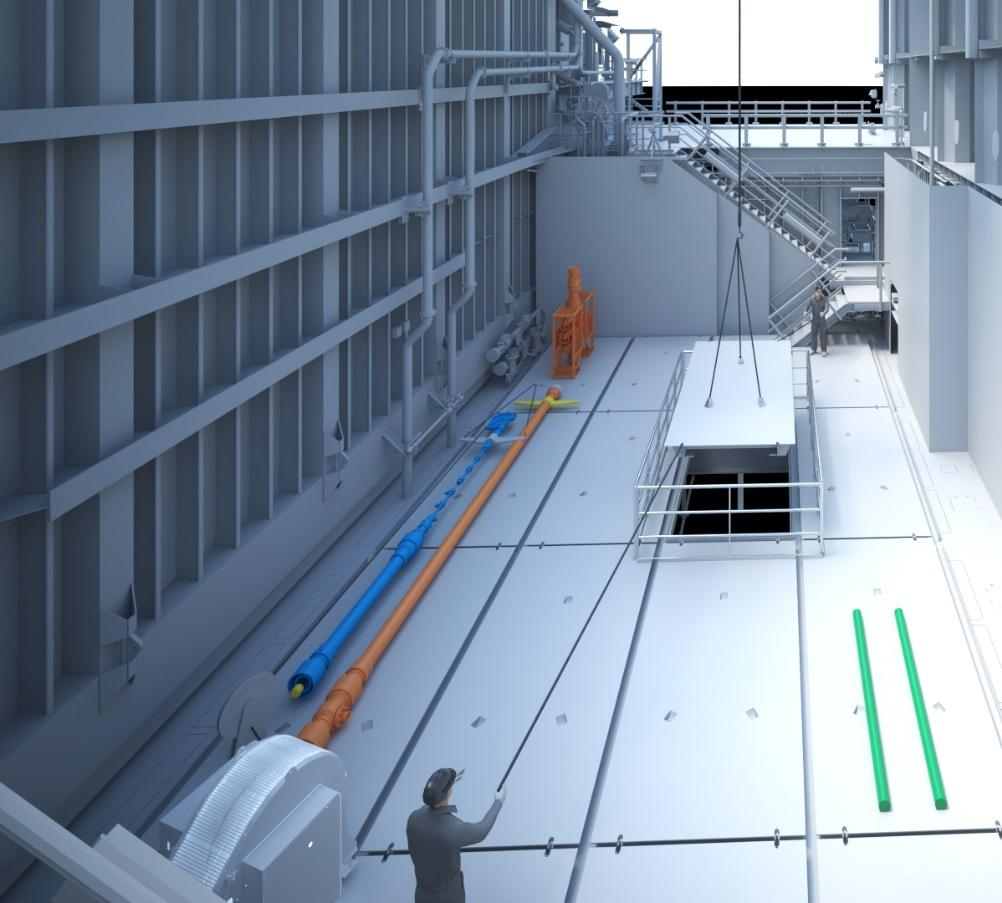
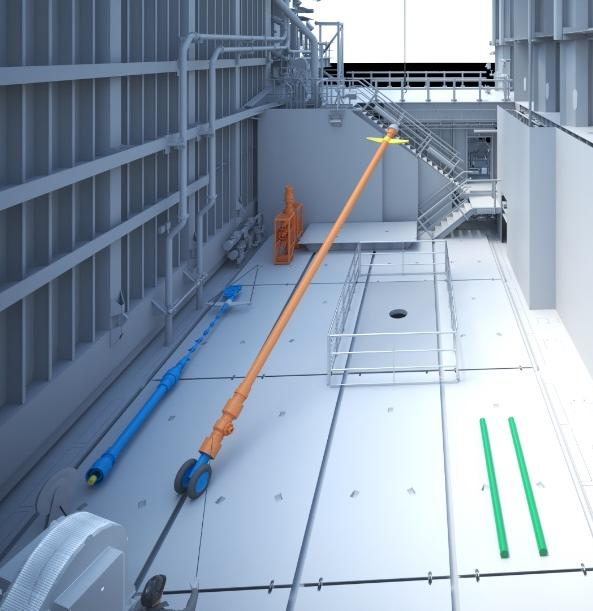
魔都 “海商讲习所公众号”邮轮搭载您从此岸世界工厂驶往彼岸中国版航运、金融、科创、贸易、经济五个全球中心;搭载您从此岸大陆法系服务,驶向彼岸海陆空复合型中华法系服务;搭载您从此岸伦敦航运业金字塔,驶往彼岸上海海陆空复合型航运业金字塔;搭载您填补产品、要素、行业、市场、规则和制度空白,协助您成为某一细分垂直领域古今中外第一人。
上海“水险讲习所视频号”商船,搭乘您从海上保险英国法的辉煌,驶向数字金融中国法的伟大;搭载您从中国金融中国法的自转,并轨国际金融国际法的公转;搭载您进入海陆空复合法系为说明书,通江达海金融体为地基的上海金融城魔幻世界。
联系人杨永曾任或者现任广州/南京/武汉/荆门/十堰/襄阳/周口/唐山/保定/宜春/九江/鹰潭/潍坊/德州/日照/济宁/包头/呼伦贝尔/通辽/梧州/银川/西安/宝鸡/沈阳/拉萨/阳泉仲裁委员会仲裁员,可被自贸区、自贸港等国家规定区域内的涉外纠纷当事人,选聘为临时仲裁员,协助您深度参与中共中央关于进一步全面深化改革 推进中国式现代化的决定第(11)条:提高航运保险承保能力和全球服务水平,推进海事仲裁制度规则创新
即刻联系,共绘宏图:
📞 杨永 律师/仲裁员13826454000或18321585360 (微信同号)
📧 邮箱:yangyong@rhymesmarine.com
杨永 律师/仲裁员办公🏢 地址:上海市静安区中兴路1539号金融街中心一期B座3层上海市华荣律师事务所
助力企业从“世界工厂”驶向“全球治理中心”,深度参与中国式现代化新征程!
English
📞Lawyer/Arbitrator Yang Yong: 13826454000 or 18321585360(WeChat ID same as phone number)
🏢Office Address of Lawyer/Arbitrator Yang Yong:3rd Floor, Building B, Phase I of Financial Street Center, No. 1539 Zhongxing Road, Jing’an District, ShanghaiShanghai Huarong Law Firm
We help enterprises move from being a "world factory" to becoming a "global governance center" and deeply participate in the new journey of Chinese-style modernization!
🏢Adresse : Bureau de M. Yang Yong (Avocat/Arbitre)3ème étage, Tour B, Phase 1 du Centre Financial Street, 1539 Zhongxing Road, District de Jing’an, ShanghaiLaw Firm Huarong de Shanghai
Spanish
🏢dirección: hualong law offices, shanghai, 3er piso, edificio B, primera fase, financial street center, 1539 zhongxing road, jingan, shanghai
German
📞Anwalt/Arbitrator Yang Yong: +86 13826454000o oder +86 18321585360(WeChat-ID identisch mit Telefonnummer)
🏢Büroadresse von Anwalt/Arbitrator Yang Yong:3. Etage, Gebäude B, Phase I des Financial Street Center, Nr. 1539 Zhongxing Road, Jing’an-Distrikt, ShanghaiShanghai Huarong Anwaltskanzlei


