
 五度妙笔
五度妙笔 企业透视镜
企业透视镜 API商城
API商城
 数据库
数据库Verne Plans Croatian Robotaxi, Dropping Mobileye With Chinese System
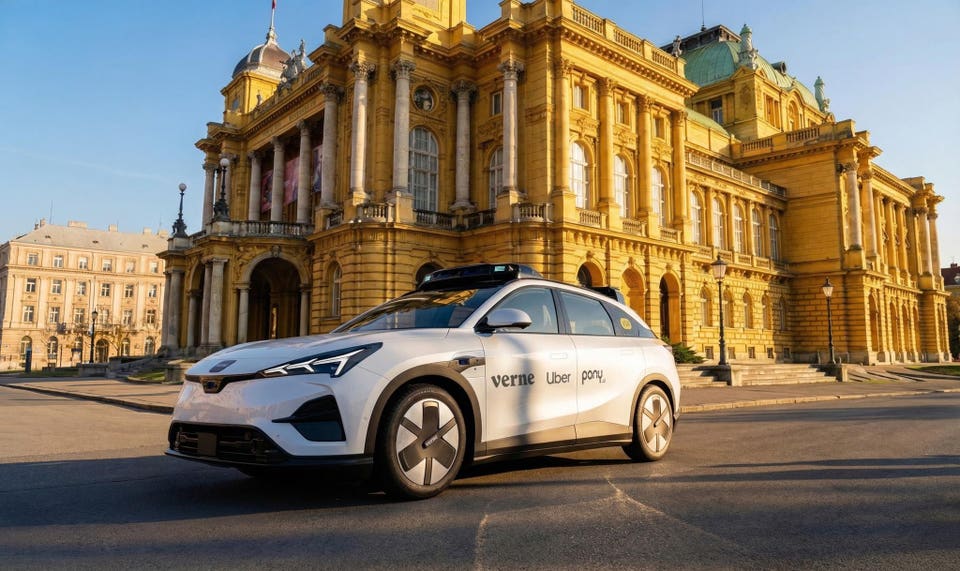
Verne robotaxi made by/Arcfox to be deployed in Zagreb, in theory this year.
Verne
Verne, a Croation robotaxi company formed by Mate Rimac, founder of high-end sportscar maker Rimac Buggati, has announced plans to deploy this year a robotaxi service in their home city of Zagreb. But in a reversal from earlier announcements, which involved a custom 2-seater robotaxi made in Croatia, this service will feature self-driving software from Chinese, a Chinese made Arcfox Alpha T5 as the underlying car, and ride-hail from U.S. company Uber. Uber is also reportedly investing in Verne as part of this deal.
Verne will provide in-Croatia logistics and regulatory work, and their own app as an alternate ride-hail.
The Arcfox is’s new platform for their next generation robotaxi, so they will have done all the work of making it a robotaxi. The one pictured does have a Verne badge on the front.
Verne’s own prototypes were very different. They were to have a self-driving system from Israel’s Mobileye (a subsidiary of Intel, and the leading ADAS supplier.) Volkswagen and its MOIA unit also have a Mobileye based robotaxi planned for this year.
The Verne two seater robotaxi is a “designed from the ground up” robotaxi with no steering wheel or other controls, and an interior for relaxing, not driving. This has been a long term goal of Mate Rimac. I met him to discuss robotaxis 8 years ago, and they’ve put a lot of work into getting here.
Last December, Verne released an animated promo video about their plans to launch in spring 2026 in Europe. Other robocar projects have pretty much all been in the USA or China, and people have been wondering how long it will take to get one in Europe. The video just a few months ago featured their Croatian made 2 seaters, claiming launch was coming in spring.
While animated promotional videos don’t mean a lot, this new announcement is surprising. This is not, for now, their hoped for service.
Verne has decided not to use Mobileye for self driving. This also casts a shadow on that company. Mobileye had announced robotaxi plans for Mobileye Drive with Verne, VW/MOIA, a few shuttle projects like Holon/Beep, and with ride-hail companies like Uber, Sixt and Lyft. They’ve announced deals with Zeekr, Nio and Willier but these were several years ago and updates showing progress have been few, and they no longer appear on Mobileye materials. Mobileye states that Verne is no longer on their list of upcoming launches--indeed, Verne was not present in their slide deck from CES in early January.
Since Verne has dropped Mobileye this leaves only VW/MOIA as Mobileye’s only significant automaking partner. Of course, VW group is the world’s 2nd largest automaker, so that’s far from a minor thing. MOIA has been operating shuttles in Hamburg with a safety driver on board, a state that typically has implied they are still some years from real deployment.
, however, has several successful robotaxi deployments in China, with plans to launch in Doha, Singapore and Dubai. Their predictions of deployment will be more reliable, though their Alpha T5 platform is fairly new and may still need some testing. The early deployment will feature a safety driver in the vehicles. That Uber can do robotaxi ride-hail is well established.
The Verne two-seater robotaxi from Rimac. This came out well before the Tesla Cybercab, which has many similar elements. It may remain only a concept.
Verne
Verne has yet to explain the switch. Was Mobileye not ready, or were their own production facilities falling behind? While Bugatti Rimac knows how to make electric sportscars, they’ve never made a car like this before.
Verne had been building a factory in Lučko which was said to begin production this year, starting at hundreds of vehicles per year. They reported in December that 60 prototypes had been manufactured.
Update:
Verne has responded and says work on the 2-seater continues and it will be their long-term platform. In addition, Verne is also developing a ride-hail platform and the vehicles will also be available through it, presumably in a similar way to how Waymos are available on both Uber and Waymo One in a few of the Waymo cities.
Presumably will adapt their self-driving stack to work on the Verne vehicle. Verne can get on the road early working with the Arcfox. Verne received €180 million in grants from the E.U. for its robotaxi project. Indeed, Verne had a deadline in those grants to produce something by March 31 or otherwise refund half of it. Verne states they are meeting all of the requirements in their grant.
Interior of the Rimac Verne Robotaxi prototype (driven someday by the Mobileye chip, it was said.)
Verne
(This story contains several updates due to more information arriving from Verne.)
Editorial Standards
Reprints & Permissions


