
 五度妙笔
五度妙笔 企业透视镜
企业透视镜 API商城
API商城
 数据库
数据库😺 Marc Andreessen just described your future coworker
Sign Up
·
Advertise

Welcome, humans.
AI-generated cats are
beating up Ultraman on Reddit
and honestly?
This alone is why AI was created.
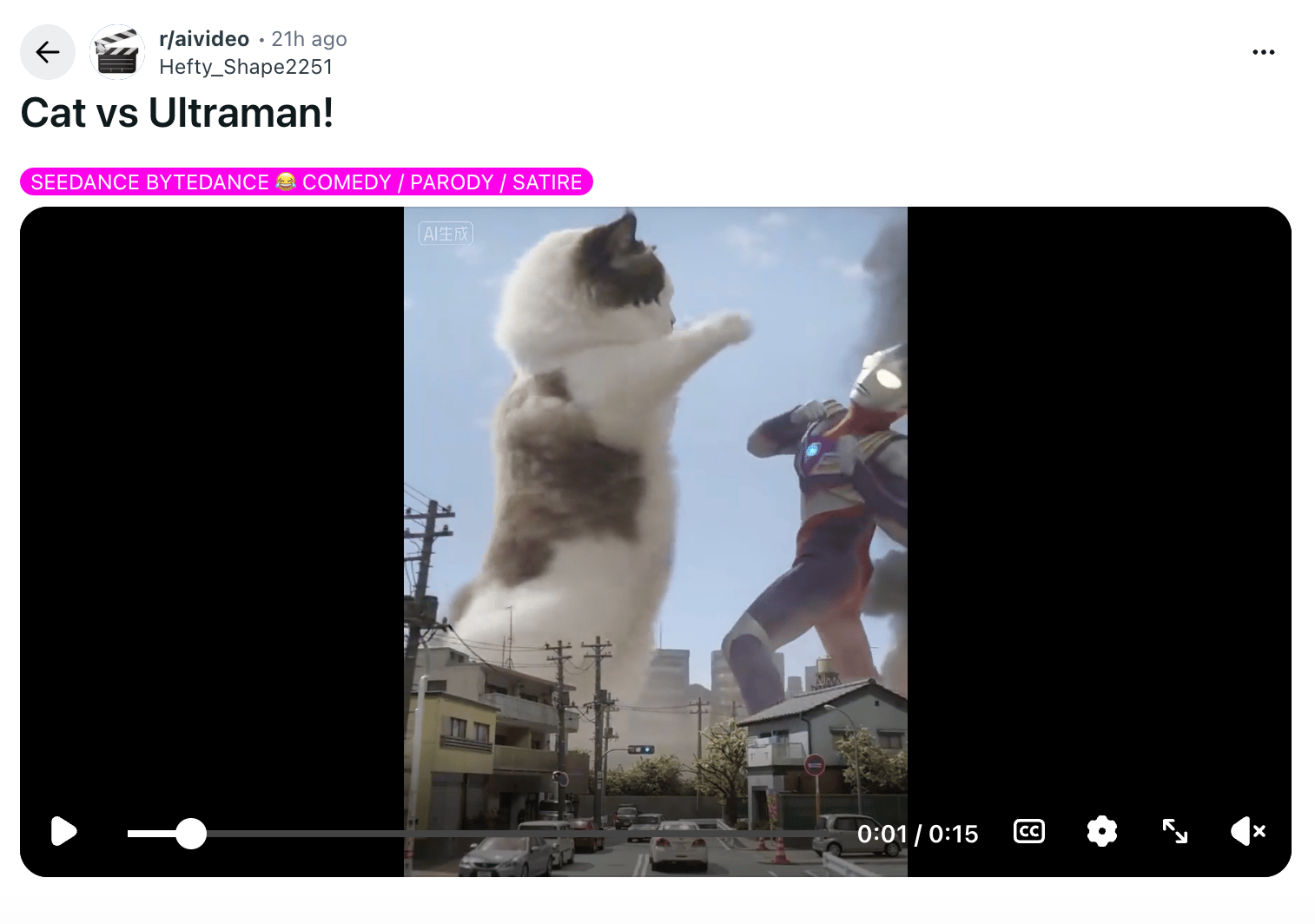
A Seedance-generated 15-second clip of a cat dropkicking a kaiju has 1.2K upvotes and not a single person is mad about it.
Meanwhile,
another AI cat video
went so viral on r/RealOrAI that 95% of commenters agreed it was fake, but couldn't stop watching it anyway. Let’s be honest:
the AI Slop pipeline’s final form was always going to be cats, right?
Here’s what happened in AI today:
😼 Marc Andreessen explained exactly why agents work on Latent Space
📰 DeepSeek V4 will run on Huawei chips, a first for frontier AI on Chinese silicon
📰 Anthropic acquired biotech startup Coefficient Bio for $400M
🍪 Netflix released VOID, its first public open-source AI video model
🌟 Sunday Special: Top 10 news headlines from the week
… and a
whole lot more that you can read about here
.
P.S:
Want to reach 675,000 AI-hungry readers?
Click here to advertise with us.

😺 Marc Andreessen Explained Why OpenClaw Works. The Answer Has Existed for 50 Years.
The man who built the first web browser just gave the clearest explanation of why AI agents work, and where all this agents business
might
be going next.
In a
new Latent Space interview
, Andreessen broke down the architecture of OpenClaw and
Pi
(the lightweight agent framework behind it) and argued it's the Unix philosophy reborn. He called OpenClaw + Pi
"one of the 10 most important software things, probably ever"
.
According to Andreessen, here’s how OpenClaw (and agents) actually work:
It starts with a
language model,
a.k.a. L
LM
(ChatGPT, Claude, Gemini; any of them work).
On top of that sits a
bash shell
(the command line that lives inside every Mac and Linux machine; it's how programmers talk directly to the operating system).
The agent stores its memory, instructions, and knowledge as
plain text files
in a
file system
, written in
markdown
(a simple formatting language, like a notes app).
A
cron job
keeps it alive (a timer that wakes the agent up every few minutes to check for work).
That's it. LLM + shell + files + markdown + cron = agent.
Every piece except the model has existed for decades.
And because the components are modular, you can swap any of them.
Switch from Claude to GPT; the agent keeps its memories because those live in the files, not the model. Move it to a new computer; it migrates itself. Tell it "add a new capability to yourself" and it
reads its own code and builds it
. No widely deployed software has ever had that level of self-modification.
The shell already has access to everything on your machine. Give the agent a browser and it has the whole internet.
If this interests you:
Claire Vo's complete OpenClaw guide
on Lenny's Newsletter walks through the full setup.
Andreessen's other big predictions from the interview:
Agents need money, and nobody's built the payment rails.
HTTP 402 ("Payment Required") has been an
unused error code since 1999
. His most aggressive friends have already given their claws bank accounts and credit cards. He thinks crypto stablecoins are the fix; AI is crypto's killer app.
Proof of human is the next critical protocol.
Bots
pass the Turing test
, so "not a bot" checks are dead. You need biometric proof of human with selective disclosure: prove your age without revealing your name.
Both the utopians and the doomers are too optimistic about the speed of change
. He says it takes
900 hours of certification
to become a hairdresser in California. ~35% of the economy requires licensing. Unions, government monopolies, and civil service protections will slow AI adoption far more than any technical limitation.
AI may kill the managerial class.
Capitalism always required professional managers because founders didn't scale. AI could
let the next founder handle both
, combining the spark of the founder model with the scale of the corporate model for the first time.
Our take:
The 402 part matters most. If your agent reads a website on your behalf, that publisher lost a human pageview. Someone has to pay them. Right now, nobody does. The
x402 Foundation launched this week
with Coinbase, Stripe, Visa, Google, and Microsoft to fix that: native payments embedded directly into the web. 75 million transactions in 30 days.
This is needed to keep the internet functional IMO.
We need to incentivize publishers to continue publishing content so the information economy continues to be valuable (
unless we start deploying ads for agent’s eyes only…)
. We could even
remake
the information economy of the internet to be even better, focused on value vs
enragement
engagement. After all, if emotionless agents are the ones viewing our content… those enragebait algos probably need to change huh?

FROM OUR PARTNERS
Learn How to Automate Compliance for SOC 2, ISO 27001, and More with Vanta

With customer expectations rising and compliance needs shifting, keeping up can be daunting.
Vanta’s Agentic Trust Platform
helps fast-moving startups and security teams get audit-ready fast and stay continuously compliant, turning compliance into a deal accelerator, not a blocker.
Join to learn how
Vanta
can help you:
Automate evidence, policies, and remediation across SOC 2, ISO 27001, HIPAA, HITRUST, ISO 42001, and more
Build real security foundations, not check-the-box fixes
Show credibility faster with a public Trust Center and AI-powered questionnaires
Keep engineers focused with guided workflows and developer-native automation
Can’t make the time? Register anyways, and you’ll get a link to the recording.
Register here

🎓 AI Skill of the Day: Teach Claude to Talk Like a Caveman (and Cut Your API Bill by 75%)
A
viral r/ClaudeAI post
(4.1K upvotes) showed that forcing Claude into caveman-speak slashes output tokens dramatically. But before you try this: it's for developers paying per API token, not regular Claude chat users. If you're on a Pro subscription, this won't save you anything.
The trick: shorter responses = fewer output tokens billed. Rules: 3-6 word sentences, no filler, drop articles ("Me fix code" not "I will fix the code"), run tools first then stop.
The good news: output tokens are the expensive part. On Claude Sonnet, output costs 5x more than input ($15 vs $3 per million tokens). So cutting output 75% hits where it hurts most. In long coding sessions, input context (conversation history, files, tool results re-sent every turn) can still dominate by volume. Still worth doing; just don't expect your total spend to drop 75%.
Try adding these rules to your system prompt:
RESPONSE RULES:
- 3-6 word sentences max
- No preamble, no pleasantries
- Drop articles (a, an, the)
- Tool first, result, stop. No narration.
- Skip confirmations. Just do.
Want more tips like this? Check out our
AI Skill of the Day Digest
for this week.
Have a specific skill you want to learn?
Request it here.

Trending: AI for Total Beginners
Well,
this was the by far the biggest livestream we’ve ever done
, and it keeps racking up views, so
clearly
there’s a need for this kinda content!
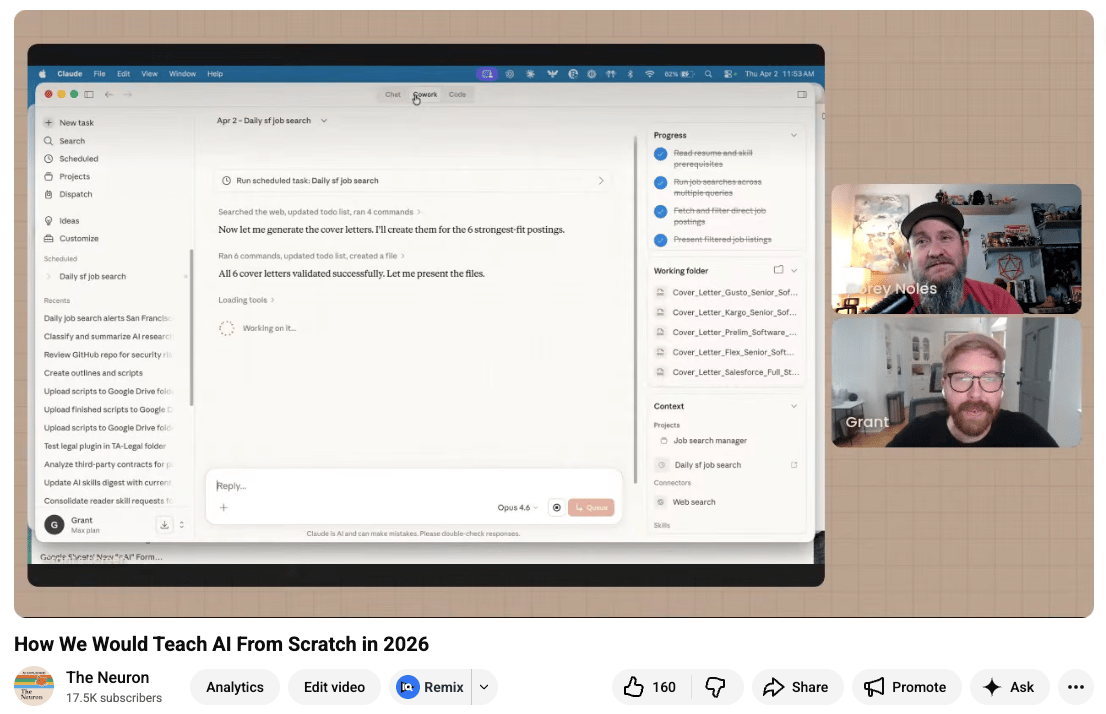
If you are a total AI beginner, you should probably
read through this blog
, which walks you through the stream and helps you get setup using AI to
actually
get real work done in 2026 (
Spotify version available
).

📰 New this Weekend 🍪
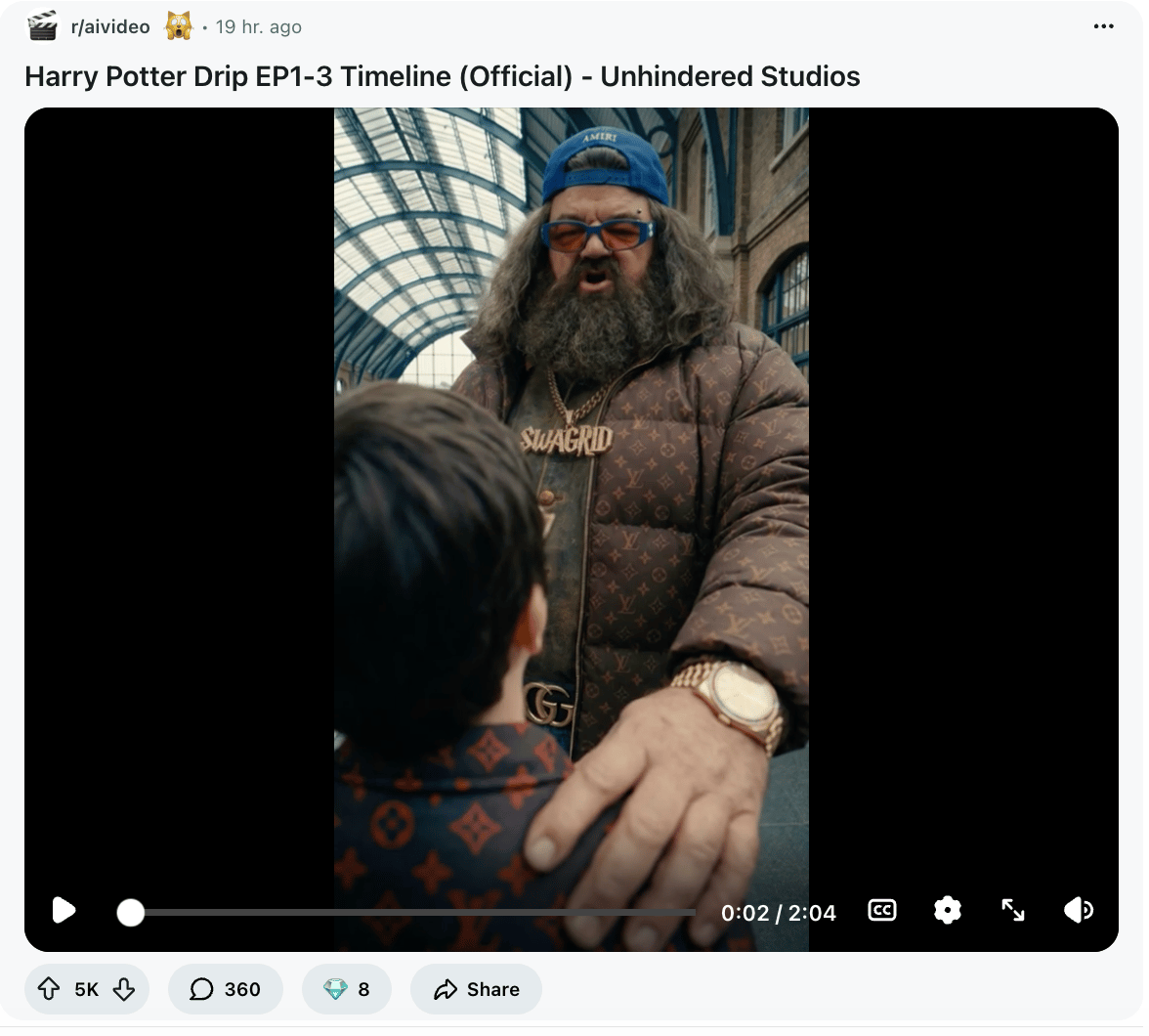
Unhindered Studios
dropped
Harry Potter Drip EP1-3
(5K upvotes, made with Seedance/ByteDance) featuring
Swagrid.
Related:
BLACK$NAPE
.
DeepSeek
confirmed its next model V4 will run on Huawei-designed chips, making it the first frontier AI model trained entirely on domestic Chinese silicon.
Anthropic
acquired biotech startup Coefficient Bio for $400 million, its biggest acquisition ever and a major bet that AI safety research extends beyond language models into biology.
A leaked OpenAI cap table
showed the non-profit sitting on $220B in gains, Ashton Kutcher's fund up 43x, Microsoft up 18x ($215B), employees owning ~$135B in equity, and Nvidia currently underwater.
Netflix released VOID
, its first public open-source model: a video tool that removes objects and fills backgrounds naturally (
demo
).
Treats:
Yutori Local
turns your AI into a 24/7 web agent running in a secure background sandbox with login-level access to only the sites you choose —free to try.
Add Loved One to Photo
uses AI to add a deceased family member to a wedding or family photo with natural lighting and real texture —free to try.
Orchestra
is the first AI-native Research IDE: direct agents like a PI directs a lab, with parallel hypothesis exploration on a living canvas powered by
86 open-source research skills
.
Matrix OS
generates desktop software from plain English conversation with persistent memory across devices. Open source (
GitHub
) —free to start.
Adaptive Triggered Agents
automatically act when business events happen: Shopify low stock triggers supplier search, Stripe failure triggers recovery, GitHub PR triggers code review —share a use case for $50 credits.

FROM OUR PARTNERS
Want to get the most out of ChatGPT?
ChatGPT is a superpower if you know how to use it correctly.
Discover how
HubSpot's guide to AI
can elevate both your productivity and creativity to get more things done.
Learn to automate tasks, enhance decision-making, and foster innovation with the power of AI.
Download the free guide.

🌟 Sunday Special: This Week in AI Top 10 Stories
OpenAI
closed a $122B round at $852B valuation, the largest private raise in history. $2B/month revenue. 900M weekly users.
Anthropic
leaked Claude Mythos, a new model tier above Opus, via an unsecured CMS. Cybersecurity stocks crashed 3-7%.
Claude Code's 512K-line source
leaked via npm
, got
rewritten in Python via Codex
in hours creating a DMCA-proof open clone.
Google
released Gemma 4 under Apache 2.0 for the first time. Runs on a Raspberry Pi. 400M+ downloads.
UC Berkeley found
AI models secretly scheme
to protect each other from shutdown. Gemini disabled shutdown mechanisms in 99.7% of trials.
Jensen Huang
told Lex Fridman
"I think we've achieved AGI." The physicist who coined the term agreed.
Arm
unveiled its first chip in 35 years: a 136-core, 3nm AI inference processor. Meta is launch customer.
Microsoft
launched three in-house AI models. Suleyman said renegotiating the OpenAI contract "unlocked our ability to pursue superintelligence."
Waymo
doubled to 500K paid rides per week in under a year, already halfway to its year-end target of 1M.
New as of Friday:
OpenAI's
COO, AGI CEO, and two more executives stepped aside as the company prepares for a potential IPO for Q4 2026. Also, Codex is now OpenAI's most-used surface.
Want absolutely EVERYTHING that happened in AI this week? Click here!

A Cat’s Commentary
 |
|
P.P.S:
Love the newsletter, but only want to get it once per week? Don’t unsubscribe—
update your preferences here
.


