
 五度妙笔
五度妙笔 企业透视镜
企业透视镜 API商城
API商城
 数据库
数据库Moving Electrons, Not Just Vehicles
Key Takeaways:
- There are several ways to convert AC power from the grid to DC power in the system. Some degrade the battery faster than others.
- Battery management systems monitor cell voltage, current, and temperature, helping to estimate state of charge, health, and useful remaining life.
- A PMIC with a multi-level converter is the most efficient way to get power from the battery to the traction inverter and motor, as it steps through multiple voltages instead of jumping from 0 to the battery’s voltage.
Managing power is a key concern for all devices that run on a battery, whether it’s to extend an electric vehicle’s range, a robot’s capacity to work, or a consumer device’s time without charge. Battery management technology is well established, but there are ongoing innovations to fine-tune systems and eke out ever greater efficiency.
Battery systems include a complex array of chips and systems to optimize the movement of current and power in three key stages:
- Getting power from the electric grid into the battery;
- Using a battery management system (BMS) to monitor charge, health, and useful remaining life, and
- Getting power out of the battery to be used by the vehicle, robot, or other device.
The process of getting power into and out of the battery is similar for EVs and edge devices such as humanoid robots. “Robots have the exact same challenges,” said Jim Pawloski, director of applications engineering at Infineon Technologies. “The bus voltage for robots — the voltage that’s going to be powering all the motors and actuators and whatnot — will be 48 volts, because 48 volts is considered a low voltage, or non-hazardous voltage. Anything above 60 volts is considered high voltage. But robots still require a battery pack, which can be lithium-ion or another chemistry. There will be a BMS system that monitors the health, the charge, and the temperature of the battery pack, and you’ll have the same microcontroller (MCU).”
Getting power into the battery
Battery charging is a critical element of the overall electrification equation. Within that, time to charge is a key metric.
“In electric vehicles right now, for a lot of companies, the fastest is 15 minutes to charge from 0% to 80%,” said Puneet Sinha, senior director and global head of battery industry at Siemens EDA. “If you need to improve that charging rate or make it more reliable, especially in extreme weather conditions, it comes down to the battery design — what kind of materials and cell designs you have that can accept that charge, but also make sure all the charging side of electronics are appropriate and can push that much charge.”
In an EV, an onboard charger (OBC) module takes AC power from the electric grid and converts it to DC that is high enough to force current into the battery. “It forces electrons into the battery, as opposed to what the battery normally does, which is provide electrons to a load when it’s discharging,” explained Pawloski. “You need to do that very efficiently, in the area of 98%.”
Heat is another challenge, just as it is for power electronics. “The way you’re doing this conversion from AC to DC is that you’re switching semiconductor devices very, very quickly, in some cases hundreds of kilohertz,” said Pawloski. “Every time you have a switching operation in a transistor switch, because it’s not a perfect switch, you generate heat with every switching cycle. If you’re doing that several hundred thousand times a second, you can imagine the amount of heat that is dissipated. We call those switching losses.”
Power devices built on gallium nitride and silicon carbide have minimized switching losses. “The shorter time it takes to go from, say, 0 volts to 400 volts to make that switch, the smaller your losses are going to be,” said Pawloski. “If you have a slow transition from 0 volts to 400 volts, you’re going to dissipate a lot more heat.”
Therefore, it is critical that the charger electronics are designed correctly. “That’s why we are seeing a lot more innovations and adoption of silicon carbide-based inverters,” said Sinha. “We are looking at cooling the cables, because they may become hot points.”
OBCs are versatile. “You can plug in 120 volts from a wall, and it knows that. It can step that up to the DC voltage it needs for the battery,” said Pawloski. “You can plug it into a Level 2 charger, which uses 240 volts in the U.S, and that can be in your garage, because homes have 240 volts AC coming into them.”
Another way to get energy into the battery is DC fast charging, such as the Tesla supercharger, which puts a lot of energy into the battery in a very short amount of time. But that approach is harder on the battery than conventional charging.
“Instead of doing the conversion from AC to DC within the vehicle in the onboard charger, you’re getting DC directly from the supercharger,” said Pawloski. “When you plug that in, depending on the vehicle, it’s using a different set of contact pins in this big connector, and it’s providing DC current directly to the battery. You’re moving a lot of current because the power is enormous, up to 750 kilowatts. That’s enough to power a small subdivision, depending on the time of day. That is achievable because there is a giant power cord in this cable, with coolant flowing through it to manage the amount of heat that’s being dissipated in the copper conductor. Then the battery itself in the vehicle has its own internal cooling system that is operating to keep the heat down.”
This is what makes nine-minute charging possible, along with the appropriate battery chemistry to be able to pass that amount of current within the battery itself. However, fast charging can quicken battery degradation and shorten life.
“Battery aging is a complex electrochemical process, categorized into two primary mechanisms — calendar aging and cyclic aging,” noted Bryan Kelly, principal engineer at Synopsys. “Cyclic aging depends on how the battery is stressed during use. Frequent fast‑charge events, high discharge rates, deep depth‑of‑discharge cycles, and operation at temperature extremes all accelerate degradation and lead to more pronounced deterioration over time.”
As battery technologies and charging methods continue to evolve, the supporting electronics and systems play an increasingly vital role in ensuring efficient and safe power delivery. Understanding how these components interact is essential for optimizing battery performance and longevity.
The chips used to get power into the battery include power switches, gate drivers, and MCUs.
Power switches are controlled by a gate driver. “The gate driver provides signals directly to the power devices to turn them on and off,” said Pawloski. “It needs galvanic isolation between the high voltage side and the low voltage side. All of the control is done at a low voltage, using microcontrollers. The core of an MCU is running at 1.2 volts or maybe even 800 millivolts. The gate driver allows you to provide those control signals from your MCU at a logic level, 3.3 volts or 5 volts. Then you have a galvanic isolation barrier, which allows those signals to pass through to the high voltage side and generate the actual gate signals that are going to the power devices.”
A microcontroller runs an algorithm that does the control and the switching of the power devices. “It’s firing voltages, so it knows how to switch it to either raise or lower voltage,” said Pawloski. “It also performs a number of safety functions — monitoring temperatures and input voltages to comply with ISO 26262. There are certain requirements within the onboard charger that must meet the ASIL-D safety rating, the highest requirements. The microcontroller and gate driver must be rated to this safety level to be able to detect any fault conditions that could lead to a hazard, which could result in someone getting injured or killed.”
Alongside these considerations for charger and battery technology, it’s important to examine what happens after energy is delivered to the battery. The management and monitoring of battery health and performance become crucial, especially as new charging strategies and architectures emerge.
Battery swapping
Battery swapping is gaining ground in industrial applications, such as fleets of electric long-haul trucks, last-mile delivery vehicles, and robots in factories. “The concept has been tried before with personal vehicles, but it didn’t work business-wise,” said Sinha. “Now there’s enough scale and business needs. Battery swapping has implications for the overall battery pack architecture, and how the interconnection needs to happen, so that you can remove the battery easily and put the new battery in correctly.”
Swapping allows users to quickly get a new battery, and the old battery or the depleted battery can be charged overnight instead of waiting to charge it, Sinha noted.
The battery management system (BMS) oversees battery swapping, which is the brain of the battery. “In fleet applications, you will need an energy management system (EMS), which looks at all the batteries,” Sinha explained. “If you have a fleet of humanoids or a fleet of trucks, companies will need to know the fleet operator. We need to know how much charge is in which system. They need to pull this data to know which battery to swap versus what system can keep working. That involves a lot more telemetry, with a database on all the data that the BMS is delivering. Then there is a dashboard with a real-time view of the fleet.”
Battery management systems
Once the power is in the battery, it is monitored and balanced by a battery management system (BMS).
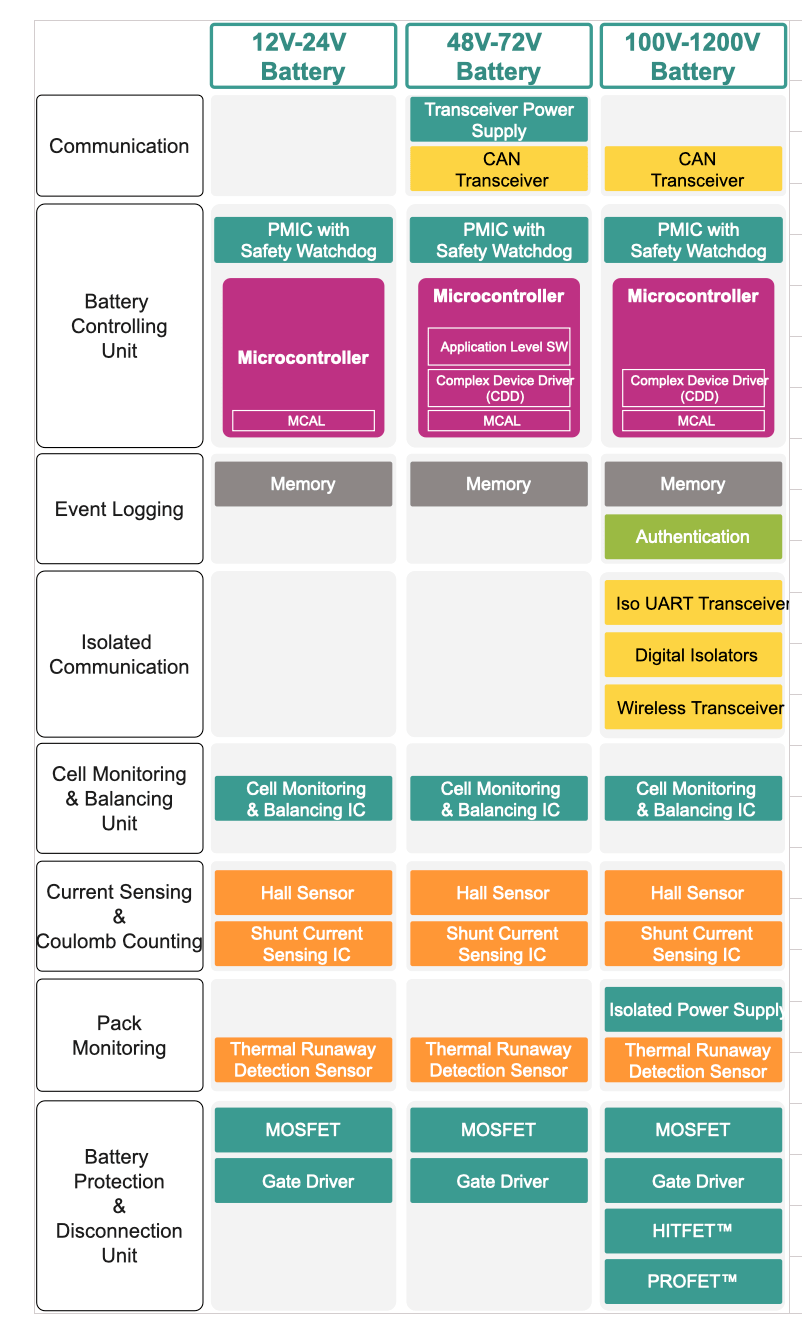
Fig. 1: Automotive battery management system (BMS). Source: Infineon
“The term ‘battery’ is often used loosely, even though it can refer to very different things — a single cell, a module, or an entire pack composed of many cells,” said Synopsys’ Kelly. “It’s only at the pack level that BMS functionality and cell-to-cell balancing become relevant.”
Hardware design engineers must estimate the pack’s current state of health (SOH) relative to its end of life (EOL). “This information is critical,” said Kelly. “It enables accurate quality assessment, supports forecasting of remaining useful life (RUL), and helps reduce expensive warranty-related costs.”
For any array of energy-producing elements — solar arrays to battery packs — it is only as good as its weakest link. “A BMS actively monitors each cell voltage, current, temperature, estimates state of charge (SOH), and can also estimate SOH,” said Kelly. “This would be a daunting task in the early days of EVs, as there may have been up to 7000 cells implemented into the entire pack assembly. But now with technical advancements in battery cell production, the cells manufactured today can be large format, sharply reducing the number of cells in a pack assembly.”
If the battery is new, the state of charge (SOC) can be estimated pretty well. “But as the battery ages, not all of the cells degrade identically,” said Clint O’Connor, co-founder of True Balancing. “They start to vary in terms of individual capacity. Some will be a bit bigger, some will be a bit smaller. They self-discharge at slightly different rates. The internal impedances vary, and what you end up with is the amount of energy, and the state of charge in each cell, is a little bit different.”
[Editor’s note: A second part of this story will look more closely at impedance and battery balancing.]
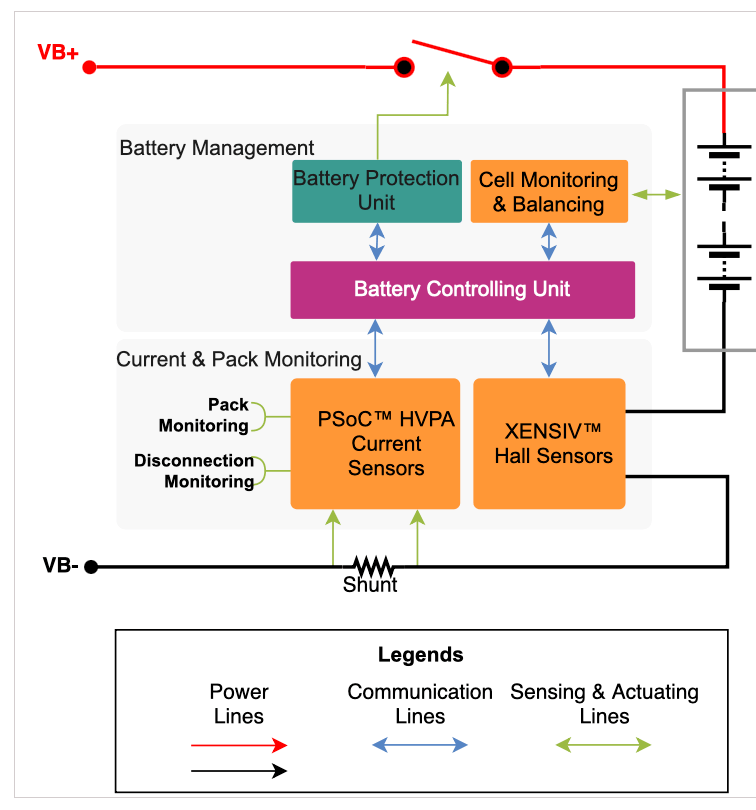
Fig. 2: Automotive current sensing and coulomb counting. Source: Infineon
BMS refers to the entire electronic system that manages the battery, and the system can be customized based on battery chemistry, size of system, the environment it is being used in, use patterns, and challenges. The most fundamental thing a BMS will do is prevent overcharging or over-discharging, relative to the manufacturer’s recommendations. “If you overcharge, get the voltage too high, or over-discharge, get the voltage too low, you’re trying to push electrical current through resistance,” O’Connor noted. “You’re generating heat, and that’s degrading the battery.”
The BMS also prevents an overcurrent condition. “Even if you’re in a nice middle-of-the-range state of charge of the battery, if you try to push current in or pull current out at too high a rate, that can accelerate damage to the battery,” he said.
Getting power out of the battery into the vehicle
Once the battery is charged, that energy is used to propel the vehicle or robot into motion, as well as perform other functions. Therefore, a key challenge in a vehicle is overall energy management.
“You can look at two electric vehicles, such as Tesla Model S and Audi E, which are of a similar size, similar amount of energy in the battery, but the overall range is significantly different,” said Siemens’ Sinha. “It is not really the energy that you are packing in the battery. It is how well you can utilize that in driving. That’s where it comes down to the BMS, along with the overall inverters and motors, how tightly they are integrated and what technology they are using. There’s an overall energy consumption within the cabin, for cabin cooling and other auxiliary power, and this can cause a significant amount of energy drop. So, managing overall energy distribution from a given battery to the wheels and every other load that needs to be satisfied is a big system engineering challenge.”
Likewise, saving energy in an EV or humanoid comes down to how components are integrated, along with overall optimization of systems. “We are seeing various strategies,” said Sinha. “Many companies are looking at how they are putting inverters and converters in the vehicle, how well they are combining with the motors, and even at the inverter level, what technology they are using.”
The primary load on the battery is the traction inverter, which takes DC power from the battery and creates a variable frequency AC waveform. “This is how you spin the motor,” said Infineon’s Pawloski.
For automotive, an ASIL-D MCU with a six-core architecture enables each core to have an independent checking core. “You’re running the same software on two different cores simultaneously, and if there’s any difference in the output of those two cores, that is detected and flagged,” explained Pawloski. “The algorithms in the MCU control the behavior of those power switches to get what you need. It’s looking at a torque request from the driver, and then it’s burning that torque request into an output that goes there to power the MCU.”
PMIC role in battery-powered edge
Power management ICs (PMICs) play a supervisory role in getting power from the battery and into the other components, overseeing power sequencing, charging, and monitoring voltage or current levels to ensure safety. They are equally necessary for EVs as humanoids or smaller edge devices.
“PMICs are an essential part of the low-power story,” said Dave Garrett at Synaptics. “It is a huge piece because the understated part of low power is that you start from a battery in a lot of places. For example, a lithium-ion battery is sometimes between 4 volts and 3.2 volts. That’s a terrible swing, and it’s not a reliable supply. The PMIC’s job is, ‘I have a 0.7 volt core. How do I get 3.8 to 3.2 volts down to 0.7 that’s reliably controlled?’”
PMICs sometimes include a linear dropout regulator (LDO). “This is a bad way to get a supply, because all it’s doing is taking the current from a high voltage and passing that current and producing the low voltage out,” said Garrett. “It’s very cheap, very easy to do, but it’s terrible for power efficiency. Instead, we have multiple power rails. We’re using our custom-designed PMICs with switchers that are very efficient at translating voltage and current down to that. Power efficiency matters, and even if you have the best low-power digital circuits, if you don’t have a good PMIC, you walk away from all that. Efficiency is the game at the edge.”
PMICs play a key role everywhere, from automotive to the data center. “A PMIC needs to check literally everything about the power supply,” said Infineon’s Pawloski. “It’s checking all of the power rails where there’s 3.3 volts, 5 volts, the communications power for the network communications through the vehicle, and sensor power for the various sensors that are used.”
Still, use cases for PMICs are evolving. “We see challenging requirements in several applications,” said Piero Blanco, senior director of product marketing for chips at Rambus. “Autonomous vehicles are one. Similar to AI in data centers, AI for autonomous vehicles requires increasing load currents and tighter voltage regulation and load transient specs. On top of this, autonomous vehicles operate in harsh environments, with widely varying input (battery) voltages, stringent EMI constraints, and high safety demands. Another emerging area with similar requirements will be physical AI.”
AI is piling on the complications. “AI drives more challenging power requirements across all server subsystems,” Blanco observed. “For example, in the memory subsystem, the constant increase in memory speeds drives higher load currents, the need for more precise voltage regulation, due to the adoption of finer DRAM chip silicon geometries, and more aggressive load transient requirements for PMICs. This pushes the limits of control solutions and requires novel design solutions to achieve faster transient performance and maximize efficiency at all load currents. At the same time, memory solutions need to fit in a smaller form factor, for example, with SOCAMM modules, requiring power solutions that can operate with smaller external components and utilize board real estate efficiently.”
Conclusion
Effective, efficient battery management is growing in importance as more EVs take to the roads, robots are deployed, and drones or electric planes take off. Techniques continue to evolve with use cases and battery chemistries.
All the BMS metrics matter now that an EV’s range can be a selling point. “OEMs used to be differentiated on their mechanical competence, the efficiency of the engine, the power of the engine,” said Rob Fisher, senior director of product management at Imagination Technologies. “That’s no longer so differentiating. There’s no engine. There’s a motor in nowadays, so it’s coming down to things like battery life and in-cabin experience.”
Energy efficiency also impacts the overall electrical architecture of the vehicle. “How they are designed, and the overall cable length matter,” said Siemens’ Sinha. “Everything adds up to the overall weight that they should carry.”
Related Articles
AI Power On The Edge
Architecting solutions for edge AI is not about minimizing cloud solutions or making small extensions of existing MCUs/MPUs. It’s a hardware/software/model co-development problem.
New Automotive Architectures Are Shaking Up Processor And Memory Choices
Exponential increases in data and a mix of performance requirements are driving a top-to-bottom rethinking of what works best where.
SDVs And AI Forcing Big Changes In Automotive
Advancements in vehicle architectures, AI, and security are reshaping the future of the car.


