
 五度妙笔
五度妙笔 企业透视镜
企业透视镜 API商城
API商城
 数据库
数据库Asus Panther Lake Laptop Costs Stun, Cheapest Model Listed for $3,200
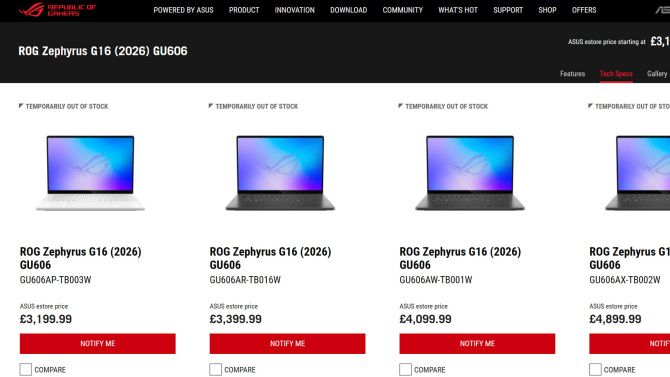
Intel's new Panther Lake CPUs might be great, but they'll be costly. Thanks to the combined costs of a new generation of hardware, global component shortages thanks to AI data center builds, and the ongoing fuel and materials crisis caused by President Trump's war in Iran, the new Asus Panther Lake laptops are very expensive. In some cases, that's more than 50% more costly than the last generation, with even the cheapest model priced at over $3,000.
The ROG Zephyrus G16 and G14 ranges of Asus laptops have always been fantastic for lean gaming on the go. Battery life is strong, GPU performance is capable, and the overall design is sleek and good-looking. That hasn't changed with this generation, but the prices have shot up. The entry-level G14 is priced at $3,200, while the most pricey G16 reaches as high as $5,405—and that's with only 2TB of storage space, as NoteBookCheck points out.
Credit: Asus
Prices for all electronics have shot up in recent months, and there have been hints that next-generation laptops will be more expensive too, but this is somewhat ridiculous. Redditors have reacted with consternation, some highlighting that you can get high-end gaming desktops for the same price as entry-level models of this new generation of Asus designs.
"I'm sorry, but have they lost their minds?" one commenter asked, pointing to the $6,500 cost of the Zephyrus Duo.
The one caveat is that this is with only a single processor option: the Intel Core Ultra 9 386H. That's the second most powerful of its generation, and likely one of the most expensive, so it could be driving up costs here at least a little. If Asus offered more affordable Intel CPUs in these laptops—and it may in the future—prices could be lower, particularly at the low end. But I still can't see any of these laptops dipping below $2,500.
As NotebookCheck highlights, these prices are 15% to 50% higher than those of their last-generation counterparts. Even if the new chips and designs are solid, they aren't anything close to 50% better in any metric. While some price rises due to component shortages are to be expected, this one feels egregious. It will be interesting to see how it affects Asus' sales numbers.


