
 五度妙笔
五度妙笔 企业透视镜
企业透视镜 API商城
API商城
 数据库
数据库从7步到1步:当传统合成“此路不通”,药明康德如何用光化学打开新门
在药明康德的一栋实验楼里,一群年轻人正围着光反应设备做最后的调试。窗外是料峭春寒,窗内,一盏特制的光源照亮了静静放置的反应器。
此时,一家公司正在焦急地等待消息。他们急需合成一种关键药物中间体,却卡在了关键反应步骤上,试遍了常规方案却始终无法突破。他们将希望托付给了药明康德。
等待终于迎来了回响。项目团队通过运用光化学反应和其他创新技术的“组合拳”,仅用9个小时就完成了100克以上规模的精准制备,为后续研究奠定基础。最终,原本预估需要4个多月的项目工期,被大幅缩短至仅10周。
当高质量产物交付到客户手中时,客户项目负责人难掩兴奋:“你们对光化学工艺的掌握和应用令人印象深刻,这项新技术为我们打开了实验优化的大门,不仅提高了产量,也让规模放大成为可能。”
如今,这家客户仍有多个后续项目选择与药明康德持续合作。

图片来源:123RF
这个案例,是药明康德二十多年来在一体化CRDMO赋能平台上,凭借全面的化学技术和能力持续赋能新药研发,赢得客户信任的一个缩影。
对此,药明康德研发化学服务部(Research Chemistry Services,RCS)光化学技术平台负责人指出:“光化学的潜力让我们看到,化学的边界仍可被不断拓展。在药明康德,类似的赋能故事每天都在发生。依托公司全面、系统的化学技术与能力,我们能够更有力地支持客户攻克研发和生产难题,将前沿方法转化为驱动新药研发的切实动力,最终助力更多客户的创新疗法更快惠及患者。”
前瞻布局,拥抱光化学浪潮
二十一世纪初,合成化学家们开始尝试驾驭一种温和却强大的能量——可见光。
2008年,普林斯顿大学David MacMillan教授团队在《科学》杂志发表论文,证明可见光可以温和地撬开化学键,生成以往难以驾驭的自由基。几乎同一时段,威斯康星大学麦迪逊分校Tehshik Yoon教授团队和密西根大学Corey Stephenson教授团队也发现光催化在更多反应类型中的应用潜力。这些背靠背的研究共同为现代光氧化还原催化领域奠定了重要基础。两年后,MacMillan教授团队又将光催化与手性催化结合,实现了对产物三维结构的精准控制。
至此,合成化学家的工具箱里,从此多了一把名为“光”的钥匙。
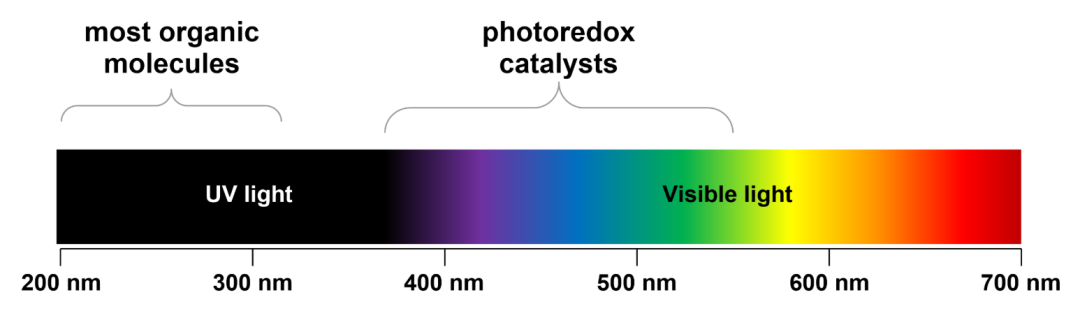
这把钥匙很快打开了新世界的大门。2014年,MacMillan教授与同校的Abigail Doyle教授合作,创造性地将光催化与镍催化结合,攻克了传统方法难以高效地构建C(sp³)-C(sp²)键难题。这一突破让原本需要多步反应转化才能使用的羧酸,可直接用于构建复杂的药物分子骨架,合成路径大幅缩短,迅速引发产业界关注。
彼时,光氧化还原催化技术在学术界发展如火如荼,但在工业界仍是“烧杯里的魔术”——现象令人惊叹,机理却难以捉摸,更遑论规模化生产。
作为全球一体化的CRDMO赋能平台,药明康德敏锐意识到这一创新技术在新药研发领域的应用潜力,并开始提前布局。早在2008年,药明康德就曾邀请MacMillan教授前往公司进行专题讲座。
2016年,药明康德在做足准备后正式搭建光催化条件筛选平台,快速组建核心技术团队,并面向公司内部提供条件筛选服务。
万事开头难。十年前,在整个制药产业,通过光催化合成分子都还处于起步阶段。“那时市面上不像现在有这么多光波长、光催化试剂,光反应器更是寥寥无几。第一次尝试用光催化反应解决合成路线设计时,挑战巨大。但化学团队勇敢去尝试。”该负责人回忆道,“起步时缺少适用的工业级光反应器,更别提筛选现成的光催化剂,一切几乎从零开始。”
这支年轻的团队并未被困难吓退。没有成熟光反应器,就找到工厂定制;没有路径,就通过海量实验筛选催化剂、配体与反应参数……
功夫不负有心人。平台成立的第一年,团队就在一个项目中利用光催化反应,将C(sp²)-C(sp³)卤卤偶联原始路线从4步缩短至2步,总收率提高8倍以上。而且,与传统合成路线相比,光化学反应不仅避免了使用敏感的金属试剂,也规避了存在安全风险的还原步骤。
随着技术、方法和经验的积累,团队在光催化平台的应用上越发游刃有余。平台成立的第二年,客户的一个化合物项目需要在杂环卤代物上引入烷基基团,而烷基羧酸底物化学性质比较钝化,不易发生脱羧反应。药明康德团队大胆尝试了光化学C(sp³)-C(sp2)脱羧偶联策略,通过对30多种镍配体的筛选,成功找到光催化方法。最终,原本7步的合成路线被缩短为1步,项目周期从预计至少2周大幅缩短至4天。
“这是在光催化技术发展初期,也是在平台发展初期,非常出色的一次设计和筛选。”该负责人自豪地说。
2019年,当MacMillan教授再次受邀来到药明康德讲座的时候,药明康德在光化学应用领域的进度令他感到振奋——不到四年的时间里,药明康德化学团队已累计完成上万个光化学反应。
迄今为止,公司光化学平台已成功验证并实施了数十种光化学反应类型。常见的C(sp²)-C(sp³)卤卤偶联、C(sp³)-C(sp²)脱羧偶联等反应类型,都已经是药明康德光化学平台的成熟服务模块之一。
突破“放大”之困:从克级到公斤级的跨越
在光化学工艺领域流传着这样一句话:“在烧瓶里让一个光催化反应完美进行,是艺术;而让它在工厂里以公斤级规模安全、经济地运行,完全是另一门工程学”。
自光催化可在高通量模式下运行后,光催化从“冷门技术”一跃成为合成化学家的“常规工具”。然而,规模化放大问题始终悬而未决。这既是光化学技术产业化的必经之路,也是一道严峻的工程挑战。

紧跟行业发展趋势,药明康德光化学团队在经历了反应类型开发,反应参数探索,克级化合物库合成探索之后,也开始着力攻克这一行业痛点。
凭借药明康德在化学领域的全面能力和丰富经验,光化学团队与流体化学团队携手开发流体放大方法。他们通过将高通量实验(HTE)与流动化学(Flow)工艺深度结合,持续探索解决方案。
“HTE能在极短时间内测试数百种反应条件,快速锁定最佳‘配方’;Flow则通过连续化生产,稳定批量地产出目标产物。”该负责人这样比喻两者的协作,“前者如同在家研发新菜谱,探索最佳组合;后者则像中央厨房,在百克级至公斤级的规模上验证与固化工艺,最终为客户交付一套完整、可放大的解决方案。”
通过“HTE+Flow”的深度协同,药明康德的化学平台每年都在稳健拓展着可放大的流动光化学反应工艺类型,支持客户解决从百克级至公斤级以上的放大反应需求,涵盖条件筛选、参数影响探索、操作步骤稳定以及后续流体放大等全流程。
目前公司光化学平台已与流体化学团队联合开发了数十种流动光化学反应类型,并总结了多种放大方法,包括需要分步操作的难度较大的脱氧偶联反应,涉及产气的环丙烷化,涉及需要避免使用危险试剂的肼合成等。
“光催化对于特殊类型分子的合成不可或缺,甚至是不二之选。”该负责人对光催化合成药物分子的未来潜力充满信心。
从最初那间实验室的“一束光”,到如今覆盖数十种反应类型的光化学一体化平台,药明康德的光催化平台走过了一条从0到1、从实验室走向产业化的道路。
当下,“这束光”正以更成熟的姿态,照亮着更多复杂分子的合成之路。
以近年来新药开发热点领域——靶向蛋白降解剂(TPD)为例,这类分子结构复杂且敏感,给化学合成和放大带来诸多挑战。而光催化技术凭借温和、快速、无需加热等特点,正在为这类复杂分子的合成提供新路径。“目前,我们光化学平台已经成为合成TPD等复杂分子的关键技术手段之一,我们已能够系统实现多种关键的TPD光催化反应类型。”该负责人表示。
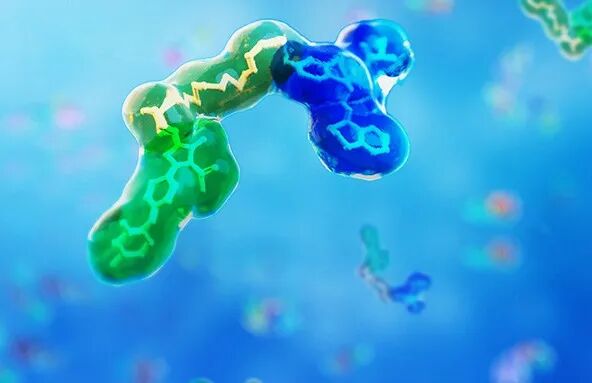
“随着光催化技术日益成熟,可用的反应类型更加丰富,团队对何时采用光催化也愈发得心应手。”该负责人进一步补充道,“光催化为逆合成分析提供了更多可行的切断方式,并展现了更丰富的化学键断裂模式。它不仅使合成路线更简洁高效,还能实现传统方法难以完成的转化,如脱羧偶联、脱硼偶联、NHP酯偶联、含F官能团、以及近年来热门的BCP环的引入和后续官能化等。在这些转化中,光催化都是一种更高效、成功率更高的合成方法。”
持续精进,赋能创新未来
药明康德光化学平台建设和赋能能力的不断完善,是公司全面化学能力的重要体现,也是公司CRDMO全球赋能平台在创新浪潮中的一个缩影。
二十多年来,药明康德打造的全球一体化、端到端的CRDMO赋能平台,已构建起包括光化学、电化学、流动化学、酶催化等等在内的全方位化学技术能力。这些不断精进的全面化学能力,成为高质量、高效率交付的重要支撑,赢得了全球众多客户的长期信任。
根据2025年药明康德投资者开放日上披露的数据,其研发化学服务部已经与超过980个客户合作5年以上,与280个客户合作10年以上,与10多家客户合作超过20年。这些数字,是客户长期信任的见证,更是药明康德对“赋能全球创新”这一使命坚定践行的回响。
从最初那间实验室里点亮的第一盏灯,到如今覆盖数十种反应类型、并与各类创新化学技术融会贯通,药明康德光化学平台的进化之路,折射出的不仅是技术边界的拓展,更是公司二十余年来“跟随科学、跟随客户”的坚守——将每一个看似微小的反应,淬炼为可被信赖的解决方案。
当全球越来越多的复杂分子在光照下高效合成,当传统方法难以实现的化学空间被成功解锁,我们看到的不仅是技术突破,更是药明康德对客户的坚定承诺——用更绿色、更高效的化学,点亮创新的希望。
From Bottleneck to Breakthrough: How WuXi AppTec Translates Photochemistry into Real-World Drug Development Impact
In one of WuXi AppTec’s laboratory buildings, a group of young researchers gathered around a photoreactor, making final adjustments. Outside, a lingering spring chill hung in the air; inside, a custom-built light source illuminated a reactor vessel sitting quietly.
At that moment, a client company was anxiously awaiting news. They needed to synthesize a key pharmaceutical intermediate but had hit a wall at a critical reaction step. Having exhausted all conventional methods without success, they turned to WuXi AppTec.
The wait finally paid off. The project team, leveraging a combination of photochemical reactions and other technologies, completed a synthesis at a scale exceeding 100 grams in just nine hours, laying the groundwork for subsequent research. Ultimately, the overall project timeline, initially estimated at over four months, was drastically shortened to just ten weeks.
When the high-quality product was delivered to the client, their project lead excitedly commented: “Your teams' use of photochemistry including flow chemistry has really opened the doors to new optimization and has increased the yields on many projects as well as making many scale ups feasible.”
Today, the client continues to partner with WuXi AppTec on several follow-up projects.
Image source: 123RF
This case serves as a microcosm of how WuXi AppTec, over more than two decades, has leveraged its comprehensive chemistry capabilities within its integrated CRDMO platform to enable R&D and manufacturing and earn customer trust.
Commenting on this, the head of the Photochemistry Technology Platform at WuXi AppTec’s Research Chemistry Services team noted: “The potential of photochemistry shows us that the boundaries of chemistry can still be pushed further. At WuXi AppTec, similar enabling stories unfold every day. Leveraging the company's comprehensive and systematic chemical technologies and capabilities, we can more effectively support clients in overcoming R&D and manufacturing challenges, and ultimately help more customers to bring innovative therapies to patients faster.”
Future-Oriented Strategy: Riding the Wave of Photochemistry
In the early 2000s, synthetic chemists began exploring the potential of a mild yet powerful energy source: visible light.
In 2008, Professor David MacMillan’s team at Princeton University published a paper in Science demonstrating that visible light could gently pry open chemical bonds to generate previously difficult-to-handle radicals. Around the same time, research groups led by Professor Tehshik Yoon at the University of Wisconsin-Madison and Professor Corey Stephenson at the University of Michigan also discovered the potential of photocatalysis in various reaction types. These parallel studies collectively laid the essential groundwork for modern photoredox catalysis. Two years later, Professor MacMillan's team combined photocatalysis with asymmetric catalysis, achieving precise three-dimensional control over product structure.
With that, synthetic chemists gained a new tool: light.
This key swiftly unlocked a new world. In 2014, Professor MacMillan collaborated with Professor Abigail Doyle, also at Princeton, to creatively merge photocatalysis and nickel catalysis, overcoming the challenge of efficiently constructing C(sp³)-C(sp²) bonds—a feat difficult with traditional methods. This breakthrough enabled carboxylic acids, which previously required multi-step transformations to be used, to directly build complex drug molecular frameworks, significantly shortening synthetic routes and quickly capturing the attention of the industry.
At that time, photoredox catalysis was flourishing in academia but remained a “test-tube magic trick” in industry—impressive to observe but difficult to control, let alone scale up for production.
As a global, integrated CRDMO platform, WuXi AppTec keenly recognized the potential of this innovative technology for drug discovery and began its strategic investments.
In 2016, after thorough preparation, WuXi AppTec formally established a photocatalysis condition screening platform, quickly assembled a core technical team and began to offer condition screening services internally.
The initial phase was challenging. A decade ago, the use of photocatalysis for molecular synthesis was still nascent across the pharmaceutical industry. “At that time, the market didn’t have the range of light wavelengths and photocatalytic reagents that are available today, and photoreactors were extremely rare. The first attempt to use a photocatalytic reaction to solve a synthetic route design was immensely challenging. But our team was courageous in trying,” the platform head recalled. “At the start, we lacked suitable industrial-grade photoreactors, let alone ready-made photocatalytic catalysts to screen. It was like starting from scratch.”
This young team remained determined. In the absence of commercially available photoreactors, they collaborated with manufacturing partners to custom-build their own. Even without a defined pathway, they examined catalysts, ligands, and reaction parameters through extensive experimental research.
Their perseverance paid off. In the platform's first year, the team applied photocatalysis to a project involving C(sp²)-C(sp³) cross-coupling process, shortening the original four-step route to just two steps and increasing the overall yield by over eightfold. Furthermore, compared to traditional synthetic routes, the photochemical approach avoided the use of sensitive reagents and eliminated a reduction step that posed safety risks.
As expertise in technology, methods, and experience grew, the team became increasingly adept at applying the photocatalytic platform. In its second year, a client required the introduction of alkyl groups onto heterocyclic halides for a compound project. However, the alkyl carboxylic acid substrates were relatively unreactive and displayed resistance to decarboxylation. The RCS team applied a photochemical C(sp³)-C(sp²) decarboxylative coupling strategy. After screening over 30 nickel ligands, they successfully identified a photocatalytic method. The result: the original seven-step synthetic route was condensed into a single step, and the project timeline, initially projected to be at least two weeks, was shortened to just four days.
“This example illustrated the potential of reaction design and screening in the early stage of photocatalytic technology development.” The platform head stated.
In 2019, when Professor MacMillan was invited to give a lecture at WuXi AppTec, he was impressed by the company’s progress in photochemical applications—in less than four years, WuXi AppTec had successfully carried out more than 10,000 photochemical reactions.
To date, WuXi AppTec's photochemistry platform has successfully validated and implemented dozens of photochemical reaction types. Now, routine reactions such as C(sp²)-C(sp³) cross-coupling and C(sp³)-C(sp²) decarboxylative coupling are mature service modules within WuXi AppTec's photochemistry platform.
Overcoming the Scale-Up Challenge: Bridging the Gap from Grams to Kilograms
A well-known saying in the field of photochemical process development goes: “Getting a photocatalytic reaction to work perfectly in a flask is an art; making it run safely and economically at the kilogram scale in a plant is an entirely different engineering discipline.”
As photocatalysis became operable in high-throughput modes, it rapidly evolved from a specialized technique into a conventional tool for synthetic chemists. However, the challenge of scaling up remained unresolved. This issue represents not only a necessary step for the industrialization of photochemistry but also a significant engineering hurdle.
Following industry trends, WuXi AppTec’s photochemistry team, after focusing on reaction type development, parameter exploration, and gram-scale synthesis for compound libraries, turned its attention to tackling this industry-wide pain point.
Leveraging WuXi AppTec's comprehensive capabilities and extensive experience in chemistry, the photochemistry team collaborated with the flow chemistry team to develop methods for scaling up flow photochemistry. They continuously explored solutions by deeply integrating high-throughput experimentation (HTE) with flow chemistry.
“HTE can test hundreds of reaction conditions in a very short time, quickly identifying the optimal formulation; flow chemistry, through continuous processing, enables stable, batch production of the target compound,” the platform head explained, drawing an analogy. “It’s like developing a new recipe at home to find the best combination, and then using a central kitchen to validate and solidify the process at a pilot scale from hundreds of grams to kilograms, ultimately delivering a complete, scalable solution to the client.”
Leveraging the deep synergy of HTE and flow chemistry, WuXi AppTec's chemistry platform widens the scope of scalable flow photochemical processes year by year. It supports clients in addressing scale-up needs from hundreds of grams to over a kilogram, covering the entire workflow from condition screening and parameter impact studies to process stabilization and subsequent flow scale-up.
At present, the company’s photochemistry team has been working in conjunction with the flow chemistry team to develop dozens of flow photochemical reaction types. Additionally, they established a variety of scale-up methods. These include challenging deoxygenative coupling reactions requiring meticulous steps, as well as gas-generating cyclopropanations and hydrazine synthesis involving hazardous reagents.
“For certain types of molecules, photocatalysis offers a synthetic route that may be more efficient or, in some cases, not readily achievable with conventional methods,” the platform head remarked, expressing strong confidence in the future potential of photocatalytic synthesis for pharmaceutical molecules.
From the initial “beam of light” in that early laboratory to today’s integrated photocatalysis platform covering dozens of reaction types, WuXi AppTec’s photocatalytic capabilities have traversed a path from zero to one, from laboratory research to industrial application.
Today, photocatalysis is increasingly applied to the synthesis of complex molecules with greater maturity.
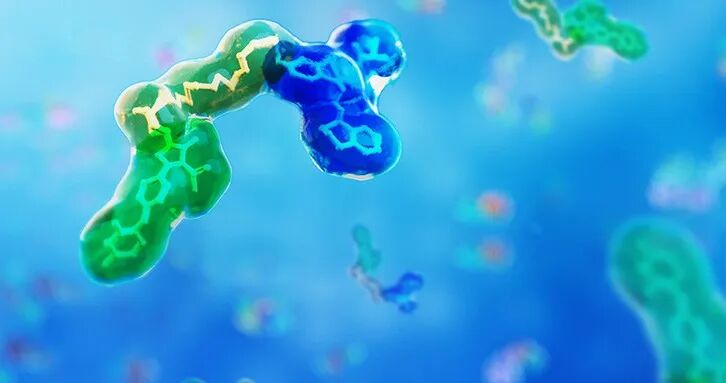
Consider targeted protein degraders (TPDs), a recent focus in drug development. These molecules often feature complex and sensitive structures, posing significant challenges for chemical synthesis and scale-up. Photocatalysis, with its mild, rapid, and heating-free characteristics, is offering new pathways for synthesizing such complex molecules. “Currently, our photochemistry platform has become one of the key technological approaches for synthesizing complex molecules like TPDs. We can now systematically execute a variety of critical photocatalytic reactions for TPDs,” remarked the platform head.
“As photocatalysis technology continues to evolve, with the diversification of available reaction types, our team has become skilled in determining its effective applications,” further elaborated the platform head. “Photocatalysis allows for feasible disconnection strategies in retrosynthetic analysis and provides the opportunity for a broader array of bond cleavage modes. This technique not only enhances the conciseness and effectiveness of synthesis but also aids in executing transformations that could be challenging or unfeasible using traditional methods. These include decarboxylative coupling, deboronative coupling, NHP ester coupling, the incorporation of fluorinated functional groups, and the recent incorporation of bicyclo[1.1.1]pentane (BCP) rings followed by functionalization. In these transformations, photocatalysis serves as a synthetic method that yields more effective outcomes and achieves a higher success rate.”
Ongoing Enhancement: Enabling Innovative Futures
The evolution of WuXi AppTec's photochemistry platform capabilities reflect the company's comprehensive chemical expertise and serves as a microcosm of its global CRDMO enabling platform amid ongoing waves of innovation.
Over the past two decades, WuXi AppTec has established an integrated, end-to-end CRDMO platform encompassing a wide range of chemistry technologies and capabilities, including photochemistry, electrochemistry, flow chemistry, and enzymatic catalysis. These continuously refined and comprehensive chemical capabilities provide the essential support for high-quality, efficient delivery, earning the long-term trust of numerous clients worldwide.
According to data disclosed at 2025 WuXi AppTec Investor Day, its RCS team has collaborated with over 980 clients for more than five years, with 280 clients for over a decade, and with more than ten clients for over twenty years. These figures stand as a testament to enduring client trust and reflect the fulfillment of WuXi AppTec's mission to “enable global innovation.”
From the first light switched on in that initial laboratory to today's integrated platform encompassing dozens of reaction types with various innovative chemical technologies, the evolution of WuXi AppTec's photochemistry platform mirrors not only the expansion of technological frontiers but also the company’s more than two decades commitment to “following the science, following the customer”—transforming seemingly minor reactions into reliable, trustworthy solutions.
版权说明:欢迎个人转发至朋友圈,谢绝媒体或机构未经授权以任何形式转载至其他平台。转载授权请在「药明康德」微信公众号回复“转载”,获取转载须知。

分享,点赞,在看,聚焦全球生物医药健康创新


