
 五度妙笔
五度妙笔 企业透视镜
企业透视镜 API商城
API商城
 数据库
数据库Microsoft flags big changes are coming to the world of AI at work
Microsoft Work Trend Index highlights growing presence of AI at work
Many employees are coming round to using AI tools more
However many businesses are still failing to offer the right level of tools
New findings from
Microsoft
’s 2026 Work Trend Index suggest that the narrative around AI in the workplace is shifting decisively as employees become more positive to the technology.
The report, which combined findings from trillions of anonymized Microsoft 365 productivity signals and a survey of 20,000 workers utilizing AI across 10 countries, highlighted a widening gap between individual capability and institutional adaptation.
In short, Microsoft found workers are increasingly open to using AI more at work — but are often being let down by their employer's platforms and systems.
Article continues below
You may like
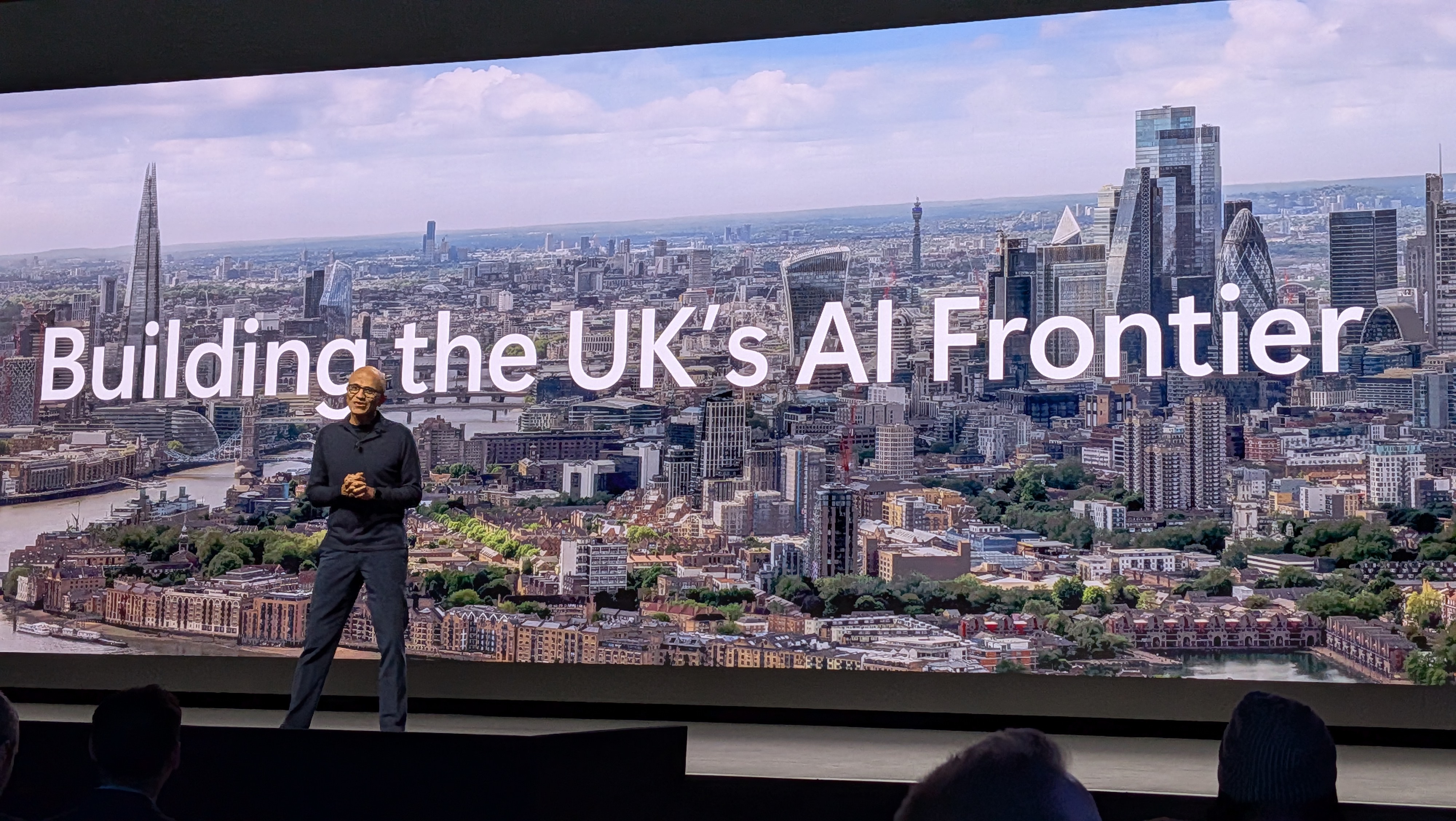
'We're working with an infinite set of minds': Microsoft CEO Satya Nadella says AI can offer your business so much more than you ever thought possible

Why 2026 is the year AI finally understands the work behind the work
Should we trust AI to take over our work tasks? Here’s why it could unlock a new age of productivity
"Frontier Firms" leading the way
At the individual level, the report found AI is already reshaping the nature of knowledge work, particular at what Microsoft calls "Frontier Firms" — those leading the way on embracing the technology.
Nearly half (49%) of Microsoft 365 Copilot interactions now involve cognitive tasks such as analysis, problem-solving, and creative thinking, showing how AI is not merely automating routine work but also augmenting higher-order functions.
This is reflected in outcomes: over half (58%) of surveyed users report producing work they could not have completed a year ago, rising to 80% among so-called “Frontier Professionals” — workers at Frontier Firms.
However, the report notes the primary constraint on AI impact is no longer technological or individual — it is from the organization themselves.
A range of structural factors, such as culture, management support, and talent practices account for more than twice the influence on AI effectiveness compared to individual skills and behaviors (67% versus 32%).
This suggests that competitive advantage is increasingly determined by how well organizations redesign their operating models to integrate AI, rather than how quickly employees adopt tools.

(Image credit: Shutterstock)
The rise of “human agency” was also highlighted as a differentiator — as AI systems take on execution, human roles are increasingly shifting toward oversight, judgment, and direction-setting.
What to read next
7 ways to future-proof your business using AI

'This isn’t just another technology trend – it’s the catalyst for the most significant workforce transformation in a generation': More and more executives believe AI usage is 'critical' in their business
AI could be your workplace’s secret weapon to end “digital friction” – here’s how
Workers themselves recognize this shift, with half identifying quality control of AI outputs as a critical skill, while slightly less (46%) emphasize the importance of critical thinking.
Notably, 87% of Frontier Professionals treat AI-generated content as a starting point rather than a final answer, reinforcing the continued centrality of human accountability.
Yet adoption is not frictionless, as the report identifies a “Transformation Paradox,” where urgency and hesitation coexist. While nearly two-thirds (65%) of workers fear falling behind without rapid AI adoption, 45% feel safer adhering to existing workflows rather than rearchitecting them.
Only 13% report being incentivized to pursue transformative change, highlighting a misalignment between strategic ambition and organizational reward systems.
Meanwhile, while all of this is going on, AI usage in the workplace is scaling rapidly. The number of agents within the Microsoft 365 ecosystem has grown 15-fold year over year — and 18-fold in large enterprises — signaling an inflection point in enterprise AI deployment.
However, just one in four employees report clear and consistent leadership alignment on AI strategy, highlighting a potential governance gap, despite coordination being critical.
Looking forward, the report notes that for most enterprises, the challenge now ahead is less about deploying AI tools and more about redesigning the structures that allow human and machine capabilities to compound effectively.
"AI is no longer an experiment. It is an execution challenge," Jared Spataro, Microsoft's CMO, AI at Work, noted.
"Employees are already working across all four patterns. The open question for every leadership team is whether they can catch up. Access to AI won’t be the advantage for much longer. How the work is designed around it will be."

Follow TechRadar on Google News
and
add us as a preferred source
to get our expert news, reviews, and opinion in your feeds.


