
 五度妙笔
五度妙笔 企业透视镜
企业透视镜 API商城
API商城
 数据库
数据库顶住非议20多年,耶鲁教授把“梦中的疗法”推向获批上市后,又有新思路 | bilingual
多年以后,看着密封在塑料袋中的5公斤浅色药物粉末,克雷格·克鲁斯(Craig Crews)教授回想起上世纪90年代末那个遥远的下午。当时,几乎无人驻足观看他的学术海报。
好在他并不孤单。这些海报是按姓氏首字母顺序排列的,在他旁边展出科研成果的,是一位名为雷蒙德·德沙耶(Raymond Deshaies)的年轻科学家。几小时过去,驻足提问的参会者寥寥无几,两人便开始攀谈起来。
那时的克鲁斯还是耶鲁大学的一名助理教授,他正如痴如醉地思考着一个不同寻常的化学构想:一种异双功能分子,能够把细胞内的两个蛋白质连接到一起。把它们拉得足够近,或许就能让它们发生相互作用。
德沙耶则是加州理工学院的酵母遗传学家,多年来一直致力于研究调控细胞周期的机制。1997年,他的实验室鉴定出一种被称为SCF的蛋白复合体,它是精密的蛋白酶体通路的一部分。蛋白酶体通路即细胞内部的“废品处理系统”,负责识别和降解多余的蛋白质。
两位科学家开始好奇:
如果有一种分子把这两种机制结合起来,会是什么样?
如果有一种药物,能在物理上将致病蛋白直接“拉”到细胞自身的降解系统面前,并把它标记为“垃圾”以供销毁,会发生什么?
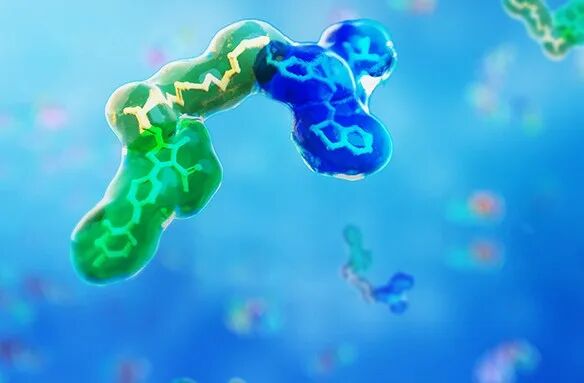
毕竟,当今的药物大多建立在“抑制”的基础上:阻断蛋白质的活性、关闭某些功能、抑制信号传导。但这个设想截然不同,它构想出了一种能让整个问题蛋白消失无踪的药物。
“几杯啤酒下肚后,我们开始讨论如何利用异双功能分子来‘劫持’蛋白酶体降解系统,”克鲁斯后来回忆道,“那真是一个开创性的时刻。”
二十多年后,当年那场深夜对谈萌生的想法,最终促成了首款获FDA批准上市的蛋白降解靶向嵌合体疗法问世,也推开了那扇通往一类全新药物的大门——这类药物设计的目的不再仅仅是抑制致病蛋白,而是把它们从细胞中“粉碎删除”。

图片来源:123RF
诺贝尔奖
令克鲁斯和德沙耶着迷的设想,建立在精巧的细胞内部清理系统之上。在人体细胞中,存在着上万个、甚至上百万个蛋白酶体,这种桶状的分子结构功能如同高度精密的“垃圾回收站”。它们的工作必不可少,尽管有些冷酷无情:识别出那些不需要的、受损或过剩的蛋白质,并将其分解为可循环利用的片段。
但这个“垃圾处理系统”并不是不加选择地进行清理。细胞承受不起随意破坏蛋白质的代价;要维系生存,就要精准地知道哪些蛋白质应该保留,哪些必须清除。在蛋白质被送入蛋白酶体之前,首先必须给它贴上一种叫做“泛素”的分子标签。泛素是一种小蛋白,实际上起到了“给垃圾贴标签”的作用。当足够多的泛素分子连接在一起形成多聚泛素链时,传递的信息就变得明白无误了:销毁这个蛋白质。
要给蛋白质贴上这种“泛素标签”,需要一系列复杂的酶协同接力完成。其中一类酶叫做E1酶,负责激活泛素;另一类叫做E2酶,负责运输泛素;最后,也是选择性最强的酶是E3连接酶,它们就像分子之间的“中介”,能够识别特定的目标蛋白、为其贴上“判令处决”的泛素标签。
这一系统的精准性,是维系生命本身的生死存亡的核心。细胞要依靠它来调节从分裂、生长到应激反应和DNA修复的各个过程。它还肩负着严格的质量控制工作——科学家目前估计,多达30%的新合成蛋白质在生成后不久就被分解了,因为它们没能达到细胞的“质量控制”标准。
到了20世纪90年代末和21世纪初,泛素-蛋白酶体通路已成为现代生物学中最重要的发现之一。2004年,阿龙·切哈诺沃(Aaron Ciechanover)、阿夫拉姆·赫什科(Avram Hershko)和欧文·罗斯(Irwin Rose)因揭示了这一系统背后的化学原理而荣获诺贝尔化学奖——细胞如何通过泛素标记不需要的蛋白质,并将其引导至蛋白酶体进行快速降解,从而调控蛋白质的存在。
诺贝尔奖委员会在宣布该奖项的公告中,暗示了这一发现蕴含的深远治疗潜力。“泛素系统已成为针对多种疾病开发治疗药物的一个有吸引力的靶点,”公告中写道。公告还提到,或许有朝一日,科学家们不仅能学会阻止重要蛋白质的降解,还能学会有意触发有害蛋白质的销毁。
对于克鲁斯和德沙耶而言,他们正朝着这个“未来”前进——它早在几年前便已初具雏形。
转折点
两位科学家设想的理念,依赖于能否“劫持”细胞自身的一种E3连接酶——它就像分子的“把关人”,负责决定哪些蛋白质能存活、哪些要被送去销毁。德沙耶实验室发现的SCF复合体结构庞大而复杂,但它恰恰提供了两位科学家需要的东西:一种能募集泛素机制、并作用于他们所选的目标蛋白上的方法。
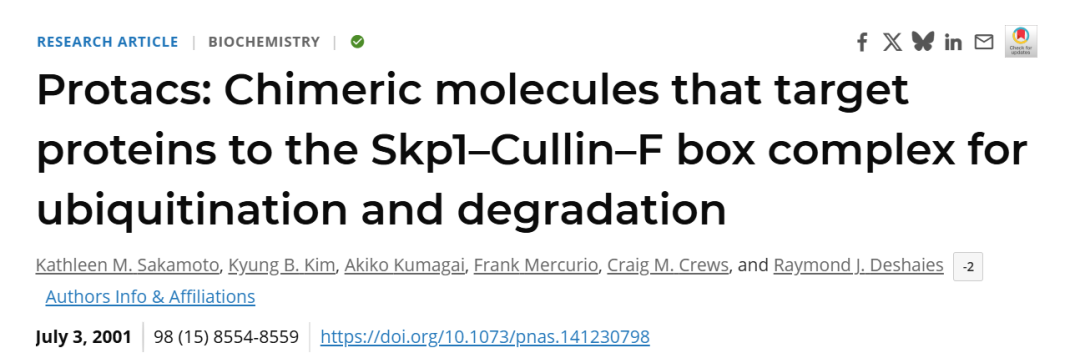
2001年,这一设想首次得到了真正的验证,两个团队在《美国国家科学院院刊》(PNAS)上发表了一篇论文。他们描述的一种蛋白降解靶向嵌合体(Proteolysis Targeting Chimera)分子大胆而又创新,其结构很简洁——这是一种充当“转接头”的双功能分子,一端包含一段能够募集SCF复合体的短磷酸多肽,另一端则携带卵假散囊菌素(ovalicin,一种已知能与MetAP-2蛋白结合的天然产物化合物)。
这项实验之所以格外引人注目,是因为人们此前知道MetAP-2蛋白不会在自然条件下被SCF复合体泛素化。如果这个蛋白降解靶向嵌合体分子能促成这种泛素化作用发生,就能验证这种全新的药物作用机制。
事实也确实如此。只有在这一蛋白降解靶向嵌合体分子存在的情况下,MetAP-2才会被泛素化,随后被降解。论文结尾做了一个预测:“未来,这种方法可能有助于让蛋白质在一定条件下被灭活,以及靶向致病蛋白以将其销毁。”
两年后,克鲁斯和德沙耶创立了一家名为Proteolix的公司,希望将这一概念转化为药物。但当时的时机并不友好,生物技术泡沫的破灭,让投资者对雄心勃勃的平台技术持谨慎态度,对非常规的药物模式也持怀疑态度。风险投资人想要的是那些路径清晰明确、能快速进入临床的成熟小分子,而不是听起来不像是实用疗法的降解剂。
“一位风险投资人把我们拉到一边说,‘听我一句劝,我们很欣赏你们,但我们对用多肽做的降解剂那套东西不感兴趣,’”克鲁斯回忆道,“‘你们还有别的想法吗?’”
巧的是,他们还真有。
当时,克鲁斯的实验室也在研究环氧霉素(epoxomicin),这是一种从土壤放线菌中分离出的天然产物,它能选择性地抑制蛋白酶体本身。与试图重塑降解机制的蛋白降解靶向嵌合体不同,环氧霉素能直接“关停”整个降解系统。公司随即调整了研究方向。这一决定最终促成了卡非佐米(carfilzomib)的开发,它是环氧霉素的衍生物,于2012年获FDA批准用于治疗多发性骨髓瘤。通过抑制蛋白酶体,这款药物能让恶性肿瘤细胞积累废弃蛋白质达到毒性水平,最终导致这些细胞灭亡。
这个“有心栽花、无心插柳”的转折,也让人感叹不已——曾经设想利用细胞“废物处理系统”来销毁有害蛋白的科学家,却率先通过“关停这个系统”获得突破。
蛋白降解靶向嵌合体
“从实验室里的构想到新药最终获批,跑完这一整个流程后,我对创建公司到底需要什么有了更深刻的理解,”克鲁斯后来反思道。
卡非佐米的成功,正是对这一经验的见证。但即便Proteolix公司正朝着上市抗癌疗法迈进,克鲁斯也从未放弃最初与德沙耶在对谈中萌生的蛋白降解靶向嵌合体的概念。萦绕在他心头的,还有阻拦它真正能作为药物在人体中使用的重要障碍——多肽。这一点,也是当初投资者几乎在看到方案那一瞬间就提出来的顾虑。
他们早期设想的蛋白降解靶向嵌合体依赖于多肽片段来募集E3连接酶,但在口服可行性方面,这带来了一个严峻的问题。基于多肽片段构建的蛋白降解靶向嵌合体结构复杂,分子量大,在口服吸收和穿越细胞膜方面面临着重大挑战。这些阻碍导致研发进程一度停滞不前。
克鲁斯意识到,要让蛋白降解靶向嵌合体成为真正的药物,必须把多肽的部件整块放弃掉。
2008年左右,他的团队开始了艰苦的“回炉重造”,从头开始设计整个分子构架。首先,他们需要找到一种小分子,它能够以足够的特异性和亲和力结合E3连接酶、以取代多肽作为募集泛素的部件,然后将其整合到一个能在活细胞内发挥作用的双功能降解剂中。
“我们花了4年时间克服化学、结构生物学以及各种必要的分析检测方法的挑战,最终找到了一种能够结合E3连接酶的小分子配体,”克鲁斯回忆道,“目标是制造一种全部由小分子构成的蛋白降解靶向嵌合体。”
2015年,突破性进展来了。在一篇具有里程碑意义的论文中,克鲁斯的团队报告了新一代、整体由小分子配体构建的蛋白降解靶向嵌合体。通过采用一种结构紧凑的化学结合剂取代多肽的部件,他们创造出的降解剂分子比早期原型分子效力更强、选择性更高,也更具成药性。在小鼠研究中,这些分子在多种组织(包括实体瘤)中都实现了疾病相关蛋白的靶向降解,表明这种方法最终可能具有治疗实用性。
“它或许不是最漂亮的分子,”克鲁斯后来说,“但至少是我们能实实在在地作为药物来开发的分子了。”
图片来源:123RF
随着这一突破,该领域仿佛几乎是在一夜之间发生了转变。曾经看似古怪的化学生物学“旁门左道”,突然间似乎成为一种全新的药物发现范式的开端。
“当我们有了小分子替代物的那一刻,”克鲁斯回忆道,“我才意识到,这可能会从根本上改变药物开发的方式。”
应用
2015年的这篇论文不仅引起了关注,更动摇了科学家们关于“药物应该是什么样”的长期假设。业内人士的反应,在感兴趣与怀疑之间摇摆不定。
一些科学家怀疑,比传统小分子大得多的蛋白降解靶向嵌合体分子是否能有效地进入细胞。
另一些科学家的担心则相反——降解剂的作用可能过于强大了。如果蛋白降解靶向嵌合体持续募集E3连接酶来销毁目标蛋白,会不会干扰细胞自身精密的蛋白质调控机制?会不会“垄断”泛素系统、阻止E3连接酶发挥其天然功能,从而导致危险的副作用?
随着时间的推移,许多这类担忧都通过实验被证明是可控的。研究人员证实,尽管蛋白降解靶向嵌合体背离了诸多指导药物化学研究数十年的传统规则,但它确实可以实现口服生物利用度并在体内产生显著活性。随着该领域发展出新的药理学概念——比如DC50(即降解一半靶蛋白所需的分子浓度,是衡量蛋白降解剂效果的指标)和Dmax(分子可达到的最大降解程度)等指标——关于效力和选择性的问题也变得更容易处理。这些指标部分由克鲁斯的实验室率先提出,在它们的帮助下,研究人员不再把降解剂当作抑制剂,而是把它视为一种迥然不同的药理学类别。
然而,更重要的问题并非停留于技术层面:为什么一开始需要探索蛋白质降解?既然抑制剂已经被证明有效,为什么还要发明一种全新的分子模式?
在克鲁斯看来,答案在于“抑制”本身是有局限性的。传统的小分子药物,一般通过占据蛋白质上的功能性结合位点并抑制其活性来发挥作用。但许多致病蛋白上几乎不存在这样的结合位点。到21世纪初,科学家已经绘制出了大部分的人类遗传图谱,并鉴定出大量潜在的疾病相关蛋白。然而,只有大约25%的蛋白质组似乎可以通过传统方法开发出的药物进行靶向干预,其余的蛋白质组常被贴上“不可成药”的标签。
克鲁斯越来越觉得这个术语具有误导性。“这些蛋白质不一定是不可成药的,它们只是还没遇到能影响它们的药物。”
蛋白质降解提供了一种根本不同的方法。与一般需要精准结合功能位点才能“压制”蛋白质活性的传统抑制剂不同,蛋白降解靶向嵌合体仅通过表面的相互作用即可发挥其功能,从而大大扩展了可能成为治疗靶点的蛋白质范围。
“我不想与抑制剂竞争,而是想与它们互补,”他补充道。
在其他一些情况下,单纯的抑制作用是暂时性的、也是脆弱的。比如,癌细胞面对抑制作用,往往会产生更多靶蛋白或激活其他代偿性反馈回路,最终恢复致病通路。
而蛋白降解靶向嵌合体无需反复阻断致病蛋白活性,而是可以直接清除致病蛋白本身。它的药理学变成了基于“事件”的药理学,而不是基于“占位”的药理学:一旦“降解事件”发生,药物分子就完成任务了,不再需要持续“占住”结合位点、与致病蛋白保持结合才能发挥其作用。
这些区别成为了整个领域的认知基础之一。
业界开始以惊人的速度做出响应。在接下来的几年里,之前那篇2015年发表于《自然-化学生物学》(Nature Chemical Biology)的论文引用量急剧上升,助推着靶向蛋白降解从“学术性好奇的产物”转变为药物发现中备受关注的领域之一。围绕这一概念,初创公司如雨后春笋般涌现,其中就包括克鲁斯于2013年率先创立的Arvinas公司,旨在将蛋白降解靶向嵌合体疗法推向临床。
十年后,该领域迎来了里程碑式的进展。2026年5月,Arvinas公司与辉瑞(Pfizer)公司共同宣布,FDA已批准vepdegestrant(商品名:Veppanu)用于治疗特定乳腺癌患者。这一决定标志着史上首个蛋白降解靶向嵌合体疗法的获批。

图片来源:123RF
对克鲁斯而言,首款蛋白降解靶向嵌合体疗法的获批意义重大。然而真正具有决定意义的时刻,并不是首批临床结果出炉的那一刻,也不是收到新药获批消息的那一刻。到那时,他已经对自己的科学理念深信不疑了。更深刻的意义感,来自于一个平静得甚至有些近乎寻常的瞬间:那是他第一次亲眼见到准备用于后期开发的蛋白降解靶向嵌合体药物的实物。
“还记得那天,我第一次亲眼看到了那袋5公斤重的、即将用于后期开发的蛋白降解靶向嵌合体药物粉末,”他回忆道,“那一刻真的触动了我。”
未来
当被问及“蛋白降解靶向嵌合体之后的下一步设想”,克鲁斯沉吟片刻便给出了答案。他相信,未来在于对“蛋白质-蛋白质”的相互作用进行更广泛的重新构想——这种复杂的分子关系支配着生物学的诸多方面,但遗憾的是,长期以来,药物发现却对此难以触及。
克鲁斯相信,诱导接近技术提供了一种绕过这一限制的通路。
目前,他关注的众多概念之一是调节诱导接近靶向嵌合体(Regulated Induced Proximity Targeting Chimera),这种新分子由他联合创立的第三家公司Halda Therapeutics开发,该公司于2025年被强生(Johnson & Johnson)收购。与蛋白降解靶向嵌合体通过募集E3连接酶来消除靶蛋白不同,调节诱导接近靶向嵌合体的目的是在细胞内强制“绑定”两种蛋白质、让它们形成新的“合作关系”。这种分子能同时结合肿瘤特异性蛋白和另一种对细胞生存的必需蛋白、形成一种稳定的非天然三元复合物,从而破坏必需蛋白的功能并选择性地杀死癌细胞。
在克鲁斯看来,这种方法预示着,未来药物的作用方式将不再是全身性、无差别地发挥作用,而是只在疾病发生的特定组织中精准生效。
“我不认为20年后传统抑制剂还是药物开发的主流,”他说,“未来在很大程度上将基于诱导接近机制发展。”
在他看来,其中的逻辑简明而清晰——传统抑制剂会抑制体内各个部位靶蛋白的活性,这往往对健康组织造成毒性。但调节诱导接近靶向嵌合体则不同,它理论上可能只在有组织特异性“伙伴蛋白”存在的部位发挥作用。例如,一种围绕骨骼肌特异性蛋白设计的调节诱导接近靶向嵌合体,可能只抑制骨骼肌中的某种酶,同时几乎不影响心肌。
这一设想依然壮志满怀,而生物很少会毫无抵抗地做出“让步”。特别是癌细胞,它们在治疗压力下进化出应对机制的能力是出了名的。然而克鲁斯怀疑,诱导接近疗法的耐药机制可能与传统抑制剂有着根本的不同。
他认为原因之一在于蛋白质-蛋白质相互作用本身的性质。过去几十年,科学家一直试图用小分子破坏蛋白质-蛋白质相互作用,却一次又一次发现,要瓦解这些结合面是如此困难。与酶紧凑的结合位点不同,蛋白质-蛋白质的结合通常会跨越广阔而灵活的界面。如果一种药物是通过“建立或稳定一个大的蛋白质-蛋白质结合面”发挥作用,即便蛋白发生了单点突变,它或许只会改变广阔接触面上的其中一个接触点,但整个大界面的相互作用依然可以维持(药物不一定因此失效)。
梦想
历经20多年沉浮,当初那场由“两张冷清的海报”引发的对谈,如今已传为一段佳话。克鲁斯参与创立的领域正不断发展壮大,比起初那个雄心勃勃的设想走得更深、更远。一开始关于“劝细胞摧毁某个特定的问题蛋白”的尝试,而今已演变成一个更宏大的理念:“诱导接近机制”本身,可能成为未来医学领域强有力的思维框架之一。
更令克鲁斯兴奋的是,他看到了为这样的未来构建分子图谱的可能性:把能与人类蛋白质组中每个蛋白质结合的配体,都编进一本“综合目录”,即覆盖几乎整个蛋白质组的配体库。如果存在这样一个工具包,研究人员理论上可以用几乎模块化的方式“组装”诱导接近疗法药物分子:针对疾病相关靶点选择一种配体,再针对组织特异性蛋白选择另一种配体,然后将它们组合成一种全新的药物类别。

图片来源:123RF
“我的梦想,”克鲁斯说,“是拥有整个蛋白质组的目录以及每个蛋白质对应的配体。这样每当我们有了一个想法,就可以直接从‘货架’上挑出现成的部件,来构建我们需要的分子。”
The Molecules of His Dreams
How Proteylysis Targeting Chimeras are Rewriting the Rules of Small Molecules
Many years later, staring at five kilograms of pale drug powder sealed inside a plastic bag, Craig Crews remembered that afternoon in the late 1990s, when almost nobody stopped to see his poster.
He was not entirely alone. The posters had been arranged alphabetically by last name, and beside his stood another young scientist’s work, belonging to a researcher named Raymond Deshaies. As the hours passed and few attendees stopped to ask questions, the two men began talking to each other instead.
Craig Crews was then a junior faculty member at Yale University, thinking obsessively about an unusual chemical idea: heterobifunctional molecules capable of tethering two proteins together inside a cell, forcing them into close enough proximity to interact. Deshaies, a yeast geneticist at Caltech, had spent years studying the machinery that governs the cell cycle. In 1997, his lab identified a protein complex known as SCF, part of the elaborate proteasome pathway — the cell’s internal disposal system, responsible for recognizing and dismantling unwanted proteins.
What if, the two scientists began to wonder, a molecule could bring these worlds together? What if a drug could physically drag a disease-causing protein to the cell’s own degradation machinery and mark it for destruction? Modern medicines, after all, were largely built on inhibition: blocking a protein’s activity, shutting something down, suppressing a signal. But this idea was different. It imagined a drug that could make a problematic protein disappear altogether.
“After a few beers, we started talking about using heterobifunctional molecules to hijack the protein degradation system,” Crews later recalled. “That was really the genesis moment.”
More than two decades later, the idea born from that late-night conversation would culminate in the first FDA-approved Proteylysis Targeting Chimera therapy, opening the door to an entirely new class of medicines: drugs designed not simply to inhibit proteins, but to erase them from the cell entirely.
Image source:123RF
The Nobel Prize
The idea that fascinated Crews and Deshaies rested on one of the cell’s most elegant housekeeping systems. Inside a human cell are tens of thousands or even millions of proteasomes, barrel-shaped molecular structures that function like highly sophisticated disposal units. Their job is relentless and essential: to identify unwanted, damaged, or surplus proteins and break them down into recyclable fragments.
But the system is not indiscriminate. A cell cannot afford to destroy proteins carelessly; survival depends on knowing precisely what should remain and what must go. Before a protein can be fed into the proteasome, it first has to be marked with a molecular tag known as ubiquitin, a small protein that acts, in effect, as a disposal label. When enough ubiquitin molecules are linked together into a polyubiquitin chain, the message becomes unmistakable: destroy this protein.
Attaching that label requires an intricate relay of enzymes. One class, known as E1 enzymes, activates ubiquitin. Another, E2 enzymes, carries it. The final and most selective actors are the E3 ligases, molecular matchmakers that recognize specific target proteins and attach the ubiquitin label that condemns them to destruction.
The precision of this system is central to life itself. Cells rely on it to regulate everything from division and growth to stress responses and DNA repair. It also serves as a stringent quality-control mechanism: scientists now estimate that as many as thirty percent of newly synthesized proteins are dismantled shortly after being made because they fail to meet the cell’s protein quality standards.
By the late 1990s and early 2000s, the ubiquitin-proteasome pathway had emerged as one of the most important discoveries in modern biology. In 2004, Aaron Ciechanover, Avram Hershko, and Irwin Rose were awarded the Nobel Prize in Chemistry for uncovering the chemical principles behind this system — how cells regulate the presence of proteins by labeling unwanted ones with ubiquitin and directing them to the proteasome for rapid degradation.
The Nobel committee, in its announcement, hinted at the profound therapeutic possibilities embedded within the discovery. “The ubiquitin system has become an interesting target for the development of drugs against various diseases,” the statement read. Scientists, it suggested, might one day learn not only to prevent the degradation of important proteins, but also to deliberately trigger the destruction of harmful ones.
For Crews and Deshaies, that future had already begun to take shape years earlier.
The Pivot
The concept the duo envisioned depended on hijacking one of the cell’s own E3 ligases — the molecular gatekeepers responsible for deciding which proteins live and which are sent to destruction. The SCF complex identified by Deshaies’s laboratory was enormous and intricate, but it offered precisely what the two scientists needed: a way to recruit the ubiquitin machinery to a target protein of their choosing.
The first real demonstration arrived in 2001, when the two groups published a paper in the Proceedings of the National Academy of Sciences. The molecule they described — Protac-1 — was audacious in its simplicity, a bifunctional molecule acting as an adapter: one end contained a short phosphopeptide capable of recruiting the SCF complex. The other end carried ovalicin, a natural-product compound known to bind a protein called MetAP-2.
What made the experiment especially striking was that MetAP-2 was not known to be naturally ubiquitinated by the SCF complex. If the system worked, the Protac-1 molecule itself would be responsible for forcing the interaction, effectively creating an entirely new biological relationship inside the cell.
And that was precisely what happened. MetAP-2 became ubiquitinated, then degraded, only in the presence of Protac-1. The paper ended with a prediction that, in retrospect, now reads almost understated: “In the future, this approach may be useful for conditional inactivation of proteins, and for targeting disease-causing proteins for destruction.”
Two years later, Crews and Deshaies founded a company called Proteolix, hoping to transform the concept into medicines. But timing proved unforgiving. The collapse of the genomic bubble had left investors wary of ambitious platform technologies and skeptical of unconventional drug modalities. Venture capitalists wanted familiar small molecules with a clear and immediate path to the clinic, not peptide-based degraders that sounded more like speculative biology than practical therapeutics.
“One VC pulled us aside and said, ‘Listen, we like you guys, but we’re not interested in the peptide degradation stuff,’” Crews recalled. “‘Do you have something else?’”
As it happened, they did.
At the time, Crews’s laboratory had also been studying epoxomicin, a natural product isolated from soil-dwelling Actinomycetes that selectively inhibited the proteasome itself. Unlike Proteolysis Targeting Chimeras, which attempted to redirect the degradation machinery, epoxomicin simply shut the system down. The company pivoted. That decision eventually led to the development of carfilzomib, a derivative of epoxomicin approved by the FDA in 2012 for multiple myeloma. By blocking the proteasome, the drug causes malignant cells to accumulate toxic levels of protein waste, ultimately driving them toward death.
The irony was difficult to miss. The scientists who had once imagined harnessing the cell’s disposal system to destroy harmful proteins first found regulatory breakthrough by disabling that very system altogether.
The Proteolysis Targeting Chimeras
“Having gone through the entire process from an idea in the lab to an approved medicine, I had a much better sense of what it actually takes to build a company,” Crews later reflected.
The success of carfilzomib validated that lesson. But even as Proteolix advanced toward a marketed cancer therapy, Crews never abandoned the original Proteolysis Targeting Chimera concept that had first emerged from those conversations with Deshaies years earlier. What lingered in his mind, too, were the challenges he would face to turn this concept into real medicine for patients. One of the challenges was the peptide, which was also a concern that investors had raised almost immediately.
Early Proteolysis Targeting Chimera molecules depended on peptide fragments to recruit E3 ligases, and that presented a serious problem for oral delivery. Due to using peptide as a component, the bulky bifunctional degrader has high molecular weight and a complex structure. Overcoming low oral bioavailability and permeability of cell membrane became a serious challenge which stalled the research progress.
For Proteolysis Targeting Chimeras to become real medicines, Crews realized, the field would have to abandon the peptide altogether.
Around 2008, his group began the painstaking work of redesigning the entire concept from the ground up. First, they needed to discover a small molecule capable of binding an E3 ligase with enough specificity and affinity to replace the peptide recruiter and then integrate it into a bifunctional degrader that could function inside living cells.
“For four years, we worked on the chemistry, the structural biology, and all the assays necessary to come up with a small molecule ligand that could bind an E3 ligase,” Crews recalled. “The goal was to make an all-small-molecule Proteolysis Targeting Chimera.”
The breakthrough arrived in 2015. In a landmark paper, Crews’s team reported a new generation of such molecules built entirely from small-molecule ligands. By replacing the peptide recruiter with a compact chemical binder, they created degraders that were dramatically more potent, more selective, and far more drug-like than the earlier prototypes. In mouse studies, the molecules achieved targeted degradation of disease-related proteins across multiple tissues, including solid tumors — an important demonstration that the approach might finally be therapeutically practical.
Image source:123RF
“It may not have been the prettiest molecule,” Crews said later, “but it was at least something we could realistically work with as a drug.”
And with that, the field seemed to shift almost overnight. What had once looked like an eccentric chemical biology trick suddenly appeared to be the beginning of an entirely new paradigm in drug discovery.
“Once we had the small-molecule replacement,” Crews recalled, “that was when I realized this could fundamentally change how drugs are developed.”
The Adoption
The 2015 paper did not merely attract attention; it unsettled long-standing assumptions about what a drug could be. Within the pharmaceutical industry, reactions oscillated between fascination and skepticism.
Some scientists doubted whether Proteolysis Targeting Chimera molecules, substantially larger than conventional small molecules, could effectively enter cells at all. Others worried about the opposite problem: that the degraders might work too well. If a Proteolysis Targeting Chimera continuously recruited E3 ligases to destroy target proteins, could it interfere with the cell’s own delicate protein-regulation machinery? Might it monopolize the ubiquitin system and prevent E3 ligases from carrying out their natural functions, leading to dangerous side effects?
Over time, many of those concerns proved experimentally manageable. Researchers demonstrated that these molecules could indeed achieve oral bioavailability and meaningful activity in vivo, despite violating many of the conventional rules that had guided medicinal chemistry for decades. Questions surrounding potency and selectivity also became more tractable as the field developed new pharmacological concepts, including measures such as DC50, the concentration required to degrade half of a target protein population, and Dmax, the maximum extent of degradation achievable by a molecule. These metrics, pioneered in part by Crews’s laboratory, helped researchers think about degraders not as inhibitors, but as an entirely different pharmacological class.
Yet the important question was more than technical: why was protein degradation needed in the first place? Why invent an entirely new modality when inhibitors already worked?
For Crews, the answer lay in the limits of inhibition itself. Traditional small-molecule drugs generally work by occupying a functional pocket on a protein and suppressing its activity. But many disease-causing proteins lack such pockets altogether. By the early 2000s, scientists had already mapped much of the human genome and identified vast numbers of potential disease-related proteins. Yet only around 25% of the proteome appeared accessible to conventional drug discovery approaches. The rest were frequently labeled “undruggable.”
Crews increasingly came to see that term as misleading. “These proteins weren’t necessarily undruggable, they were undrugged.”
Protein degradation offered a fundamentally different approach. Unlike conventional inhibitors, which generally require a precise binding pocket to shut down a protein’s activity, Proteolysis Targeting Chimeras can act through surface interactions alone, dramatically expanding the range of proteins that may be therapeutically targeted.
“I didn’t want to compete with inhibitors. I wanted to complement them,” He added.
In still other cases, inhibition alone is temporary and fragile. Cancer cells, for example, often respond to inhibition by producing more of the target protein or activating compensatory feedback loops that eventually restore the disease pathway.
Rather than repeatedly blocking a protein’s activity, a Proteolysis Targeting Chimera could eliminate the protein itself. The pharmacology became event-driven rather than occupancy-driven: once degradation occurred, the molecule no longer needed to remain continuously bound to exert its effect.
Those distinctions became one of the intellectual foundations of the entire field.
The industry began to respond with remarkable speed. Citations of the 2015 Nature Chemical Biology paper rose sharply over the following years, helping transform targeted protein degradation from an academic curiosity into one of the most closely watched areas in drug discovery. Startups formed rapidly around the concept, beginning with Arvinas, the company Crews had founded in 2013 to advance Proteolysis Targeting Chimera therapeutics into the clinic.
A decade later, the field reached the milestone. In May 2026, Arvinas and Pfizer announced that the FDA had approved vepdegestrant, marketed as Veppanu, for certain patients with breast cancer. The decision marked the first approval of a Proteolysis Targeting Chimera therapy in history.
Image source:123RF
To Crews, the approval of the first Proteolysis Targeting Chimera therapy matters. However, the defining moment did not come from the first clinical data or a press release announcing the approval. By then, he already believed in the science. The deeper realization arrived in a far quieter, almost strangely ordinary moment: seeing the physical material of a Proteolysis Targeting Chimera drug prepared for human testing for the very first time.
“I remember seeing the five kilos of the drug that was going to go into humans,” he recalled. “That was the moment when it really hit me.”
The Future
When asked what comes next after Proteolysis Targeting Chimeras, Crews did not hesitate for long. The future, he believes, lies in a broader reimagining of protein-protein interactions (PPIs), the intricate molecular relationships that govern much of biology and have historically remained frustratingly inaccessible to drug discovery.
Induced proximity technologies, Crews believes, offer a way around that limitation.
Among the concepts that now occupy much of his attention is a modality called Regulated Induced Proximity Targeting Chimera, developed through Halda Therapeutics, the third company he co-founded, which was acquired by Johnson & Johnson in 2025. Whereas Proteolysis Targeting Chimeras recruit an E3 ligase to eliminate a target protein, Regulated Induced Proximity Targeting Chimeras are designed to force entirely new protein partnerships inside a cell. The molecule simultaneously binds a tumor-specific protein and a second protein essential for survival, stabilizing an unnatural ternary complex that disrupts the essential protein’s function and selectively kills the cancer cell.
To Crews, the approach suggests a future in which drugs no longer act systemically and indiscriminately, but only within the precise tissues where disease occurs.
“I don’t believe that twenty years from now we’ll still mainly be making traditional inhibitors,” he said. “Everything could become proximity-driven.”
The logic, in his view, is straightforward. A conventional inhibitor suppresses its target wherever the protein exists in the body, often creating toxicities in healthy tissues. But an induced-proximity molecule could, in principle, work only where a tissue-specific partner protein is present. A Regulated Induced Proximity Targeting Chimera designed around a skeletal-muscle-specific protein, for example, might inhibit an enzyme in skeletal muscle while sparing cardiac muscle entirely.
The vision remains ambitious, and biology rarely yields without resistance. Cancer cells, in particular, have a notorious ability to evolve around therapeutic pressure. Yet Crews suspects that resistance mechanisms for induced-proximity drugs may differ fundamentally from those seen with traditional inhibitors.
One reason, he argues, lies in the very nature of protein-protein interactions themselves. Scientists have spent decades trying to disrupt PPIs with small molecules and have repeatedly discovered how difficult those interfaces are to break apart. Unlike the compact binding pockets of enzymes, protein-protein interfaces often span broad and flexible surfaces. If a drug functions by creating or stabilizing a large protein-protein interface, a single mutation may alter one contact point without necessarily destabilizing the interaction entirely.
The Dream
More than twenty-five years after a conversation beside two largely ignored posters, the field Crews helped create continues to expand beyond its original ambitions. What began as an attempt to persuade the cell to destroy a single problematic protein has evolved into a broader idea: that proximity itself may become one of the most powerful organizing principles in the future of medicine.
What excites Crews most is the possibility of building a molecular atlas for this future: a comprehensive catalog of ligands capable of binding proteins across the human proteome. If such a toolkit existed, researchers could theoretically assemble induced-proximity therapeutics almost modularly: selecting one ligand for a disease-related target, another for a tissue-specific protein, and combining them into entirely new classes of medicines.
Image source:123RF
“My dream,” Crews said, “is to have a catalog of the entire proteome and corresponding ligands for each protein, so when we have an idea, we can essentially pull components off the shelf and build the molecule we need.”
免责声明:本文仅作信息交流之目的,文中观点不代表药明康德立场,亦不代表药明康德支持或反对文中观点。本文也不是治疗方案推荐。如需获得治疗方案指导,请前往正规医院就诊。
版权说明:欢迎个人转发至朋友圈,谢绝媒体或机构未经授权以任何形式转载至其他平台。转载授权请在「药明康德」微信公众号回复“转载”,获取转载须知。

分享,点赞,在看,聚焦全球生物医药健康创新


