
 五度妙笔
五度妙笔 企业透视镜
企业透视镜 API商城
API商城
 数据库
数据库肿瘤学创新浪潮再起!从科学突破到患者获益,还要做对什么?专访李敬博士 | Bilingual
2026年5月,美国FDA宣布批准Arvinas和辉瑞(Pfizer)公司联合开发的蛋白降解靶向嵌合体Veppanu(vepdegestrant)上市,用于治疗雌激素受体(ER)阳性、人表皮生长因子受体2(HER2)阴性、ESR1突变的经治晚期或转移性乳腺癌成人患者。Arvinas公司的新闻稿指出,这是FDA批准的首款蛋白降解靶向嵌合体药物。
这一里程碑发生之际,肿瘤学领域正经历治疗边界的快速拓展。从靶向蛋白降解(TPD)、抗体偶联药物(ADC)等新兴疗法的兴起,到合成致死机制与肿瘤微环境等机制研究的突破,创新浪潮正在重塑癌症治疗格局。
作为创新的赋能者,药明康德依托一体化CRDMO平台,为加速全球合作伙伴的肿瘤疗法研发构建了一体化的能力,支持客户早日将科学想法转化为惠及患者的疗法。
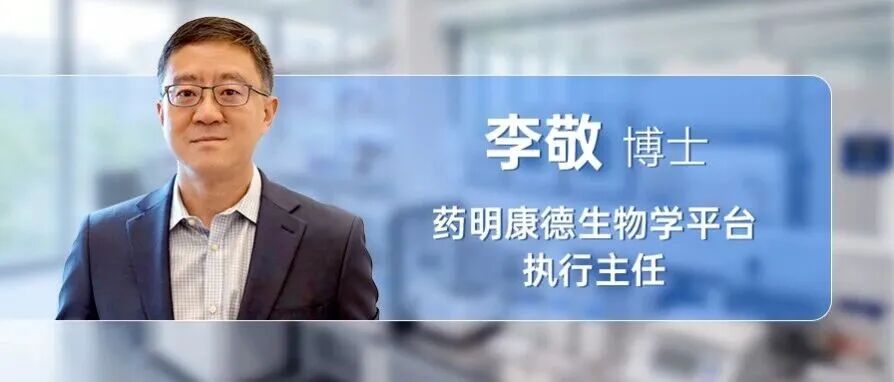
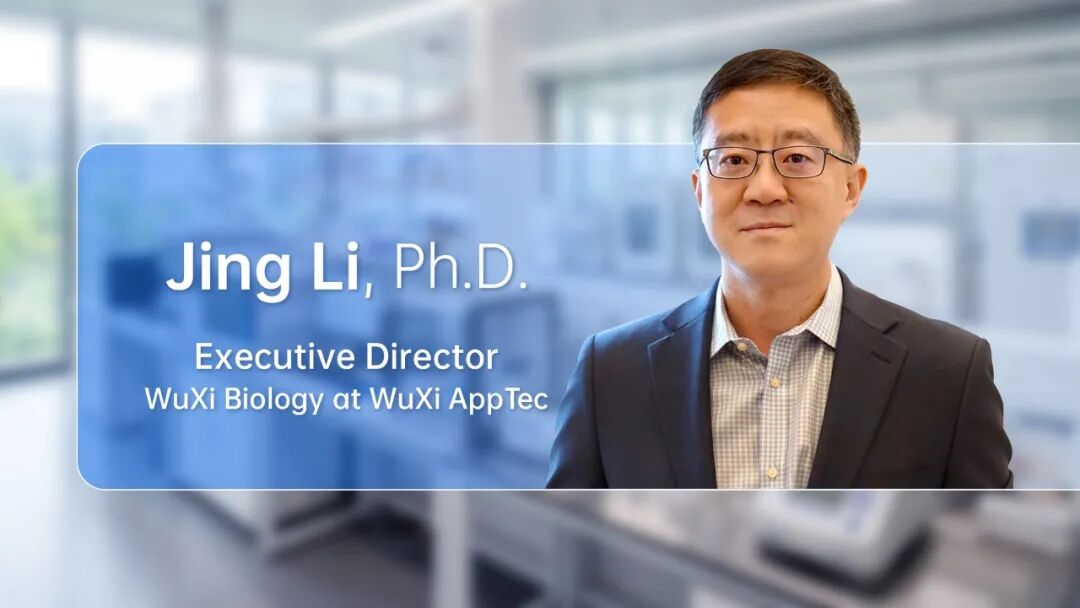
近日,药明康德生物学平台执行主任李敬博士接受了行业媒体Technology Networks专访。作为亲历多轮肿瘤学创新浪潮的资深专家,李敬博士在专访中探讨了新兴疗法与机制突破如何驱动新一轮的肿瘤学创新,并推动科学发现转化为具有临床意义的疗法。
以下为采访内容编译,点击“阅读原文/Read More”即可访问原文页面。
Technology Networks:从肿瘤学领域的几次创新浪潮中,我们学到了什么?当前又有哪些科学转变正在重新定义癌症研究?
李敬博士:过去几十年间,肿瘤领域经历了多个具有变革意义的发展阶段,例如激酶抑制剂、肿瘤免疫疗法的兴起。在我看来,这些突破共同推动肿瘤治疗向更精准的方向演进。它们从根本上改变了癌症治疗模式,向着高度个体化、基于精准医疗的治疗方案转变,根据患者的肿瘤特性量身定制疗法。
免疫检查点抑制剂便是一个典型案例,该疗法证明了我们能够调动患者自身的免疫系统,实现传统化疗往往难以企及的长期缓解。
如今,ADC和T细胞衔接器(TCE)等新型疗法同样在持续发展。这些创新不仅持续深化对癌症的科学理解,也重塑着未来的治疗格局。
在新疗法不断涌现的同时,小分子药物也在重新焕发活力。如今,小分子药物仍是主流疗法。共价修饰剂、蛋白-蛋白相互作用(PPI)抑制剂、蛋白降解剂和分子胶等新机制的不断涌现,正在拓展小分子药物的治疗范围,并重新激发业界对这一领域的关注。
Technology Networks:要使分子胶成为更加可靠、可重复的药物发现引擎,需要具备哪些条件?该领域距离拐点还有多远?
李敬博士:作为靶向蛋白降解剂的代表性类别,分子胶最初是在研究FK506、环孢素和雷帕霉素等天然产物的机制时被发现的。随后,来那度胺(lenalidomide)成为首个在临床上取得成功的分子胶降解剂。历史上大多数分子胶都是偶然发现的,但这一局面正在迅速改变。
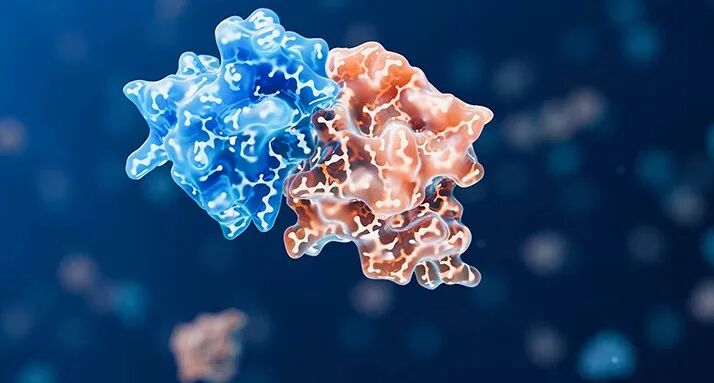
科学界意识到,诱导蛋白接近现象比此前认为的更为普遍。随着高通量筛选(HTS)、亲和质谱筛选(ASMS)和DNA编码化合物库(DEL)等筛选技术的进步,以及多样性导向的化合物库构建,针对特定靶点的分子胶理性发现正变得越来越有希望。由此,分子胶的药物发现流程正朝着可规模化、可重复性的方向转变。
这些趋势表明,分子胶领域正处于重要拐点。分子胶的研发正在回归到更广泛的邻近药理学框架中,即通过诱导蛋白质之间的邻近关系来调控其功能。其应用范围已超越蛋白降解,延伸至转录抑制、蛋白转运和蛋白稳定性等多个方向。
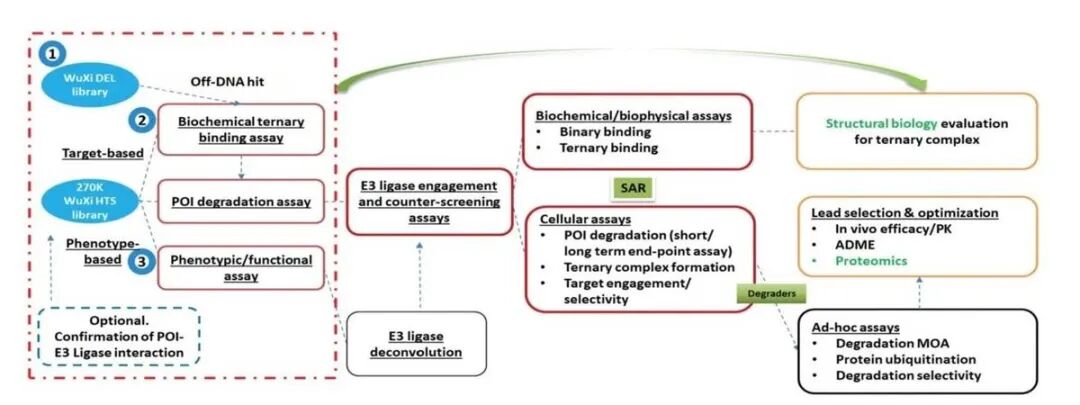
▲分子胶苗头化合物发现、表征及先导化合物优化的代表性工作流程
Technology Networks:ADC领域的下一个前沿是什么?还有哪些技术障碍有待突破?
李敬博士:ADC已成为肿瘤学中最活跃的方向之一。虽然连接子化学、载荷创新和靶点选择等方面正在快速发展,但单一的技术突破并不足以推动ADC领域的整体进步。相反,真正驱动进步的,是多个领域进展的协同整合。
以ADC载荷为例,其范围已从传统的细胞毒性药物,扩展至靶向特异性抑制剂、蛋白降解剂和免疫激动剂。目前,业界正向多载荷ADC和多特异性ADC的方向发展,以实现更精准的药物递送。这些新一代ADC的发展,将高度依赖结构创新和蛋白质工程的进步。其最终目标是更深入地理解ADC耐药机制,并且更准确地预测联合疗法的疗效持久性。
Technology Networks:合成致死呢?它是否可以成为一种适用于更多肿瘤类型的治疗策略?
李敬博士:合成致死指的是两个基因同时失活会导致细胞死亡,而其中任意一种失活则不会致死的遗传现象。基于合成致死原理开发的PARP抑制剂已经显著改善了BRCA突变癌症患者的预后。此外,多款针对MTAP缺失肿瘤的PRMT5抑制剂也已进入后期临床开发阶段。随着遗传依赖性图谱的不断扩展,合成致死有望在更广泛的肿瘤领域发挥作用。
合成致死概念对癌症治疗极具吸引力,但其临床成功仍面临着障碍。一个主要挑战在于,合成致死相互作用往往具有背景依赖性。虽然大规模筛选能产生大量候选靶点,但真正具有良好重复性、稳定性以及临床相关性的合成致死基因对似乎并不多见。
合成致死疗法的一个发展路径,是将网络生物学与机器学习相结合,以提高候选靶点优先级排序能力,提高识别稳定、具有转化潜力的合成致死靶点的成功率。
Technology Networks:随着肿瘤微环境研究的深入,哪些机制层面的发现正在转化为切实可行的疗法?又有哪些前沿进展具备转化潜力?
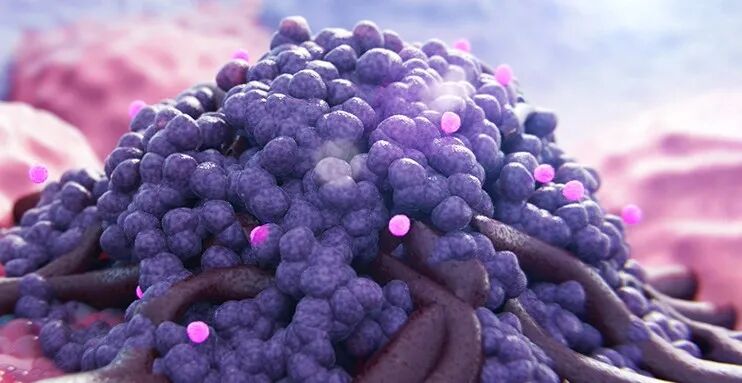
李敬博士:肿瘤微环境的复杂性,使其成为肿瘤学研究最具潜力的领域之一,同时也是药物开发中极具挑战性的方向。
尽管如此,越来越多的科学洞见正逐步转化为实际治疗策略。例如,通过清除表达成纤维细胞活化蛋白的肿瘤相关成纤维细胞(FAP+ CAFs),能够破坏肿瘤的纤维化基质结构,从而提高后续间皮素靶向CAR-T细胞疗法和抗PD-1治疗的敏感性。
与此同时,高分辨率数字病理学、空间转录组学和机器学习的进展,正在帮助研究人员以更高的精度描绘“热”肿瘤和“冷”肿瘤的免疫图谱。这些进展中涌现出良好的转化潜力,多种靶向调节性T细胞(Tregs)、髓源性抑制细胞(MDSCs)、肿瘤相关巨噬细胞(TAMs)和肿瘤相关成纤维细胞(TAFs)的药物已经进入临床开发阶段。此外,能够同时调节肿瘤微环境内多条免疫抑制通路的联合治疗策略,有望成为克服免疫逃逸的关键突破口。
Technology Networks:早期整合生物标志物在现代肿瘤药物开发中有多重要?哪些创新将持续变革癌症治疗的策略?
李敬博士:早期生物标志物,尤其是患者筛选生物标志物,一直是现代精准肿瘤学的重要组成部分。鉴于肿瘤的高度异质性,如果缺少基于生物标志物的患者分层,往往很难获得具有临床意义的治疗应答率。
如今生物标志物的一个重要趋势是,微小残留病灶(MRD)检测正从血液肿瘤迅速扩展至实体瘤。借助当前的技术平台和严格的临床验证,基于循环肿瘤DNA(ctDNA)的MRD检测能够在癌症治疗的各个阶段动态监测疗效。
从更宏观的领域来看,生物标志物正在经历一项关键转变:生物标志物策略正从静态的预后标志物,转向对兼具预测价值和可干预意义的生物信号进行动态、长期监测。
Technology Networks:药明康德如何在保持深度生物学洞察的同时,以现代肿瘤药物研发所需的速度推进项目?
李敬博士:在肿瘤药物发现领域,速度至关重要。癌症治疗方案往往很复杂,而患者需求又十分迫切,因此研发效率始终是行业关注的重点。但速度并不意味着牺牲科学严谨性。在我们看来,保持科学研究的深度与按照行业所需速度推进项目,并不是一道选择题。相反,两者都是现代药物研发的基本要求,而且必须同时实现。
实现这一平衡需要多维度能力的支撑,包括对因果生物学的深刻理解;持续洞察并预判新兴科学趋势和行业发展方向的能力;以及围绕新型治疗手段持续投入,构建相应的耐药模型以及适配新作用机制的药物反应研究体系。这些能力正是药明康德搭建的一体化能力体系的组成部分。长期以来,药明康德依托一体化赋能平台,助力全球创新者加速肿瘤药物的发现与开发。
展望未来,随着近年来新兴治疗模式和作用机制的不断涌现,将生物学发现转化为具有临床意义的治疗获益的能力正变得更强。例如,在研的新型非共价抑制剂daraxonrasib可与激活状态下的野生型和突变型RAS蛋白(包括KRAS、HRAS和NRAS)结合,靶向治疗RAS驱动肿瘤。近期公布的关键3期临床研究结果显示,在既往接受过治疗的转移性胰腺癌患者中,daraxonrasib治疗组的中位总生存期(OS)达到13.2个月,而化疗组仅为6.7个月。这是肿瘤学领域的一项重要突破。
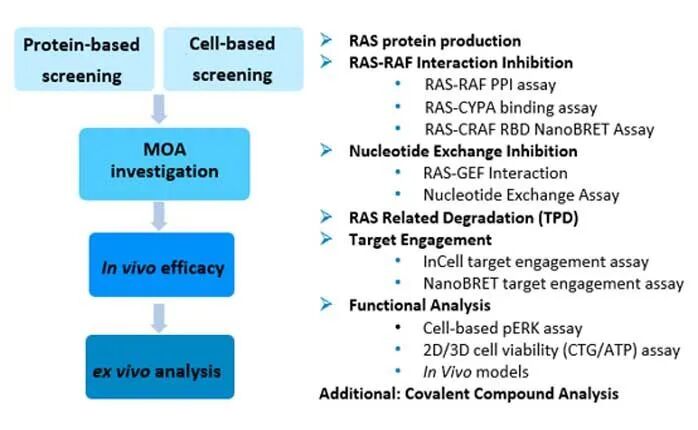
▲用于KRAS靶点表征、作用机制研究及疗效评价的代表性工作流程与检测工具组合
这类突破正在改变过去数十年来肿瘤治疗的临床实践,预示着未来创新疗法将覆盖更广泛的适应症,从而让更多类型的癌症患者从中获益。
如今,肿瘤学创新正迈入全新的阶段。在这一阶段,新兴治疗模式、更深入的癌症生物学认知以及先进的转化研究工具正在加速融合,共同重塑药物发现与开发的方式。从分子胶、ADC等治疗模式,到合成致死、肿瘤微环境调控以及动态生物标志物策略,行业进展越来越依赖于将机制层面的生物学洞察与可规模化的药物发现能力相结合。随着这些科学创新不断成熟,如何将对生物学机制的深入理解转化为高效的研发执行能力,将成为推动更多精准、持久抗癌疗法惠及患者的关键。
Inside the Next Wave of Oncology Innovation: How New Modalities and Cancer Biology Are Reshaping Therapeutics
On May 1, 2026, the US Food and Drug Administration (FDA) approved Veppanu (vepdegestrant) for adults with ER-positive, HER2-negative, ESR1-mutated advanced or metastatic breast cancer, marking the first approval of a drug based on proteolysis targeting chimeras. The approval comes at a time when oncology is witnessing a rapid expansion of therapeutic frontiers, from new modalities such as targeted protein degradation (TPD) and antibody-drug conjugates (ADC) to mechanistic advances in synthetic lethality and tumor microenvironment biology.
Dr. Jing Li, executive director at WuXi Biology, a segment of WuXi AppTec, who leads US teams to provide end-to-end biology services and solutions, has watched several waves of oncology innovation reshape the field over the course of his career. Recently, Technology Networks spoke with Li about how emerging modalities and mechanistic biology are driving the next wave of oncology and translating scientific discoveries into clinically meaningful therapies.
Innovative waves in oncology
What have we learned from transformative waves in oncology, and which scientific shifts are redefining cancer research today?
Over the past decades, the industry has navigated several transformative waves in oncology, such as kinase inhibitors and immuno-oncology. In Li’s opinion, these waves have driven oncology toward more precise therapies.
“These breakthroughs fundamentally shifted cancer therapy from a one‑size‑fits‑all approach towards highly personalized, precision-based therapy tailored to each tumor’s unique profile.” Li stated that one prominent example is immune checkpoint inhibitors, which demonstrate that a patient’s own immune system can be harnessed to achieve durable, long‑term remissions that conventional chemotherapy often cannot deliver.
Today, the field continues to advance modalities such as ADCs and T‑cell engagers (TCEs). These innovations are redefining both scientific understanding of cancer and the future of treatment.
While new modalities are emerging, traditional small molecules are also gaining renewed momentum. As Li noted, they remain a powerful engine capable of revolutionizing medicine. Emerging modes of action such as covalent modifiers, PPI inhibitors, degraders, and molecular glues are expanding the therapeutic scope of small molecules and driving renewed industry interest in the modality.
Oncology research shifts:
Oncology has shifted toward precision-based treatment guided by tumor biology.
ADCs and TCEs are opening new therapeutic directions in cancer care.
Novel small molecules are expanding the druggable space in oncology.
Inflection point for molecular glues
What would it take to make molecular glue a truly reliable, repeatable drug discovery engine, and how close is the field to the inflection point?
As a representative class of targeted protein degraders, molecular glues were first recognized while studying the mechanisms of natural products such as FK506, cyclosporin, and rapamycin. Later, Revlimid (lenalidomide) became the first clinically successful molecular glue degrader. As Li pointed out, most molecular glues were discovered serendipitously historically, but that paradigm is changing rapidly.
“Induced protein associations appear to be a far more common phenomenon than previously thought. Advances in diversity‑oriented library synthesis and screening technologies, including HTS (high-throughput screening), ASMS (affinity selection mass spectrometry), and DEL (DNA-encoded library), are making rational discovery of molecular glues against intended targets increasingly feasible,” Li stated. “We are turning molecular glue discovery into a scalable and repeatable drug discovery process.”
▲Representative workflow for molecular glue hit identification, characterization, and lead optimization
In Li’s opinion, these trends suggest the field of molecular glues is at an inflection point. The concept of molecular glue is evolving into, or perhaps returning to, the broader framework of proximity pharmacology. This extends beyond protein degradation to include transcriptional repression, protein translocation, and protein stabilization.
Molecular glue momentum:
Molecular glue identification is progressing from chance-based findings toward more intentional design.
Chemically diverse compound libraries and advanced screening tools are helping make molecular glue programs more systematic and reproducible.
The field is approaching a turning point, broadening from targeted degradation to wider proximity-driven mechanisms.
ADCs: Integration driving the next frontier
In the field of ADCs, what defines the next frontier, and which technical barriers still remain?
ADCs have become one of the most active areas in oncology. While the science of linker chemistry, payload innovation, and target selection is advancing rapidly, Li noted that no single innovation alone is sufficient to propel ADC research. Rather, progress is coming from the integration of advances across multiple areas.
Taking ADC payload as an example, the field has expanded beyond cytotoxic agents to include target‑specific inhibitors, protein degraders, and immune stimulators. The field is moving toward multi‑payload constructs and multi-specific ADCs to enable more precise delivery. Advancing these next-generation ADCs will depend heavily on structural innovation and protein engineering. Ultimately, the goal is to better understand ADC resistance mechanisms and improve the ability to predict combination strategies capable of producing durable responses.
ADC development drivers:
ADC innovation depends on integrated progress across payloads, linkers, targets, and engineering design.
New payload classes and more complex ADC formats are broadening the modality’s therapeutic potential.
Deeper insight into resistance biology and combination strategies may support more durable ADC-based treatments.
Synthetic lethality: From PARP to broader application
What will it take for synthetic lethality to become a broadly applicable therapeutic strategy across tumor types?
Synthetic lethality describes a genetic interaction in which the loss of two genes causes cell death, while the loss of either gene alone is tolerated. Based on synthetic lethality, PARP inhibitors have transformed outcomes for patients with BRCA-mutated cancers, and several PRMT5 inhibitors targeting MTAP‑deleted tumors are in late‑stage clinical development. As the map of genetic dependencies continues to expand, Li sees synthetic lethality poised for much broader application across oncology.
While synthetic lethality is conceptually attractive for cancer therapy, Li stated that challenges remain to hinder its clinical success: “One major challenge is that synthetic-lethal interactions are often highly context dependent. While large‑scale screens generate numbers of candidates, truly reproducible, robust, and clinically relevant synthetic‑lethal pairs appear to be rare.”
He also highlighted a potential path for advancing synthetic lethality-based therapies: “One promising future direction may be the integration of network biology with machine learning, to improve hit prioritization and increase the likelihood of identifying robust, translatable synthetic‑lethal targets.”
Synthetic lethality outlook:
Synthetic lethality is expanding beyond PARP inhibitors toward broader oncology applications.
Context-dependent biology remains a key barrier to identifying clinically robust synthetic lethal targets.
Network biology and machine learning may improve target prioritization and translational success.
Decoding the tumor microenvironment
As tumor microenvironment biology evolves, where is mechanistic clarity beginning to translate into actionable therapies, and which signals may hold translational potential?
The biological complexity of the tumor microenvironment renders it both a scientifically fertile area in oncology and a highly challenging one for drug development. Still, Li emphasized that many insights are beginning to translate into actionable therapeutics. For example, depletion of fibroblast activation protein-positive cancer-associated fibroblasts (FAP+ CAFs) can disrupt the desmoplastic matrix, rendering tumors more susceptible to subsequent mesothelin‑targeted CAR T cells and anti‑PD‑1 therapy.
In parallel, advances in high‑resolution digital pathology, spatial transcriptomics, and machine learning are providing an increasingly detailed view for the immune landscapes of “hot” and “cold” tumors. According to Li, signals emerging from these advances hold promising translational potential: “Multiple agents targeting Tregs, MDSCs, TAMs, and TAFs are in clinical development, and combinatorial strategies capable of simultaneously modulating multiple immunosuppressive pathways within the tumor microenvironment could be a promising route to overcome immune escape.”
Tumor microenvironment breakthroughs:
Tumor microenvironment research is turning complex biology into more actionable therapeutic strategies.
Advanced profiling tools are uncovering immune patterns linked to treatment response and resistance.
Agents targeting distinct tumor microenvironment components are advancing clinically, with combination strategies offering a potential route to overcome immune escape.
Biomarkers: Shifting from static to dynamic
How important has early biomarker integration become in modern oncology development, and which emerging innovations may continue transforming cancer care?
Early biomarkers, especially patient selection biomarkers, have always been an integral part of modern precision oncology. Given the high degree of tumor heterogeneity, clinically meaningful response rates are often difficult to achieve without biomarker-driven patient stratification.
Li noted a significant trend in biomarkers: the rapid expansion of cancer minimal residual disease (MRD) detection into solid tumors. With current technologies and rigorous clinical validation, circulating tumor DNA (ctDNA)‑based MRD detection enables longitudinal monitoring of therapy response across the entire stages of cancer care.
More broadly, Li highlighted a key transition underway: biomarker strategies are shifting from static, prognostic markers toward dynamic, longitudinal monitoring of biological signals that are both predictive and actionable.
Biomarker transformation trends:
Early biomarker integration is essential for patient selection in precision oncology development.
ctDNA-based MRD testing is expanding into solid tumors and enabling longitudinal disease monitoring.
Biomarker strategies are evolving from static risk markers toward dynamic, actionable biological signals.
Bridging scientific depth and discovery speed
Can you explain how WuXi AppTec preserves deep biological insight while still advancing programs at the speed modern oncology demands?
In oncology drug discovery, speed is essential as therapies are often complex and patient needs are urgent. Speed, however, does not come at the expense of scientific rigor. As Li explained, “Preserving scientific depth while moving at market pace is not viewed as a trade-off. Both are essential expectations that must be achieved simultaneously.”
According to Li, multi-dimensional capabilities are required for achieving that balance: capabilities grounded in causal biology; continuous anticipation of emerging scientific and market trends; and sustained investment in new drug resistance models for novel therapeutics and drug response systems tailored to emerging modes of action. These capabilities reflect the broader set of integrated capabilities that WuXi AppTec has built to enable innovators in accelerating the discovery of oncology therapies.
Looking ahead, Li noted that with the recent wave of new modalities and modes of action, the ability to translate biology into clinically meaningful outcomes is becoming stronger than ever. “Daraxonrasib is the leading development candidate for a novel class of non-covalent inhibitor that targets the active ‘ON’ conformations of mutant and wild-type KRAS, HRAS, and NRAS. The recent release of pivotal Phase 3 RASolute 302 trial results for previously treated metastatic pancreatic cancer demonstrated a median OS of 13.2 months versus 6.7 months for chemotherapy. This is a major, paradigm-shifting advance in oncology,” Li added.
These advances are transforming decades of clinical practice in oncology, pointing to a future in which therapies can be brought to patients across a broader range of cancers.
▲Representative workflow and assay toolkit used for KRAS target characterization, mechanism-of-action studies, and efficacy evaluation
Innovation execution essentials:
Modern oncology discovery requires both scientific rigor and rapid execution.
Integrated biological, translational, and trend-sensing capabilities help accelerate programs without compromising mechanistic depth.
Advances in new modalities and mechanisms are strengthening the translation of biology into patient impact.
Oncology innovation is entering a new phase in which emerging modalities, deeper cancer biology, and advanced translational tools are converging to reshape therapeutic discoveries. From molecular glues and ADCs to synthetic lethality, tumor microenvironment modulation, and dynamic biomarker strategies, progress increasingly depends on integrating mechanistic insight with scalable discovery approaches. As these scientific advances mature, the ability to connect biological understanding with rapid, rigorous execution will be critical to bringing more precise and durable therapies to patients.
Key takeaways:
Oncology innovation is moving toward more precise, biology-driven therapeutic strategies.
New modalities and mechanisms are expanding what can be targeted in cancer drug discovery.
Integrating scientific depth, translational tools, and execution speed will be essential for advancing next-generation cancer therapies.
免责声明:本文仅作信息交流之目的,文中观点不代表药明康德立场,亦不代表药明康德支持或反对文中观点。本文也不是治疗方案推荐。如需获得治疗方案指导,请前往正规医院就诊。
版权说明:欢迎个人转发至朋友圈,谢绝媒体或机构未经授权以任何形式转载至其他平台。转载授权请在「药明康德」微信公众号回复“转载”,获取转载须知。

分享,点赞,在看,聚焦全球生物医药健康创新


