
 五度妙笔
五度妙笔 企业透视镜
企业透视镜 API商城
API商城
 数据库
数据库三阴性乳腺癌迎来ADC获批里程碑,“魔法子弹”如何破解耐药困局?| Bilingual
编者按:抗体偶联药物(ADC)是当下肿瘤药物研发领域最具活力的方向之一。随着ADC技术持续迭代与临床应用的快速拓展,ADC耐药问题已经成为限制ADC长期治疗效果的重要因素。围绕这一挑战,药明康德生物学平台(WuXi Biology)构建了涵盖多种耐药细胞系的ADC耐药模型平台。该平台为合作伙伴的ADC耐药机制解析、候选药物评估以及下一代ADC研发策略优化提供支持,助力客户ADC药物进一步提升临床获益以及造福患者。
三阴性乳腺癌一直被视为乳腺癌中最难啃的“硬骨头”。由于缺乏雌激素受体、孕激素受体和HER2这三个关键靶点,患者往往无法从内分泌疗法和传统靶向药中获益,也因此承受着更高的复发风险和更严峻的预后挑战。
今年二季度起,这一领域透进了新的曙光。两款药物Datroway(datopotamab deruxtecan)和Trodelvy(sacituzumab govitecan)相继获FDA批准,用于不适合接受PD-1/PD-L1抑制剂治疗的不可切除或转移性三阴性乳腺癌成人患者。这两款药物有一个共同的身份——抗体偶联药物(ADC)。
ADC药物在三阴性乳腺癌领域的接连获批,正是该类疗法加速落地的写照。ADC通过连接子将靶向抗体与载荷偶联,借助抗体的识别能力,将细胞毒性载荷高效递送至肿瘤细胞内部。凭借“精准靶向+强效杀伤”的双重优势,ADC药物被誉为癌症治疗的“魔法子弹”。历经20余年发展,全球已有至少16款ADC药物获批上市,覆盖乳腺癌、肺癌等多种实体瘤及血液肿瘤,为患者提供了更多元的治疗选择。
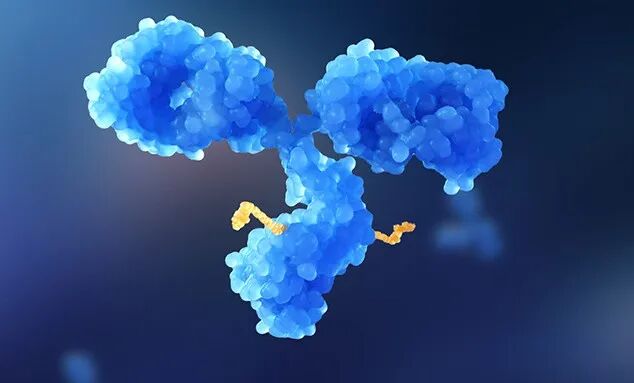
ADC药物相继获批的背后,是连接子、载荷及偶联工艺等技术环节的持续迭代。例如,早期ADC常因连接子不稳定导致载荷提前释放、毒性过高,或因其药物抗体比(DAR)不理想而疗效受限,这些瓶颈一度制约了ADC的发展。以德曲妥珠单抗(Enhertu)为代表的新一代ADC,正是凭借新型载荷、优化的DAR及“旁观者效应”,在多个难治性肿瘤中实现了疗效突破。
但与此同时,耐药性已成为限制ADC持久疗效的关键瓶颈。一旦产生耐药,疾病将卷土重来,直接阻碍了患者获得更长久的生存获益。
研究发现,ADC的耐药机制贯穿其作用全链条:肿瘤细胞可通过下调靶点表达或突变靶点结构,阻碍药物结合;在细胞膜表面,特定蛋白表达的改变会减少药物的内吞;进入胞内后,溶酶体环境的改变可抑制载荷释放,转运泵过表达则将药物载荷主动排出。此外,胞内基因突变也会阻碍载荷发挥作用。加之肿瘤的高度异质性常导致多种耐药机制并存,ADC的设计与验证面临着更为严格的要求。
解锁ADC耐药新机制
在这一背景下,深入挖掘未被认知的耐药机制,成为寻找应对耐药策略的重要切入点。近期,药明康德生物学平台(WuXi Biology)团队就针对一款ADC药物,从细胞代谢的角度揭示了其新型耐药机制。
团队首先利用HER2高表达的胃癌细胞系,通过逐步增加ADC药物浓度的方式,构建了稳定的获得性耐药细胞株。
令人意外的是,在这些耐药细胞中,HER2的表达水平和ADC的结合能力并没有发生变化,这意味着耐药并不是因为ADC药物“找不到”或“结合不上”肿瘤细胞——药物进入细胞后,因为某种未知的机制而失效了。
进一步的分析发现,耐药肿瘤细胞中一系列药物代谢酶的表达上调。在众多上调的代谢酶中,研究团队锁定了让药物失效的关键因素:醛酮还原酶1C(AKR1C)。在耐药肿瘤细胞中,AKR1C的表达量显著升高。它们能影响ADC在细胞内的代谢,从而影响载荷药物对肿瘤细胞的杀伤。
耐药新机制的揭晓也带来了对抗耐药的破局思路。进一步的验证证实,通过siRNA降低AKR1C表达,或使用抑制剂抑制其酶活性,均可恢复耐药细胞对ADC的敏感性。在临床前模型中,AKR1C抑制剂与ADC的联合用药有效抑制了耐药肿瘤的生长,表明联合用药可以逆转耐药。
AKR1C耐药机制的阐明,也为客户的ADC分子设计与验证提供了指引。有客户在研究中指出,基于药明康德团队对于“AKR1C影响ADC在细胞内的代谢”这一耐药新机制的发现,他们通过工艺优化和技术更新,重新设计了一款全新的ADC候选药物。在初步检验中,该候选分子展现出了良好的耐药抗性,以及持久抑制肿瘤生长的效果。
耐药平台应对ADC研发挑战
这一新型耐药机制的发现,得益于药明康德生物学平台搭建的ADC耐药模型平台。围绕耐药链条可能涉及的各个环节,药明康德生物学平台团队展开系统布局,通过ADC诱导耐药、载荷诱导耐药、工程化细胞等策略实现耐药细胞模型的构建。其中,ADC诱导耐药通过持续在细胞培养体系中添加ADC药物,筛选获得耐药细胞株,模拟靶向治疗后的耐药演化过程;载荷诱导耐药则是将细胞系持续暴露在游离的ADC载荷中,建立耐药株,以此模拟载荷引发的耐药路径。
基于这些策略,平台构建了超过30个覆盖已上市ADC热门靶点的耐药细胞模型,与全球超过100位客户展开项目合作。这一平台能力,也让团队得以探索治疗中的耐药机制,并评估下一代ADC药物的疗效持久性。
ADC耐药模型平台的能力,已成为药明康德生物学平台肿瘤耐药版图的重要组成部分。
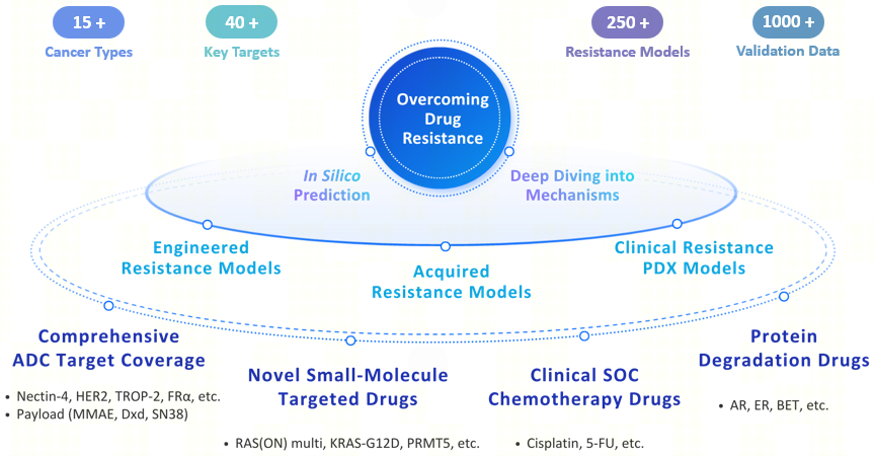
▲为应对肿瘤耐药,药明康德生物学平台建立了综合耐药模型库(图片来源:药明康德生物学平台)
从ADC到新型小分子靶向药、化疗药物、蛋白降解剂等药物类别,在更广阔的肿瘤学领域,平台已建立起涵盖250余个耐药模型、40多个关键靶点、超过15种癌种的综合耐药模型库。该平台能够系统性解析耐药机制,并应用于下一代药物活性以及联合用药策略的评估。期待这一耐药研究平台的持续赋能以及与全球客户的紧密协作,能够推动更多创新疗法为患者带来更长久的生存希望,造福全球广大癌症患者。欲了解WuXi Biology如何赋能药物研发,请点击文末“阅读原文”,与药明康德生物学业务平台联系。
Overcoming Resistance: How WuXi Biology Enables Next-Generation ADC Discovery
As drug resistance increasingly threatens the durability of antibody-drug conjugate (ADC) therapies, WuXi Biology, a segment of WuXi AppTec, is addressing this key hurdle through its ADC resistance model platform, which features a diverse panel of resistant cell lines. These capabilities enable clients to unravel resistance pathways, optimize next-generation ADC candidates, and ultimately deliver greater benefit to cancer patients worldwide.
ADC Development Momentum and the Growing Challenge of Resistance
Antibody-drug conjugates represent one of the most dynamic frontiers in oncology drug development. Often described as “magic bullets” for their ability to combine precise targeting with potent cytotoxicity, ADCs have evolved significantly over the past two decades. To date, at least 16 ADCs have received global approval, addressing both hematological malignancies and solid tumors such as breast and lung cancers, thereby expanding treatment options for patients.
For patients with triple-negative breast cancer (TNBC), recent progress has brought renewed hope. Since the second quarter of this year, two ADC therapies, Datroway (datopotamab deruxtecan) and Trodelvy (sacituzumab govitecan), have received FDA approval for adults with unresectable or metastatic TNBC who are ineligible for PD-1/PD-L1 inhibitor therapy.
The recent approvals for ADC drugs in TNBC reflect the accelerating translation of this therapeutic modality. By conjugating a targeting antibody to a cytotoxic payload through a linker, ADCs harness the antibody’s binding specificity to deliver the payload directly into tumor cells.
Behind the wave of ADC approvals lies continued innovation in linkers, payloads, and conjugation methods. For example, the development of ADCs was once constrained by unstable linkers that caused premature payload release and excessive toxicity, or by suboptimal drug-to-antibody ratios (DAR) that limited efficacy. Next-generation ADCs, powered by novel payloads, optimized DAR, and the “bystander effect”, have delivered transformative efficacy across a range of refractory tumor types.
Meanwhile, drug resistance has emerged as a major bottleneck limiting the long-term effectiveness of ADCs. Once resistance develops, disease recurrence often follows, diminishing the prospect of a durable survival benefit.
ADC resistance mechanisms span the entire drug action pathway: tumor cells may downregulate target expression or mutate target structure to prevent drug binding; altered expression of specific membrane proteins can reduce drug internalization; once inside the cell, changes in the lysosomal environment may inhibit payload release, while overexpression of efflux pumps actively expels the payload. In addition, intracellular mutations can impair payload activity. Adding to this complexity, tumor heterogeneity frequently gives rise to multiple coexisting resistance mechanisms, making ADC design and validation increasingly demanding.
Uncovering Novel Resistance Mechanisms to Guide ADC Design
Beyond well-characterized resistance pathways, exploring previously unrecognized resistance mechanisms is critical for developing more effective therapies. Recently, WuXi Biology identified a novel resistance mechanism from the perspective of cellular metabolism.
By gradually increasing the ADC concentration, the team established a cell line with acquired ADC resistance from a HER2-overexpressing gastric cancer cell line.
Intriguingly, HER2 expression and ADC binding remained unchanged in these resistant cells, indicating that resistance was not caused by the ADC failing to recognize or bind tumor cells. Instead, the drug entered cells but was rendered ineffective through an unknown mechanism.
Further analysis revealed that a group of drug-metabolizing enzymes was upregulated in resistant cells. Among these, AKR1C was identified as the key driver of drug inactivation. AKR1C expression was significantly elevated in resistant tumor cells. These enzymes can modulate ADC metabolism, thereby impacting the payload’s tumor-killing efficacy.
This finding points to a new strategy to overcome resistance. Further tests showed that reducing AKR1C expression via siRNA or target-specific inhibitors restored ADC sensitivity in resistant cells. In preclinical models, combining an AKR1C inhibitor with the ADC effectively suppressed the growth of resistant tumors, indicating that this combination strategy can reverse drug resistance.
Elucidation of the AKR1C-mediated resistance mechanism has also informed clients’ ADC design and validation strategies. As one client noted in their research, based on the mechanism discovered by WuXi Biology, they have modified their payload to develop a new ADC candidate, which showed robust resistance evasion and durable tumor growth inhibition in early testing.
An Integrated Resistance Platform Supporting ADC Discovery
This breakthrough was made possible by the ADC resistance model platform established by WuXi Biology.
WuXi Biology has developed capabilities spanning the full spectrum of resistance mechanisms through multiple strategies: ADC-induced resistance, payload-induced resistance, and engineered cell lines. Among these, ADC-induced resistance models are generated by exposing tumor cells to intact ADCs over time to recapitulate natural resistance evolution. Payload-induced resistance models, in contrast, involve continuous exposure to free ADC payloads to simulate payload-specific resistance pathways.
Based on these strategies, more than 30 resistant cell models have been created, covering major ADC targets, and the team has collaborated with more than 100 clients worldwide. This platform is extensively utilized for investigating resistance mechanisms and assessing the efficacy of next-generation ADCs, helping clients tackle the challenge of drug resistance.
The ADC resistance model platform is now an integral part of WuXi Biology’s oncology resistance landscape.
▲To address tumor drug resistance, WuXi Biology has established a comprehensive resistance model library (Image source: WuXi Biology)
Across drug modalities ranging from ADCs to novel small-molecule targeted drugs, chemotherapy drugs, and protein degraders, WuXi Biology has established featuring a comprehensive resistance model library comprising over 250 resistance models, more than 40 key targets, and over 15 cancer types. The platform enables systematic elucidation of resistance mechanisms and supports the evaluation of next-generation drug activity as well as synergistic combination strategies.
Looking ahead, sustained platform innovation and close collaboration with global clients will help drive novel therapies that offer longer-lasting hope and improved outcomes for cancer patients worldwide.
Key Takeaways
WuXi Biology, a segment of WuXi AppTec, has built an integrated ADC discovery platform covering antibody generation, payload evaluation, conjugation, and comprehensive in vitro and in vivo testing, offering clients an integrated discovery solution.
WuXi Biology addresses ADC resistance challenges for global innovators by developing its ADC resistance model platform, which includes more than 30 resistant cell models covering major ADC targets.
In a case study, WuXi Biology has identified a novel AKR1C-mediated ADC resistance mechanism leveraging its ADC resistance model platform, supporting clients in the discovery of novel ADC candidates.
By enabling the discovery of effective, resistance-evading ADCs, WuXi Biology accelerates delivery of meaningful benefits to cancer patients worldwide.
For more information about WuXi Biology’s services or business collaboration inquiries, please click “Read More” at the end of this article.
参考资料:
[1] Resistance to antibody–drug conjugates: A review. Acta Pharmaceutica Sinica B (2025). DOI:
[2] Valle, I., Grinda, T., Antonuzzo, L. et al. Antibody–drug conjugates in breast cancer: mechanisms of resistance and future therapeutic perspectives. npj Breast Cancer 11, 102 (2025).
[3] Overcoming resistance to antibody-drug conjugates: from mechanistic insights to cutting-edge strategies. J Hematol Oncol. 2025 Nov 3;18:96. doi: 10.1186/s13045-025-01752-9
[4] D. Wang et al., AKR1C mediates the acquired 1 resistance to T-Dxd in a HER-2 positive gastric cancer line. BioRxiv (2024). DOI: 10.1101/2923
[5] B. Li et al., Overview of Preclinical Drug-Resistant Tumor Models and Their Application in Drug Discovery. Current Protocols (2025). DOI: 10.1002/cpz1.70282
免责声明:本文仅作信息交流之目的,文中观点不代表药明康德立场,亦不代表药明康德支持或反对文中观点。本文也不是治疗方案推荐。如需获得治疗方案指导,请前往正规医院就诊。

分享,点赞,在看,聚焦全球生物医药健康创新


