
 五度妙笔
五度妙笔 企业透视镜
企业透视镜 API商城
API商城
 数据库
数据库药明康德:让复杂小分子走得更远 | Bilingual
近几年,创新药的聚光灯不断移动,CAR-T、mRNA、多肽等新兴技术路线轮番走红。相比之下,拥有百余年发展历史的小分子,似乎少了几分新鲜感。
但市场的喧嚣往往会掩盖产业的真实图景。
环顾当前的全球新药研发管线与商业化市场,小分子依然稳稳占据着“半壁江山”。
2025年,美国FDA药物评价与研究中心(CDER)批准的46款创新药中,小分子药物的占比依然过半。另据丁香园Insight统计,2025年全球药品销售额TOP100合计达到5643亿美元,其中小分子药物贡献超过60%;前十大小分子药物合计销售额超过1070亿美元。
药明康德承接了大量处于不同研发阶段的小分子项目,其数据也为观察行业活跃度提供了一个窗口。
药明康德最新披露的中报显示,2026年上半年,公司小分子D&M(开发与生产)业务实现收入149.9亿元,同比增长72.7%;截至上半年末,小分子D&M管线达到3731个,上半年新增699个分子,其中155个来自R(研究)端内部转化,商业化和临床3期项目新增15个。
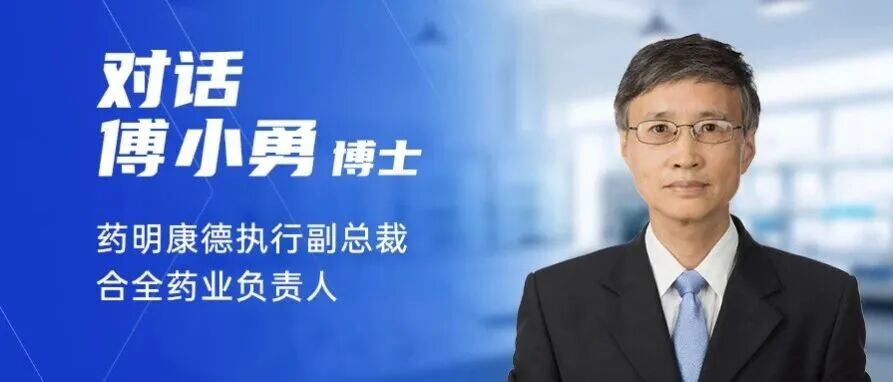
“我们的增长,离不开客户项目的成功。”药明康德执行副总裁、合全药业负责人傅小勇博士在接受专访时表示。
“这些数字背后,是一批批客户项目从早期研究持续向临床后期和商业化推进。”在傅小勇看来,药明康德小分子业务的增长,也从一个侧面反映了全球客户小分子创新的活跃。
从业三十多年,傅小勇持续见证着小分子产业的变迁。当药物技术路线日益丰富,小分子为什么仍能稳住基本盘?它的下一轮增长,又将来自哪里?
小分子为何仍占“半壁江山”
“从我们接触的客户项目来看,小分子仍然是新药研发中非常活跃的一类分子。”傅小勇表示,“这背后有其科学规律,很多疾病机制和靶点仍然适合通过小分子来解决。”
相比主要作用于细胞表面或细胞外的部分大分子药物,小分子体积较小,分子结构和理化性质也可以灵活调节,因此更有机会进入细胞内部,触达其他药物形式较难覆盖的细胞内靶点。
比如,在中枢神经系统疾病领域,经过针对性设计的小分子往往更有机会穿过血脑屏障,因此仍是重要的研发方向。
小分子的另一项优势体现在给药方式上。
对于高血压、糖尿病、高血脂等需要长期用药的慢性疾病,治疗能否持续,很大程度上取决于用药是否便利。小分子通常更易开发为口服制剂,同时拥有较为成熟的生产、储运和规模化供应体系,在提升患者依从性和药物可及性方面具有鲜明优势,也更有机会覆盖广泛的患者群体。
在傅小勇看来,小分子能够长期保持活力,正是因为它同时连接着科学与患者两端:“既要看一种分子能否解决疾病问题,也要看它最终能否成为患者方便使用、能够持续获得的药物。”
过去几年,新兴疗法解决了不少传统难题,不断吸引市场关注。如今,在一些热门治疗领域,小分子的价值正在被重新看见。
GLP-1便是一个典型例子。
多肽类药物率先打开减重和代谢疾病市场,口服小分子随后提供了新的选择。2026年4月,礼来小分子GLP-1药物Foundayo(orforglipron)获FDA批准。该药每日口服一次,不受进食和饮水时间限制,体现了小分子在用药便利性上的价值。
“一个治疗领域的兴起,并不只属于某一类分子。”傅小勇表示,“不同疾病机制和患者需求,会催生不同的解决方案。多肽验证了GLP-1的治疗价值,口服小分子则进一步丰富了患者的选择。”
聚光灯会移动,但科学规律和患者需求,始终为小分子保留着重要位置。
小分子还在“进化”
小分子的生命力,比市场想象的更为旺盛。
“从客户的研发管线来看,小分子的创新活跃度依然很高。”傅小勇表示。
随着蛋白降解靶向嵌合体(PROTAC)、分子胶、共价抑制剂等新技术逐步成熟,小分子作用于疾病靶点的方式更加丰富,让部分过去被认为“不可成药”的靶点有了新的解法。
同时,AI等药物发现工具的升级,也在帮助研究人员从更大范围内寻找、设计和筛选候选分子。已有研究显示,生成式AI已经展现出设计结构新颖、可合成的小分子候选物的潜力。
小分子的创新边界仍在扩大,但成药门槛也在同步抬高。
过去,制药行业常用“里宾斯基五规则”评估小分子化合物的成药可能性,其中分子量低于500道尔顿是一项重要参考,否则分子在体内的溶解度将大打折扣。
而如今,进入研发管线的小分子变得更大、结构更复杂、合成路线更长。据药明康德研发化学团队统计,过去5年,分子量超过600道尔顿的小分子比例增加63%;合成步骤超过20步、甚至达到30至50步的复杂分子也在增多。
“过去讨论小分子,更多关注能否找到有效的分子;今天,还要回答能否把越来越复杂的分子真正做成药。”傅小勇表示,“新的药物策略和发现工具打开了更多可能,但也把更多挑战推向了后续开发和生产。”
让复杂分子走得更远
当越来越多复杂小分子进入研发管线,一个更加现实的问题随之而来:如何帮助它们跨越工艺开发、规模放大和商业化生产的层层关卡?
在傅小勇看来,“这恰恰是药明康德更好地赋能合作伙伴的机会。”
作为药明康德化学业务的重要组成部分,合全药业提供从小分子原料药到制剂、从临床前到商业化的一体化服务。傅小勇对其中一个复杂分子项目印象深刻。
多年前,团队曾接到一个“几乎不可能完成”的复杂分子项目。该分子合成路线长达几十步,初始收率仅为几十个ppm(parts per million),意味着目标产物产量只有理论值的几万分之一。
面对这一难题,团队重新设计整条合成路线,并引入酶催化技术进行定向优化。最终,合成步骤缩短了十多步,整体收率提升近百倍,让原本“难以成药”的分子重新具备产业化可能。
此后,药明康德已为客户提供数百公斤原料药,用于支持临床试验;近期,该款药物已获FDA批准上市,项目正向更大规模生产推进,以满足这款分子的商业化需求。
经过二十多年的发展和积累,药明康德围绕复杂小分子的开发需求,已提前布局、建立了解决复杂分子挑战的全面的技术和能力。
据傅小勇介绍,围绕复杂小分子面临的路线效率、溶解度、口服吸收和规模放大等问题,合全药业持续建设酶催化、连续化生产、喷雾干燥、热熔挤出和纳米悬浮等技术能力,并逐步将其从实验室研究延伸至商业化生产。
此外,大量项目中形成的路线判断、杂质研究和放大经验,也可以在后续项目中复用,减少不必要的反复试错。
但把复杂分子开发出来,并不是终点。
如果说研发阶段考验的是能否把复杂分子“做得出来”,商业化阶段考验的则是能否长期、稳定地“交得出去”。
傅小勇直言,“真正决定一个小分子能否走向患者的,不是实验室里能否做出第一毫克,而是能否稳定完成公斤级乃至更大规模的生产,并持续满足质量和供应要求。”
据傅小勇回忆,2022年,全球某款重磅药物曾给合全药业带来一次特殊的挑战。“那是我们迄今为止生产过的最紧急的产品,也是交付过的最大规模。”他透露,仅在2022年,合全药业便高效完成了超200吨该款药物原料药的生产,成功填补了当时巨大的全球供应缺口。
“对客户而言,这化解了极端需求激增下的供应风险;对患者而言,则意味着在最关键的时刻能够及时获得救治。”傅小勇说。
目前,合全药业的全球网络包括9个开发和生产基地。截至2025年底,药明康德小分子原料药反应釜总体积已超过400万升;公司还在推进常州新基地及亚洲、欧洲、北美多地产能建设,以匹配客户项目从临床早期走向后期和商业化后的生产需求。
“随着平台能力与产能提升,以及全球交付网络持续完善,药明康德能够支持更多复杂分子跨越开发和生产中的障碍,为更多复杂的新药铺平问世的道路。”傅小勇说。
从帮助复杂分子跨越开发瓶颈,到保障商业化药物稳定供应,平台的价值不是替代客户完成创新,而是让已经产生的科学创新少一些停在途中。
客户项目向前,创新也离患者更近
从客户的一个科学构想,到患者手中的一款药,分子每向前一步,产业价值才真正发生。
小分子的生命力,不只体现在还能设计出多少分子,更体现在有多少分子能够跨越漫长的研发链条,最终成为患者可以使用的治疗选择。
而药明康德的价值,正体现在帮助这些分子跨过从研究、开发到生产的一道道关口,让客户的科学构想持续向前,最终成为患者真正用得上的药。
自2017年以来,合全药业已支持70多款新药上市;过去一年内(截至2026年二季度),公司支持了3600多个临床前至临床3期的药物,以及90多款商业化药物。
“我们的价值最终要通过客户项目的进展来体现。”傅小勇表示,“只有客户的分子能够从研究走向开发、从临床走向商业化,我们建设的技术、质量和产能才真正产生价值。客户取得进展,是我们持续创造价值的前提。”
而客户项目的终点,最终是患者。
“客户项目每向前一步,就意味着一个有潜力的分子离患者更近一步。‘让天下没有难做的药,难治的病’,并不是说新药研发不再困难,而是希望通过技术和协作,帮助更多创新跨越那些可以被解决的障碍,成为真正能够服务患者的药物。”
从这个角度看,药明康德小分子业务的增长,正是全球小分子创新持续向前,在平台上留下的刻度。
WuXi AppTec: Helping Complex Small Molecules Go Further
In the theater of modern medicine, the spotlight is restless. In recent years, it has been among the surging technologies, such as CAR-T, mRNA, and peptide-based therapies. Each new modality arrives with a messianic aura, promising to succeed. Small molecules, the workhorses that shaped the pharmaceutical industry over more than a century, are increasingly cast in a supporting role—reliable, perhaps, but hardly the stuff of headlines.
The drama on stage, however, obscures what is happening backstage. Look at the actual numbers, and small molecules still command a starring role. In 2025, more than half of the 46 new drugs approved by the FDA's Center for Drug Evaluation and Research were small molecules. According to DXY Insight, the world's 100 bestselling medicines generated a combined $564.3 bn in 2025, with small molecules accounting for over 60% of that total. The top ten small-molecule drugs alone brought in more than $107 bn.
WuXi AppTec offers a useful window into this quiet persistence. The company handles a large number of small-molecule projects spanning every stage of development. Its latest interim report in 2026 showed revenue from small-molecule development and manufacturing jumping 72.7% year on year to RMB14.99bn (about $2.1bn). The pipeline reached 3,731 molecules, with 699 new ones added in just six months, 155 of them converted from in-house research (R) work, along with 15 new commercial and Phase III programs.
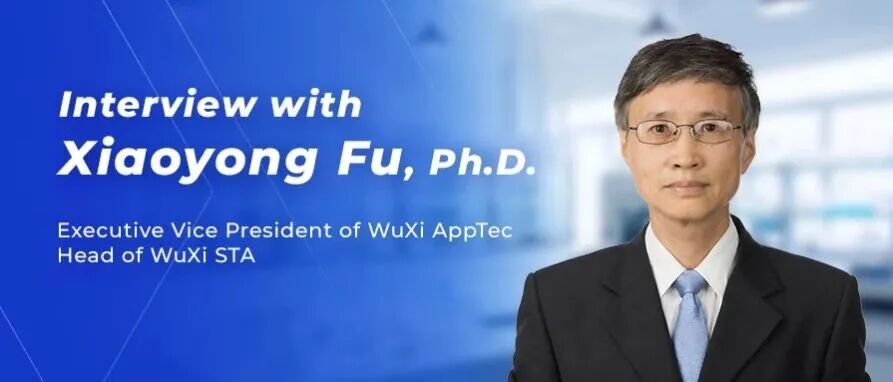
“Our growth is driven by the greater success of our customers' products,” says Dr. Xiaoyong Fu, Executive Vice President and Head of WuXi STA. “Behind these numbers is a steady stream of projects advancing from early research into late-stage clinical development and commercialization.” In Fu's view, the expansion of WuXi AppTec's small-molecule business also reflects, from a particular angle, the vibrancy of small-molecule innovation among its global clients.
The question is why. Having spent more than three decades in the industry, Fu has witnessed the small-molecule story unfold through many cycles. As the therapeutic toolbox grows ever richer, why do small molecules continue to hold their ground? And where will their next wave of growth come from?
Why Small Molecules Still Claim Half the Field
The answer begins with a simple fact of chemistry. Small molecules are, as the name suggests, small. Their compact size and malleable structures allow them to slip through cell membranes and reach targets deep inside the cell—territory that larger biologics, which typically act on the cell surface or in the bloodstream, cannot easily access. For diseases of the central nervous system, where any would-be drug must cross the blood-brain barrier, this is a decisive advantage.
Small molecules also hold an advantage in how they are delivered. For chronic conditions such as hypertension, diabetes and dyslipidemia that require long-term treatment, adherence often hinges on convenience. Small molecules can generally be formulated more readily as oral drugs, and they benefit from a mature infrastructure for manufacturing, storage and large-scale supply. That makes them powerful tools for boosting patient compliance and broadening access to medicines—and for reaching vast patient populations.
“It's not just about whether a molecule can tackle a disease,” says Dr. Fu. “It's also about whether it can become a medicine that patients can use conveniently and obtain reliably.”
The rise of GLP-1 is instructive. Peptide drugs first opened up the obesity and metabolic disease market; oral small molecules then provided a new option. In April 2026, Eli Lilly's small-molecule GLP-1 drug Foundayo (orforglipron) won FDA approval. The once-daily pill can be taken without regard to food or water intake—a neat illustration of the convenience small molecules can deliver.
“The rise of a therapeutic area doesn't belong to a single type of molecule,” Dr. Fu notes. “Different disease mechanisms and patient needs will give rise to different solutions. Peptides validated the therapeutic value of GLP-1; oral small molecules have now further expanded patients' choices.”
Small Molecules Are Still Evolving
Far from being a relic, the small molecule is quietly undergoing a reinvention. Its vitality runs deeper than the market tends to assume. “Looking at our clients' pipelines, small-molecule innovation remains very active,” says Dr. Fu.
New technologies like PROTACs (Proteolysis-Targeting Chimeras), molecular glues and covalent inhibitors are steadily expanding the repertoire of what a small molecule can do. Together, these approaches are opening routes to targets once dismissed as “undruggable.” At the same time, AI-driven discovery tools are helping researchers search, design and screen candidate molecules across a far wider chemical universe. Generative AI has already demonstrated a knack for proposing novel, synthesizable small-molecule structures.
Yet the very sophistication of these tools is pushing small molecules into new territory, and new complexity. The rule of thumb for decades was Lipinski's rule of five, a set of guidelines that included a molecular-weight ceiling of 500 daltons. Go much above that, the molecule would be too greasy, too insoluble, too unlikely to become a drug.
Today's pipeline is smashing through that ceiling. According to WuXi AppTec RCS team, the share of small molecules weighing more than 600 daltons has risen by 63% over the past five years. Synthetic routes stretching to 20, 30 or even 50 steps are becoming common.
“In the past, the conversation was about whether we could find an effective molecule,” says Dr. Fu. “Today, we also have to answer whether we can actually turn increasingly complex molecules into real drugs. New drug-hunting strategies and discovery tools have opened up more possibilities, but they have also pushed more challenges downstream into development and manufacturing.”
Helping Complex Molecules Go Further
As more and more complex small molecules enter the pipeline, a practical question looms: how to shepherd them through the successive bottlenecks of process development, scale-up and commercial production?
For Dr. Fu, it is precisely the opportunity for WuXi AppTec to better empower its partners.
WuXi STA, the small-molecule engine within WuXi AppTec's chemistry business, provides integrated services spanning from active pharmaceutical ingredients to drug products, and from preclinical work all the way to commercial supply. Dr. Fu still recalls one project that arrived looking less like a drug candidate and more like a dare.
The synthetic route stretched across dozens of steps. The initial yield was measured in mere parts per million, meaning the target product amounted to only a few ten-thousandths of the theoretical output. It was, by any reasonable standard, unmanufacturable. The team tore up the original route and redesigned it from scratch, introducing enzymatic catalysis at critical junctures. The synthesis was shortened by more than ten steps, and the overall yield rose nearly a hundredfold. A molecule that had seemed destined to remain a laboratory curiosity suddenly had a path to commercialization. WuXi AppTec has since supplied hundreds of kilograms of the active ingredient to support clinical trials, and the drug recently received FDA approval. The project is now moving toward larger-scale production for commercial demand.
Such feats are not conjured from thin air. Over more than two decades, WuXi AppTec has built a comprehensive toolkit specifically designed to tackle the challenges of complex molecules. Dr. Fu points to a suite of technologies that WuXi STA has cultivated and steadily extended from the lab bench to commercial production: enzymatic catalysis, continuous manufacturing, spray drying, hot-melt extrusion and nanosuspension, among others. Each addresses a specific pain point: route efficiency, solubility, oral absorption, scale-up.
Just as importantly, the experience accumulated across thousands of projects, instincts for route design, impurity control, and scale-up can be reapplied to new ones, sparing clients from unnecessary cycles of trial and error.
But getting a complex molecule made is not the end of the road. If the R&D phase asks whether a molecule can be made, the commercial phase asks a tougher question: can it be delivered reliably, at scale, over the long term?
"What really determines whether a small molecule can reach patients is not whether you can make the first milligram in the lab," Dr. Fu says bluntly. "It's whether you can consistently produce it at kilogram scale and beyond, while meeting quality and supply requirements."
According to Dr. Fu, a global blockbuster drug posed an extraordinary challenge for WuXi STA in 2022. "It was the most urgent product we had ever manufactured, and the largest scale we had ever delivered," he revealed. In 2022 alone, WuXi STA efficiently produced over 200 metric tons of the API for this drug, successfully closing a massive global supply gap at the time." For the client, it was a supply risk defused," says Dr. Fu. "For patients, it meant their treatment could continue."
Today, WuXi STA's global network spans nine development and manufacturing sites. By the end of 2025, WuXi AppTec's total reactor volume for small-molecule active ingredients had surpassed 4 million liters. The company is pressing ahead with a new site in Changzhou, alongside additional capacity in Asia, Europe and North America, all calibrated to match the demands of projects as they advance from early clinical stages into full commercial production.
"As our platform capabilities and capacity expand, and as our global delivery network grows stronger, we can support more complex molecules in overcoming the obstacles of development and manufacturing, and pave the way for more complex new drugs to reach the market," says Dr. Fu.
The platform's value, in the end, is not to replace the client's role to complete innovation. It is to ensure that the scientific innovations already born do not stall somewhere along the way. From helping a complex molecule break through a development bottleneck to safeguarding the stable supply of a commercial drug, the mission is the same: fewer good ideas stranded mid-journey, and more of them reaching the patients who need them.
As Client Projects Advance, Innovation Moves Closer to Patients
From a client's scientific idea to a medicine in a patient's hand, a molecule generates real value only with each step it takes forward. The vitality of small molecules is not best measured by how many can be dreamed up in a laboratory, but by how many can traverse the long and unforgiving chain of discovery, development and regulation to become treatments that patients can actually use.
WuXi AppTec's role, in this sense, is to keep the gates open. Its job is to help molecules clear the hurdles that separate research from development, and development from production—so that a client's scientific vision keeps moving forward, eventually becoming a medicine that reaches the people waiting for it. WuXi STA has supported the launch of more than 70 new drugs since 2017. Over the past year (as of Q2 2026), it has worked on more than 3,600 drugs spanning preclinical through late-stage trials, as well as over 90 commercial products.
"Our value is ultimately reflected in the progress of our clients' projects," says Dr. Fu. "Only when their molecules move from research to development, and from clinical trials to commercialization, do the technologies, quality systems and capacity we have built truly generate value. Client progress is the precondition for our own continued value creation."
And the endpoint of a client project is, ultimately, the patient.
"Every step forward for a client project means a promising molecule is one step closer to patients," Dr. Fu says. "Our vision—'every drug can be made, and every disease can be treated'—is not a claim that drug discovery has become easy. It is a belief that, through technology and collaboration, we can help more innovations overcome the obstacles that are solvable, so they can become medicines that truly serve patients."
The growth of WuXi AppTec's small-molecule business is not merely a corporate result. It is the notch left on a measuring stick by an industry grinding forward—one molecule at a time.
Key Takeaways:
Small molecules remain a cornerstone of modern medicine, with distinct advantages in drug development and patient use.
New modalities and AI are expanding the boundaries of drug discovery, while raising new demands for innovation, development expertise, and manufacturing.
WuXi AppTec accelerates small-molecule innovation through its integrated CRDMO platform, helping customers move complex molecules from early research through scale-up and commercialization—and ultimately benefits patients.
版权说明:欢迎个人转发至朋友圈,谢绝媒体或机构未经授权以任何形式转载至其他平台。转载授权请在「药明康德」微信公众号回复“转载”,获取转载须知。

分享,点赞,在看,聚焦全球生物医药健康创新


