The current state of AI agent development is characterized by significant architectural fragmentation. Software devs building autonomous systems must generally commit to one of several competing ecosy
The scaling of inference-time compute has become a primary driver for Large Language Model (LLM) performance, shifting architectural focus toward inference efficiency alongside model quality. While Tr
In the field of generative AI media, the industry is transitioning from purely probabilistic pixel synthesis toward models capable of structural reasoning. Luma Labs has just released Uni-1, a foundat
In this tutorial, we build an uncertainty-aware large language model system that not only generates answers but also estimates the confidence in those answers. We implement a three-stage reasoning pip
In the current landscape of Retrieval-Augmented Generation (RAG), the primary bottleneck for developers is no longer the large language model (LLM) itself, but the data ingestion pipeline. For softwar
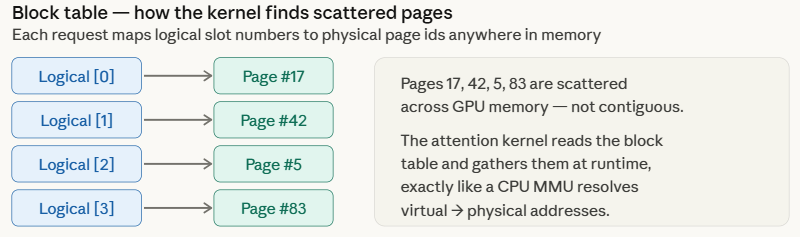
When running LLMs at scale, the real limitation is GPU memory rather than compute, mainly because each request requires a KV cache to store token-level data. In traditional setups, a large fixed memor
Over the past year, AI agents have evolved from merely answering questions to attempting to get real tasks done. However, a significant bottleneck has emerged: while most agents may appear intelligent
Google has released Gemini 3.1 Flash Live in preview for developers through the Gemini Live API in Google AI Studio. This model targets low-latency, more natural, and more reliable real-time voice int
In the landscape of enterprise AI, the bridge between unstructured audio and actionable text has often been a bottleneck of proprietary APIs and complex cascaded pipelines. Today, Cohere—a company tra
NVIDIA researchers introduced ProRL AGENT, a scalable infrastructure designed for reinforcement learning (RL) training of multi-turn LLM agents. By adopting a ‘Rollout-as-a-Service’ philosophy, the sy
Researchers from FAIR at Meta, Cornell University, and Carnegie Mellon University have demonstrated that large language models (LLMs) can learn to reason using a remarkably small number of trained par
World Models (WMs) are a central framework for developing agents that reason and plan in a compact latent space. However, training these models directly from pixel data often leads to ‘representation
Tencent AI Lab has released Covo-Audio, a 7B-parameter end-to-end Large Audio Language Model (LALM). The model is designed to unify speech processing and language intelligence by directly processing c
The scaling of Large Language Models (LLMs) is increasingly constrained by memory communication overhead between High-Bandwidth Memory (HBM) and SRAM. Specifically, the Key-Value (KV) cache size scale
Neuroscience has long been a field of divide and conquer. Researchers typically map specific cognitive functions to isolated brain regions—like motion to area V5 or faces to the fusiform gyrus—using m
AI报告
电话咨询
在线咨询
 五度妙笔
五度妙笔 API商城
API商城
 数据库
数据库