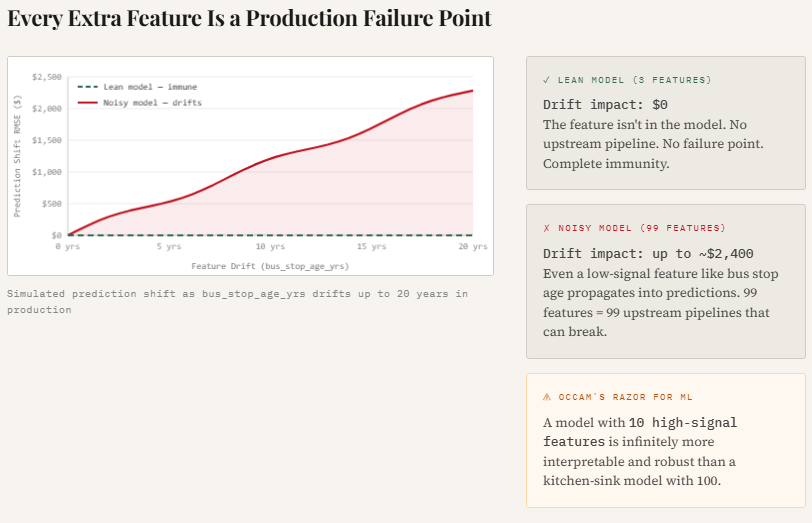
At first glance, adding more features to a model seems like an obvious way to improve performance. If a model can learn from more information, it should be able to make better predictions. In practice
In this tutorial, we explore tqdm in depth and demonstrate how we build powerful, real-time progress tracking into modern Python workflows. We begin with nested progress bars and manual progress contr
In this tutorial, we build a complete pipeline for single-cell RNA sequencing analysis using Scanpy. We start by installing the required libraries and loading the PBMC 3k dataset, then perform quality
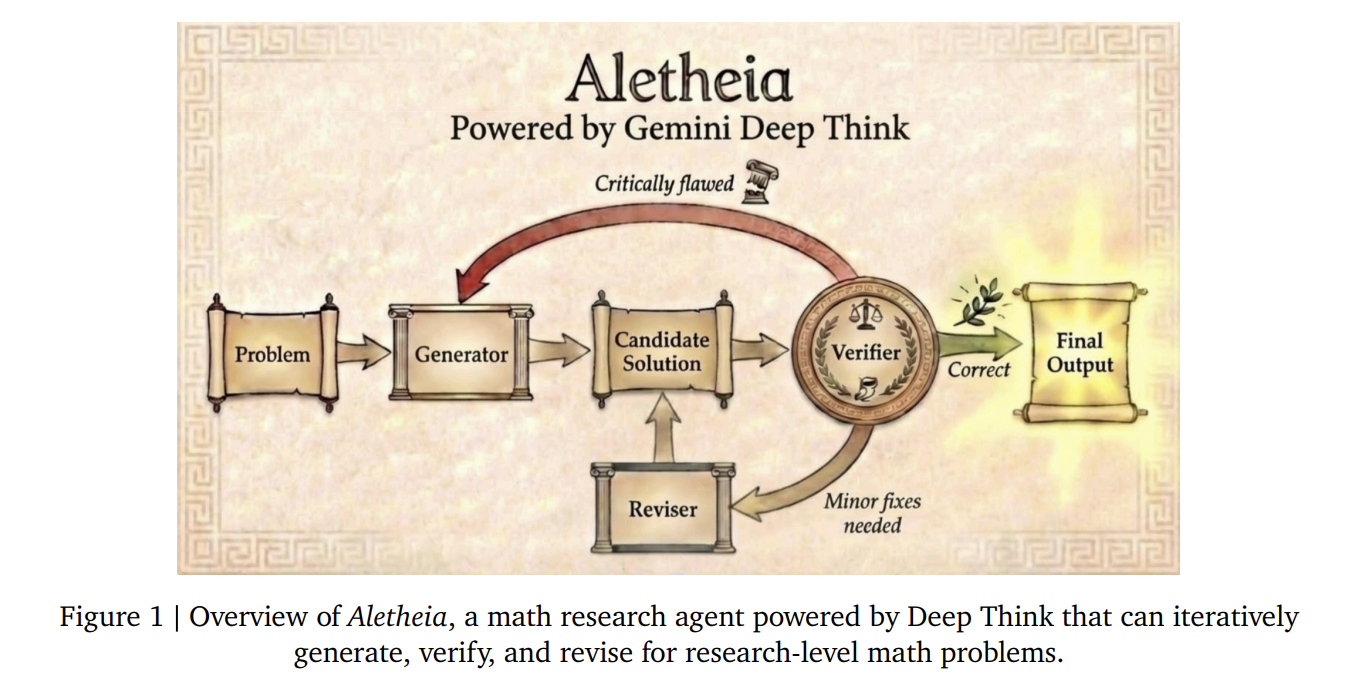
Google DeepMind team has introduced Aletheia, a specialized AI agent designed to bridge the gap between competition-level math and professional research. While models achieved gold-medal standards at
What if the AI industry is optimizing for a goal that cannot be clearly defined or reliably measured? That is the central argument of a new paper by Yann LeCun, and his team, which claims that Artific
The race to build autonomous AI agents has hit a massive bottleneck: data. While frontier models like Claude Code and Codex CLI have demonstrated impressive proficiency in terminal environments, the t
Andrej Karpathy released autoresearch, a minimalist Python tool designed to enable AI agents to autonomously conduct machine learning experiments. The project is a stripped-down version of the nanocha
Google expanded its Gemini model family with the release of Gemini Embedding 2. This second-generation model succeeds the text-only gemini-embedding-001 and is designed specifically to address the hig
Large Language Models (LLMs) are the world’s best mimics, but when it comes to the cold, hard logic of updating beliefs based on new evidence, they are surprisingly stubborn. A team of researchers fro
The landscape of Text-to-Speech (TTS) is moving away from modular pipelines toward integrated Large Audio Models (LAMs). Fish Audio’s release of S2-Pro, the flagship model within the Fish Speech ecosy
Residual connections are one of the least questioned parts of modern Transformer design. In PreNorm architectures, each layer adds its output back into a running hidden state, which keeps optimization
Google AI Research team recently released Groundsource, a new methodology that uses Gemini model to extract structured historical data from unstructured public news reports. The project addresses the
Stanford researchers have introduced OpenJarvis, an open-source framework for building personal AI agents that run entirely on-device. The project comes from Stanford’s Scaling Intelligence Lab and is
Most LLM agents work well for short tool-calling loops but start to break down when the task becomes multi-step, stateful, and artifact-heavy. LangChain’s Deep Agents is designed for that gap. The pro
Why Document OCR Still Remains a Hard Engineering Problem? What does it take to make OCR useful for real documents instead of clean demo images? And can a compact multimodal model handle parsing, tabl
AI报告
电话咨询
在线咨询
 五度妙笔
五度妙笔 API商城
API商城
 数据库
数据库